DARPA Launches HARQ Program to Advance Heterogeneous Quantum Architectures
Key Takeaways
- •DARPA launches HARQ program to integrate multiple qubit technologies.
- •19 teams from 15 institutions will work on software and hardware tracks.
- •MOSAIC aims to compile quantum circuits across diverse qubit types.
- •QSB focuses on high‑fidelity interconnects linking different qubits.
- •Goal: demonstrate scalable heterogeneous quantum systems within 24 months.
Pulse Analysis
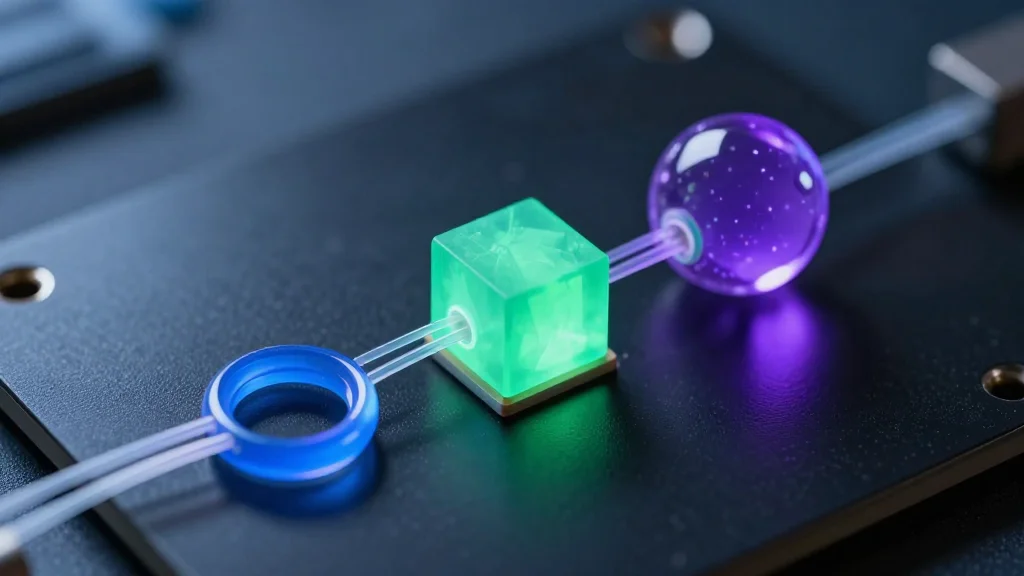
Quantum computing has surged forward, yet most platforms rely on a single qubit technology, limiting performance and scalability. Classical computing sidesteps such constraints by mixing CPUs, GPUs, and ASICs, each optimized for specific tasks. DARPA’s HARQ program seeks to import that heterogeneity into the quantum realm, encouraging researchers to combine superconducting, trapped‑ion, photonic and other qubits within a unified system. This paradigm shift promises to overcome bottlenecks that have kept many quantum algorithms theoretical, paving the way for practical, high‑throughput quantum workloads.
The HARQ effort is split into two parallel workstreams. MOSAIC will develop compilation tools that automatically partition algorithms across the most suitable qubit types, creating a "mosaic" of optimized sub‑circuits. Meanwhile, the Quantum Shared Backbone (QSB) tackles the hardware challenge of building low‑error, high‑bandwidth links that allow disparate qubits to exchange quantum information reliably. Nineteen performers—including leading universities such as MIT, Stanford, and EPFL, and industry players like IonQ—will collaborate over a 24‑month timeline, delivering prototype architectures, software stacks, and interconnect demonstrations that prove the concept at scale.
If successful, heterogeneous quantum systems could dramatically broaden the commercial and defense use cases for quantum computing. Industries ranging from materials science to drug discovery would gain access to more powerful, task‑specific quantum resources, while national security agencies could field quantum‑enhanced analytics faster than adversaries. The program also sets a foundation for future federal investments in quantum infrastructure, signaling to the private sector that a mixed‑qubit ecosystem is a viable, government‑backed path forward. This could catalyze a new wave of startups and partnerships focused on modular quantum hardware, accelerating the overall quantum race.
DARPA Launches HARQ Program to Advance Heterogeneous Quantum Architectures
Comments
Want to join the conversation?