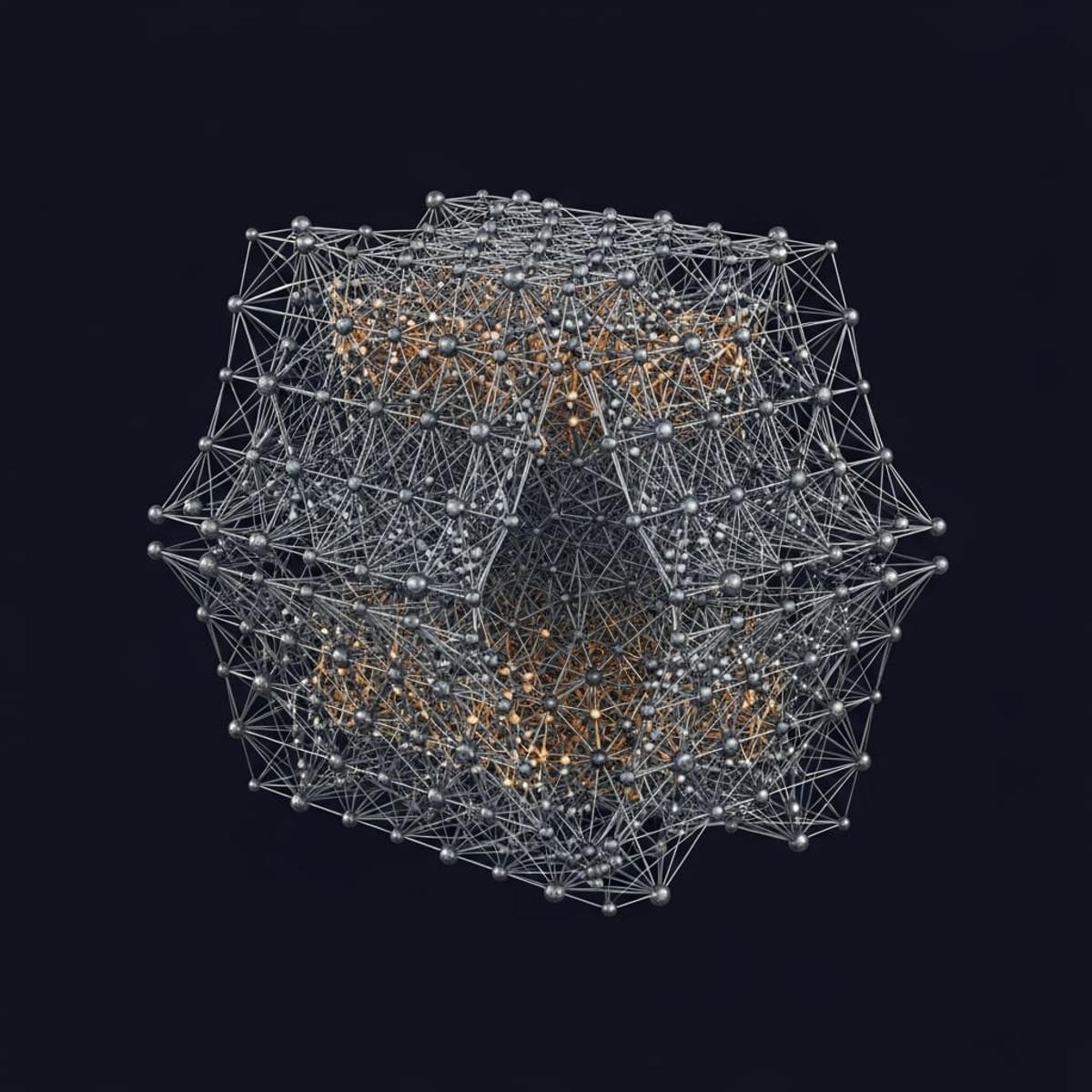
Folded Surface Code Architecture Achieves Constant Time Logical CNOT Gates
•January 29, 2026
0
Why It Matters
Constant‑time logical operations dramatically lower error‑correction overhead, accelerating the path to scalable, fault‑tolerant quantum computers. The architecture’s efficiency gains could reshape hardware roadmaps for industry‑scale quantum processors.
Key Takeaways
- •Folded surface codes enable constant‑time logical CNOTs.
- •Short‑range shuttling creates effective 3‑D connectivity on 2‑D chips.
- •Magic‑state distillation volume drops over ten‑fold.
- •Virtual‑stack layout supports flexible multilayer routing.
- •Overhead scales independent of code distance d.
Pulse Analysis
Quantum error correction has long been bottlenecked by the need for extensive qubit connectivity and costly lattice‑surgery cycles. Surface codes, the leading error‑correction scheme, traditionally require O(d) time for logical CNOTs, where d denotes code distance. By engineering a folded surface‑code architecture that leverages short‑range qubit shuttling, the Oxford team transforms a planar chip into a quasi‑three‑dimensional network, preserving the hardware’s 2‑D layout while delivering the connectivity of a multilayer system. This breakthrough redefines how logical operations are scheduled, enabling constant‑time execution without sacrificing fault tolerance.
The core of the innovation lies in the “virtual‑stack” layout, which partitions the computing region into logical layers dedicated to storage, short‑range, mid‑range, and long‑range tasks. Transversal SWAP gates stitch these layers together at minimal cost, allowing folded surface codes to perform all three logical Clifford gates and CNOTs natively. As a result, the runtime of single‑qubit Clifford gates and logical CNOTs collapses from O(d) to O(1). The authors also demonstrate that a transversal S gate slashes the spacetime volume of 8T‑to‑CCZ magic‑state distillation by more than an order of magnitude, with an additional 2.6× reduction when combined with the folded code, dramatically easing the resource burden of universal quantum computation.
For the broader quantum‑computing ecosystem, these advances translate into tangible hardware savings and faster algorithmic execution. Reduced overhead means fewer physical qubits are needed to achieve a given logical error rate, accelerating the deployment of fault‑tolerant processors in cloud services and specialized applications. Companies pursuing scalable quantum architectures can adopt the folded surface‑code approach without redesigning existing 2‑D fabrication processes, positioning it as a pragmatic bridge toward the next generation of high‑performance quantum machines.
Folded Surface Code Architecture Achieves Constant Time Logical CNOT Gates
0
Comments
Want to join the conversation?
Loading comments...