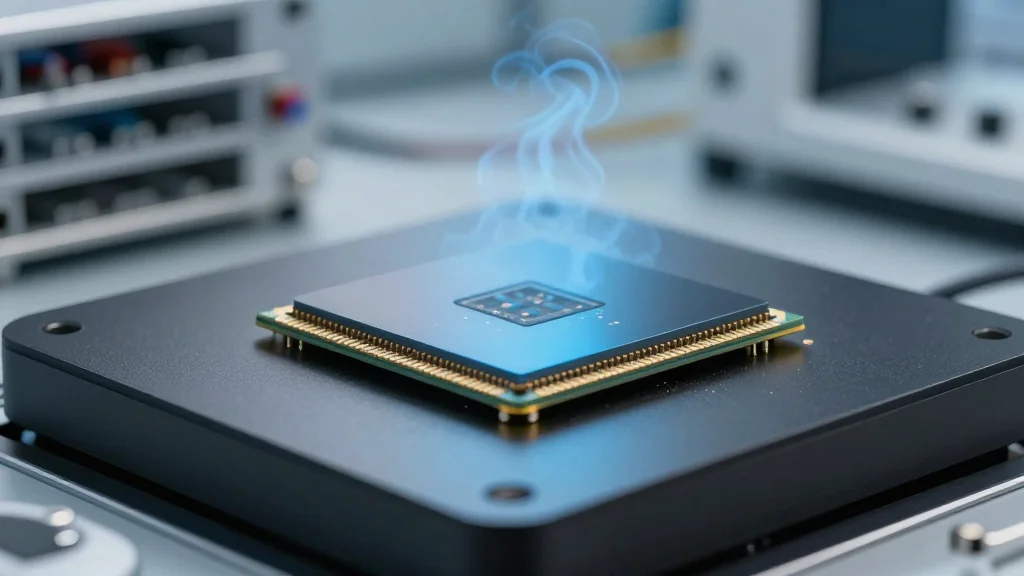
IBM and RIKEN Hail Breakthrough in Quantum-Assisted Supercomputing
Key Takeaways
- •Simulated 12,635‑atom protein, largest quantum‑assisted model to date
- •Achieved 40× size increase and 200× accuracy boost in six months
- •Hybrid algorithm EWF‑TrimSQD cut overhead, enabling 6,000 quantum runs
- •IBM Heron used 94 of 156 qubits, linked with Fugaku and Miyabi‑G
- •Breakthrough paves way for quantum‑centric drug discovery and materials research
Pulse Analysis
Protein folding and ligand binding remain among the most computationally demanding problems in biophysics. Classical molecular dynamics can model thousands of atoms, but the quantum mechanical interactions that dictate chemical reactivity are often approximated, limiting predictive power. Over the past decade, quantum hardware has progressed from a handful of qubits to devices capable of error‑mitigated calculations, yet real‑world biomolecules have stayed out of reach. The IBM‑RIKEN collaboration builds on a 303‑atom quantum simulation completed in late 2025, pushing the frontier toward truly drug‑relevant scales.
The 2026 experiment married IBM’s superconducting Heron processor with Japan’s Fugaku and Miyabi‑G supercomputers in a hybrid pipeline. A novel EWF‑TrimSQD algorithm fragmented the 12,635‑atom trypsin enzyme into quantum‑tractable sub‑systems, allowing 6,000 individual quantum runs that collectively consumed 94 of the processor’s 156 qubits. Compared with the 2025 baseline, the new workflow delivered a 40‑fold increase in system size and more than a 200‑fold boost in energy‑calculation accuracy, all while keeping runtime within practical limits for research cycles.
The success signals a turning point for quantum‑centric supercomputing in the pharmaceutical pipeline. By delivering near‑quantum accuracy for proteins of therapeutic relevance, companies can prioritize candidates earlier, cutting experimental costs and shortening time‑to‑market. Beyond drug discovery, the same hybrid approach can accelerate materials design, catalysis research, and climate‑modeling calculations that require precise quantum chemistry. As IBM scales its qubit counts and algorithmic efficiencies improve, the industry can expect a cascade of niche applications that gradually migrate from proof‑of‑concept to production‑grade tools.
IBM and RIKEN Hail Breakthrough in Quantum-Assisted Supercomputing
Comments
Want to join the conversation?