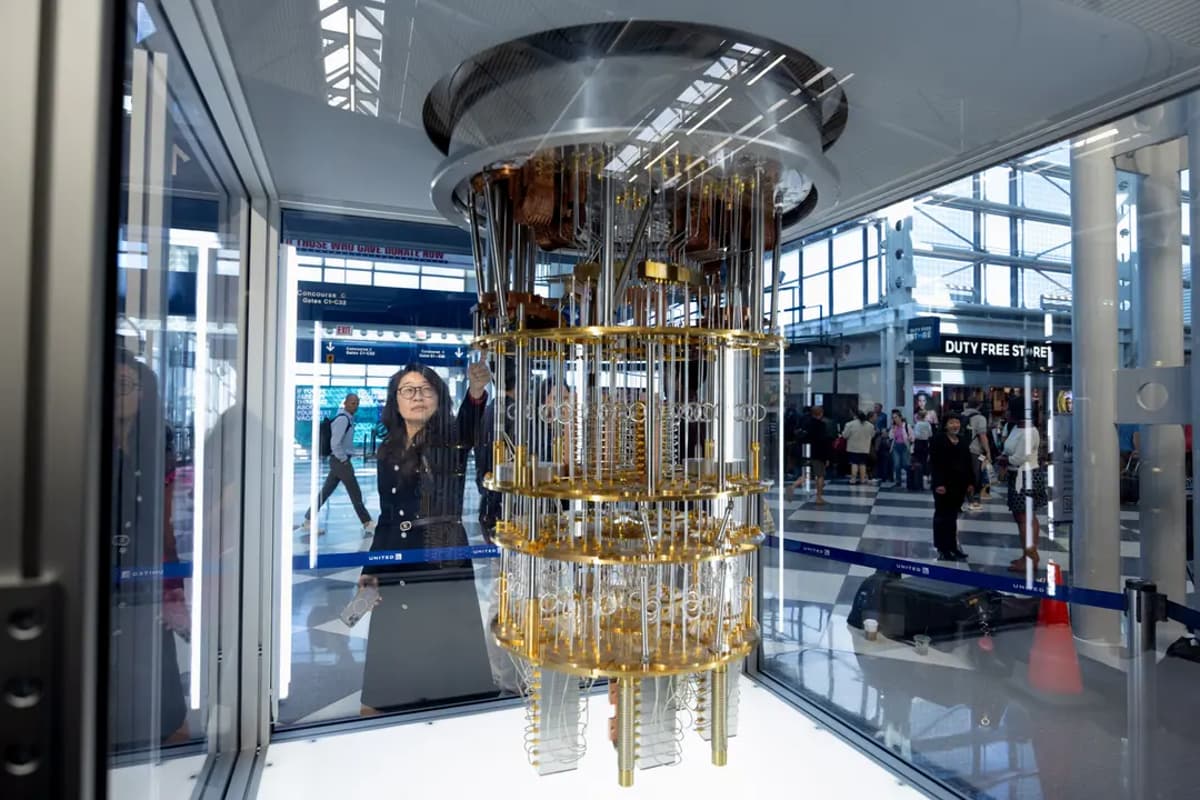
IBM Quantum System Two Arrives in Chicago This September

Key Takeaways
- •IBM's Quantum System Two arrives in Chicago September 2024
- •National Quantum Algorithm Center gives UIUC dual access to quantum and HPC
- •Integrated quantum‑HPC workflow solved Fe₄S₄ molecule ground state
- •Qiskit abstraction layers aim to democratize quantum programming
- •Hanhee Paik’s transmon qubit research underpins IBM’s quantum roadmap
Pulse Analysis
IBM’s September rollout of Quantum System Two marks a strategic shift from isolated quantum labs to city‑scale research ecosystems. By situating the machine in Chicago and pairing it with the University of Illinois’ Discovery Accelerator Institute, IBM creates a seamless bridge between its cloud‑based quantum processors and the NCSA Delta supercomputers. This hybrid architecture, branded as the National Quantum Algorithm Center, gives researchers the ability to toggle between qubits, GPUs and CPUs within a single workflow, dramatically shortening the time from algorithm conception to experimental validation.
The practical payoff of this integration is already evident. In a recent collaboration with Japan’s RIKEN institute, IBM leveraged the combined quantum‑HPC platform to compute the ground‑state energy of the iron‑sulfur cluster Fe₄S₄, a molecule critical to cellular energy production. Classical supercomputers alone could not tackle the exponential complexity of the problem, but the quantum‑centric workflow delivered results in hours rather than weeks. Such breakthroughs illustrate how quantum processors can act as accelerators for specific scientific challenges, complementing rather than replacing traditional high‑performance computing.
Beyond hardware, IBM is betting on software to broaden adoption. The open‑source Qiskit framework now includes higher‑level abstraction layers that hide low‑level quantum control details, allowing scientists and engineers without deep quantum expertise to prototype algorithms. Paik’s emphasis on algorithmic accessibility aligns with industry demand for quantum‑plus‑AI solutions that can be deployed across sectors ranging from drug discovery to financial modeling. As more institutions gain joint access to quantum and classical resources, the ecosystem is poised to generate a pipeline of commercially viable quantum applications, reinforcing IBM’s position as a leader in the emerging quantum computing market.
IBM Quantum System Two Arrives in Chicago This September
Comments
Want to join the conversation?