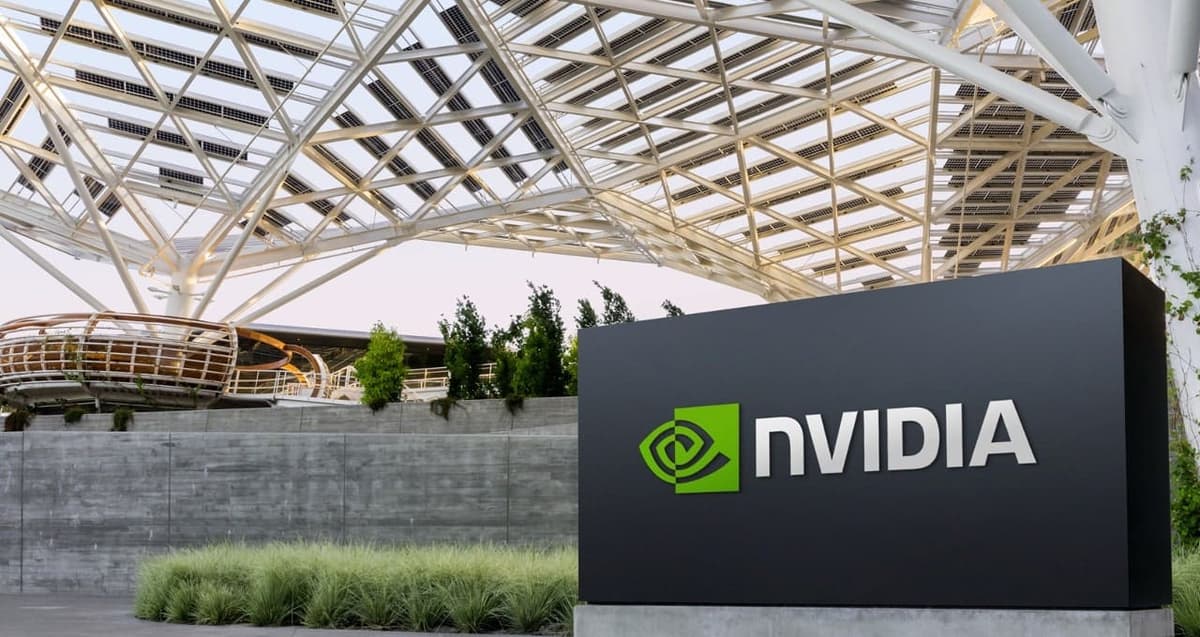
National Quantum Initiative Crucial for R&D Leadership
•January 29, 2026
0
Why It Matters
Reauthorizing the NQI secures coordinated federal investment in AI‑quantum integration, a decisive advantage for national security, economic competitiveness, and scientific breakthroughs.
Key Takeaways
- •NVIDIA urges Congress to reauthorize the National Quantum Initiative.
- •AI‑quantum convergence aims to double R&D productivity by 2034.
- •NVQLink and CUDA‑Q enable low‑latency quantum‑GPU integration.
- •Quantum digital twins will accelerate hardware design cycles.
- •Reauthorized NQI must fund AI infrastructure for error correction.
Pulse Analysis
The National Quantum Initiative, launched in 2018, has already spurred measurable gains in qubit coherence and system scaling across universities, national labs, and industry partners. Yet the next wave of quantum breakthroughs hinges on a tighter coupling with artificial intelligence and accelerated computing. By positioning AI as a core component of quantum error correction, calibration, and algorithm development, the United States can move beyond isolated demonstrations toward practical, large‑scale quantum machines.
NVIDIA’s recent announcements underscore the commercial push to operationalize this integration. Its Bridge interconnect and the open‑source CUDA‑Q programming model provide the low‑latency pathways needed for GPUs, CPUs, and quantum processing units to function as a unified supercomputing fabric. The company’s NVQLink technology further reduces communication bottlenecks, making it feasible to target scientifically useful quantum systems—hundreds of logical qubits capable of millions of operations—by the end of the decade. These hardware‑software advances are only viable with sustained, coordinated federal funding.
A reauthorized NQI would institutionalize support for system‑level deployment, funding quantum digital twins that let researchers simulate hardware before fabrication, and expanding AI infrastructure for large‑scale error correction. Such an integrated strategy not only safeguards U.S. leadership in emerging quantum technologies but also creates a pipeline of high‑impact applications in chemistry, materials science, and life sciences. Aligning policy, industry, and academia around this AI‑quantum nexus will translate scientific promise into economic and security dividends.
National Quantum Initiative Crucial for R&D Leadership
0
Comments
Want to join the conversation?
Loading comments...