Pasqal’s 1024 Atoms Show Less Than 0.5% Defects, 5000-Second Lifetimes

Key Takeaways
- •1024‑atom register created with <0.5% defect rate.
- •Qubit lifetimes exceed 5000 seconds (≈80 minutes).
- •Dual‑laser system generated >2000 traps for loading.
- •New 4 K cryogenic platform improved vacuum, extending coherence.
- •95% of arrays meet sub‑0.5% defect threshold.
Pulse Analysis
Neutral‑atom platforms have emerged as a compelling alternative to superconducting and trapped‑ion qubits because they combine long‑range interactions with natural scalability. Pasqal’s latest demonstration of a 1,024‑atom register pushes the envelope of that promise, delivering a defect rate under 0.5% while preserving high‑fidelity control. By more than doubling its previous 506‑atom record, the French startup proves that uniform optical traps can be extended to the thousand‑qubit regime without sacrificing performance. The result narrows the gap between laboratory prototypes and the large‑scale processors required for real‑world quantum advantage.
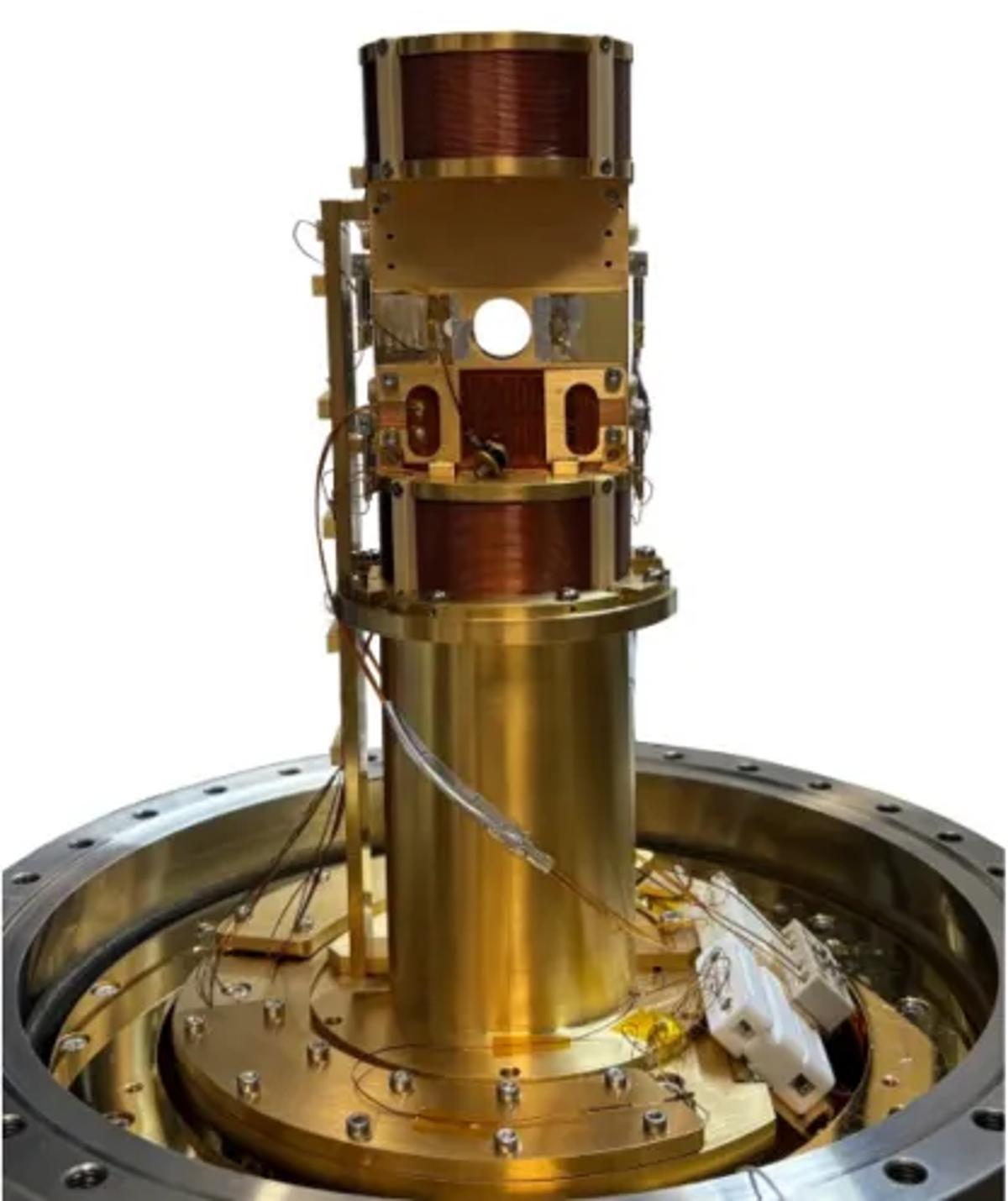
The technical leap rests on two engineering upgrades. First, Pasqal merged two high‑power lasers through a spatial‑light modulator, creating over 2,000 individual traps that can be populated and rearranged rapidly. Second, a revamped 4 K cryogenic enclosure with 4 K/30 K shielding and in‑vacuum optics dramatically reduces background gas collisions, extending atom lifetimes to roughly 5,000 seconds—about 80 minutes. Such long coherence windows lower the error budget for each quantum gate and provide the redundancy needed for surface‑code error correction, where thousands of physical qubits form a single logical unit.
From a market perspective, Pasqal’s milestone positions neutral‑atom technology as a serious contender for the next generation of quantum computers. Investors have poured over $200 million into the sector, and major cloud providers are already testing neutral‑atom chips for chemistry and materials simulations. With defect‑free yields approaching 10% and sub‑0.5% error rates across most runs, Pasqal is poised to scale beyond the 1,000‑qubit threshold, a prerequisite for fault‑tolerant architectures. Continued improvements in laser power, vacuum engineering, and automated rearrangement algorithms will likely accelerate the path to commercially viable quantum services.
Pasqal’s 1024 Atoms Show Less Than 0.5% Defects, 5000-Second Lifetimes
Comments
Want to join the conversation?