S Coherence Achieved in Surface-Scaffolded Molecular Qubit Via hBN Stabilisation
•January 29, 2026
0
Why It Matters
The breakthrough proves that molecular qubits can retain long coherence while being directly on a surface, unlocking practical, high‑density quantum hardware for sensing and computation.
Key Takeaways
- •Pentacene qubits on hBN reach 214 µs coherence.
- •Deuteration boosts Hahn‑echo coherence tenfold.
- •Encapsulation extends ambient stability to 58 hours.
- •Surface placement outperforms shallow NV centers.
- •Scalable fabrication enables nanoscale quantum sensing.
Pulse Analysis
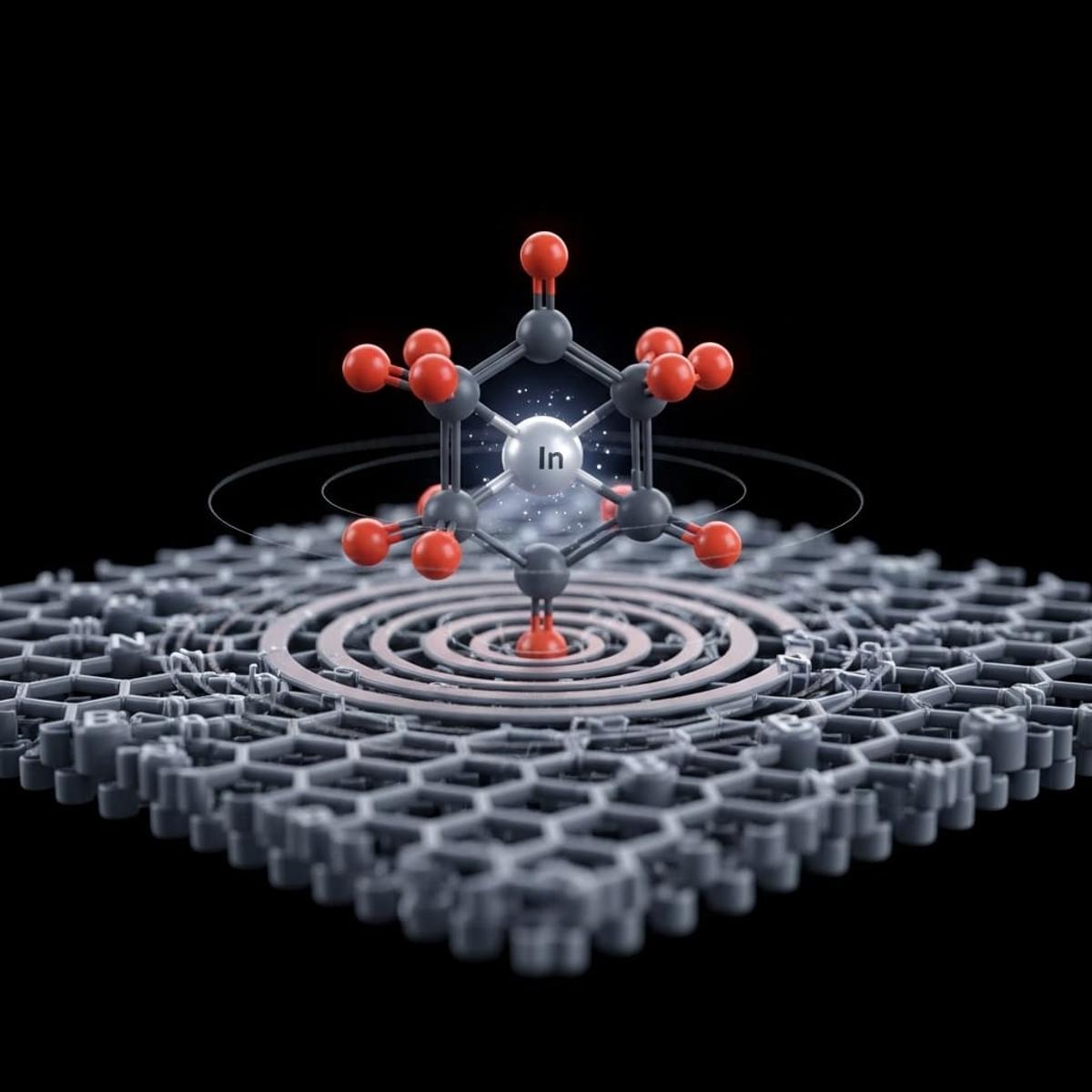
The emergence of surface‑scaffolded molecular qubits marks a paradigm shift in quantum hardware design. By leveraging the atomically flat, chemically inert nature of hexagonal boron nitride, researchers have anchored deuterated pentacene molecules within a few nanometers of the substrate. This configuration mitigates magnetic noise and phonon interactions that typically degrade coherence, allowing the qubit to maintain a 214 µs T₂ time—well beyond the performance of near‑surface NV centers, which struggle to exceed 100 µs at comparable depths. The result is a compact, optically addressable spin system that retains quantum fidelity without sacrificing integration potential.
Technical innovation underpins the record performance. Full deuteration of pentacene reduces hyperfine coupling, boosting Hahn‑echo coherence from roughly 2.5 µs to 22 µs. When combined with advanced dynamical decoupling sequences, the coherence extends to over 200 µs, while optical readout via ODMR remains robust. hBN encapsulation further shields the molecules, delivering a half‑life of 58 hours under ambient conditions—a stark improvement over unprotected organic spins. High‑resolution TEM and EDS confirm sub‑nanometer placement accuracy, ensuring reproducible fabrication across wafer‑scale processes.
The implications for industry are profound. Long‑lived, surface‑proximate qubits enable ultra‑sensitive magnetic and electric field detection at the nanoscale, directly benefiting quantum sensing applications in materials science, biology, and navigation. Their small footprint and compatibility with existing photonic platforms facilitate hybrid architectures that combine molecular spins with superconducting circuits or silicon photonics. Moreover, the scalable, bottom‑up assembly approach aligns with semiconductor manufacturing pipelines, accelerating the transition from laboratory prototypes to commercial quantum devices. Future research will likely explore diverse 2D hosts and molecular chemistries, expanding the qubit toolbox and driving broader adoption of quantum technologies.
S Coherence Achieved in Surface-Scaffolded Molecular Qubit Via hBN Stabilisation
0
Comments
Want to join the conversation?
Loading comments...