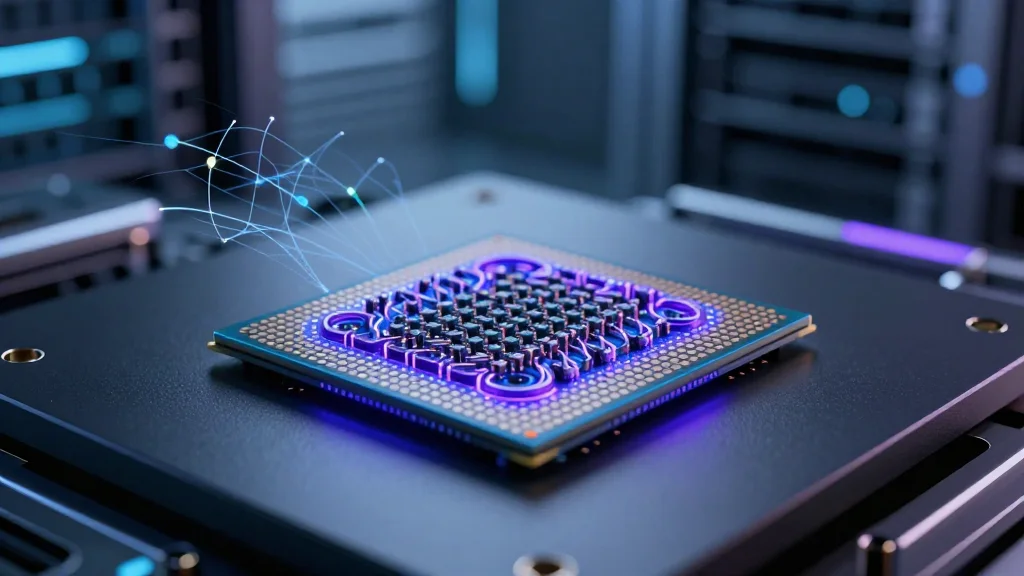
Xanadu and ORNL Bring PennyLane Quantum Software to Frontier Supercomputer
Key Takeaways
- •PennyLane now runs on Frontier’s exascale AMD CPUs/GPUs.
- •MPI integration cuts simulation runtimes across multiple nodes.
- •Researchers can test larger qubit counts than before.
- •OLCF workshop trained users on quantum‑classical hybrid programming.
- •Collaboration speeds benchmarking for future fault‑tolerant quantum hardware.
Pulse Analysis
The convergence of quantum computing and exascale high‑performance computing (HPC) marks a pivotal shift in scientific research. Frontier, the world’s fastest supercomputer, delivers over a quintillion calculations per second on AMD EPYC CPUs and Radeon Instinct GPUs, providing the raw horsepower needed to simulate quantum circuits that would be infeasible on conventional clusters. By porting Xanadu’s PennyLane library—renowned for its intuitive Python interface and hardware‑agnostic design—to this platform, researchers gain immediate access to a scalable environment that mirrors the behavior of near‑term quantum processors.
PennyLane’s Lightning simulator, now equipped with Message Passing Interface (MPI) capabilities, exploits Frontier’s multi‑node architecture to distribute the computational load of quantum‑state evolution. This parallelism reduces wall‑clock time dramatically, enabling the exploration of algorithms involving dozens of qubits and complex entanglement patterns. The OLCF‑run workshop further lowered the adoption barrier, offering hands‑on training that blended hybrid classical‑quantum programming with best practices for exascale resource management. Early adopters can benchmark error‑mitigation techniques, evaluate hardware constraints, and iterate on algorithmic designs at a pace previously reserved for theoretical work.
Beyond immediate research gains, the Xanadu‑ORNL partnership signals a broader industry trend: national labs and quantum startups are co‑creating infrastructure that bridges the gap between today’s noisy intermediate‑scale quantum (NISQ) devices and tomorrow’s fault‑tolerant machines. As quantum hardware matures, the ability to validate software stacks at scale will become a competitive differentiator for enterprises seeking quantum‑ready solutions. This collaboration not only accelerates scientific discovery but also positions the United States as a leader in building the software ecosystem essential for the next generation of quantum technologies.
Xanadu and ORNL Bring PennyLane Quantum Software to Frontier Supercomputer
Comments
Want to join the conversation?