3D-Printed Surfaces Help Atoms Play Ball to Improve Quantum Sensors
•January 22, 2026
0
Why It Matters
Enhanced vacuum control directly boosts the precision and portability of quantum sensors, accelerating their adoption in fields like medical imaging and navigation.
Key Takeaways
- •3D‑printed titanium textures triple vacuum pump rate
- •Hexagonal and conical patterns direct gas particle trajectories
- •Passive surface pumping could shrink quantum sensor packages
- •Simulations predict up to ten‑fold pumping improvement
- •Low‑cost surface engineering boosts quantum measurement fidelity
Pulse Analysis
Quantum sensors demand ultra‑high vacuum because even a single stray molecule can decohere the delicate quantum states used for measuring magnetic fields, gravity or temperature. Traditional vacuum systems rely on large, power‑hungry pumps that dominate the size and weight of the overall instrument, limiting deployment to laboratory settings. By rethinking the vacuum interface itself, researchers can shift part of the pumping burden to engineered surfaces that physically redirect gas molecules, creating a hybrid passive‑active solution that preserves the pristine environment needed for quantum coherence.
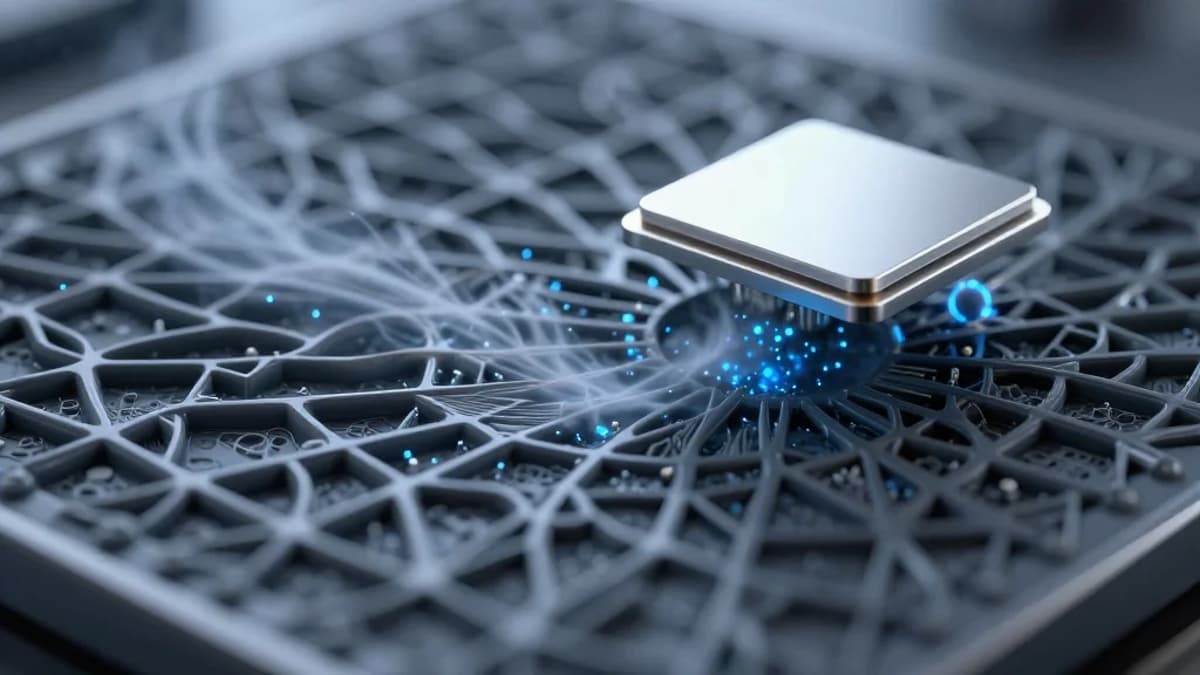
The Nottingham team leveraged additive manufacturing to sculpt titanium alloy into hexagonal pockets and conical protrusions, patterns that increase the probability of gas‑surface collisions and bias the scattering direction away from the sensor chamber. Laboratory tests showed a 3.8× boost in removal rate per unit area compared with smooth surfaces, while computational models forecast up to a ten‑fold improvement for optimized geometries. This performance gain stems from the increased surface area and the geometric steering effect, which together turn the surface into a miniature, directional pump without moving parts. The approach is compatible with existing vacuum ports, allowing retro‑fit upgrades for current quantum hardware.
The broader impact lies in enabling truly portable quantum technologies. Reducing or eliminating bulky pumps cuts power consumption, weight, and cost, opening pathways for field‑ready magnetometers in medical diagnostics, compact gravimeters for underground surveying, and navigation systems that operate without GPS. As quantum devices move from labs to real‑world applications, surface‑engineered vacuum solutions could become a standard design element, spurring further research into material choices, pattern optimization, and integration with next‑generation quantum chips. Confidence score
3D-printed surfaces help atoms play ball to improve quantum sensors
0
Comments
Want to join the conversation?
Loading comments...