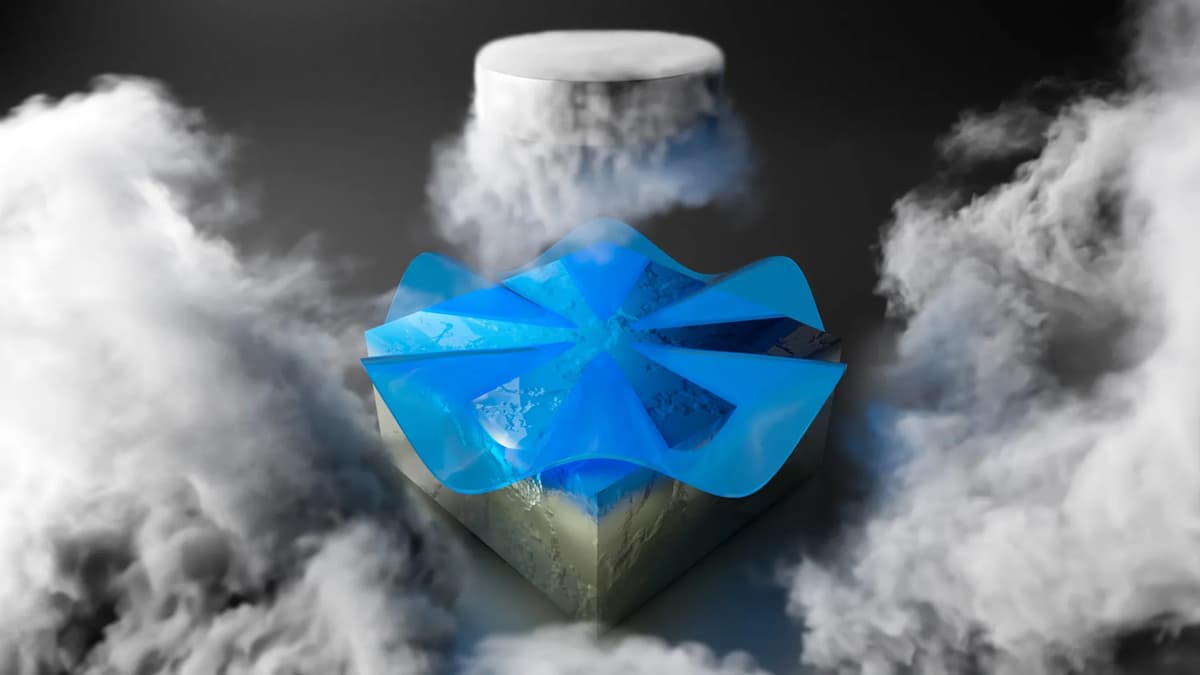
A New Superconductor Breaks Rules Physicists Thought Were Fixed
•December 26, 2025
0
Why It Matters
PtBi₂ provides the first robust platform that combines intrinsic topological superconductivity with controllable Majorana modes, accelerating the development of error‑resilient quantum computers.
Key Takeaways
- •PtBi₂ surfaces become superconducting while bulk stays metallic
- •Electron pairing follows six‑fold symmetry, unseen before
- •Edges host Majorana modes without external engineering
- •Thickness tuning can isolate Majoranas for qubit designs
- •First convincing intrinsic topological superconductor evidence
Pulse Analysis
The discovery of topological superconductivity in PtBi₂ marks a watershed moment for condensed‑matter physics. Unlike conventional superconductors, PtBi₂ confines Cooper pairing to its outermost atomic layers, leaving the interior a normal metal. This surface‑only superconductivity is protected by the crystal’s topological invariants, ensuring robustness against disorder and making the material a rare example of an intrinsic topological superconductor with clear experimental signatures.
Equally striking is the six‑fold symmetric pairing pattern observed on the PtBi₂ surface. Traditional unconventional superconductors, such as cuprates, display four‑fold or other lower‑symmetry gaps, while PtBi₂’s electron pairs avoid six equally spaced directions, reflecting the underlying three‑fold rotational lattice. This novel symmetry challenges existing pairing theories and suggests new mechanisms tied to the material’s spin‑orbit coupling and crystal geometry, prompting theorists to revisit models of electron correlation in topological media.
From a technology perspective, the automatic emergence of Majorana particles along crystal edges transforms PtBi₂ into a practical testbed for topological quantum computing. By simply engineering step edges or adjusting film thickness, researchers can generate and manipulate Majorana modes without complex heterostructures. Magnetic‑field tuning further enables relocation of these modes to crystal corners, paving the way for scalable qubit architectures. As the quantum industry seeks hardware that inherently suppresses decoherence, PtBi₂’s unique combination of surface superconductivity and edge‑bound Majoranas positions it as a promising cornerstone for next‑generation fault‑tolerant processors.
A new superconductor breaks rules physicists thought were fixed
0
Comments
Want to join the conversation?
Loading comments...