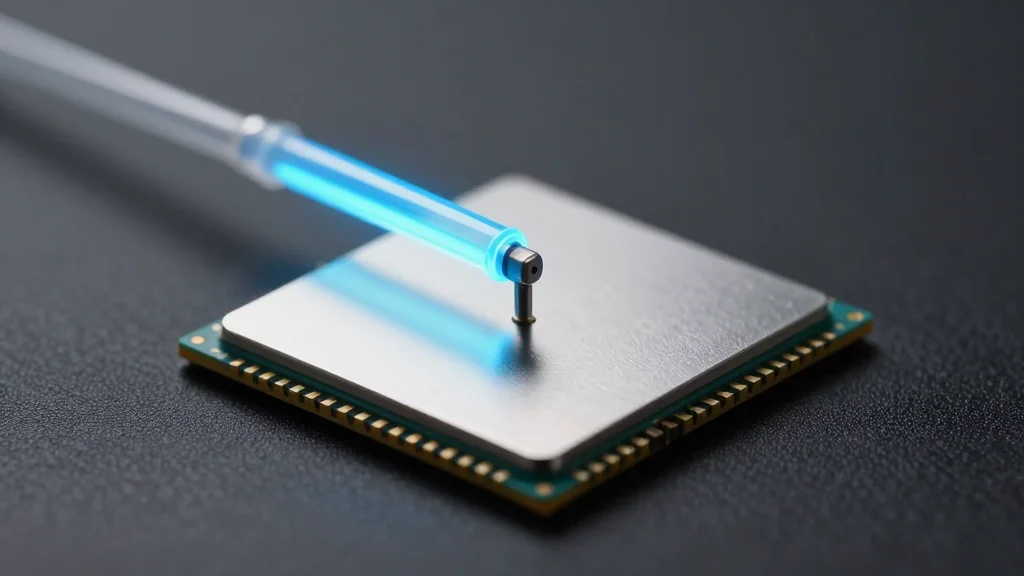
Argonne Lab Shows Electron‑on‑Neon Qubits Cut Noise Up to 10,000‑Fold

Why It Matters
The electron‑on‑neon qubit’s dramatically reduced noise floor addresses one of the most stubborn obstacles in quantum hardware: material‑induced decoherence. By offering a pathway to coherence times comparable to the best superconducting devices without the same fabrication complexity, the platform could lower entry barriers for new entrants and diversify the supply chain for quantum processors. Moreover, the DOE’s involvement signals that federal research agendas are broadening beyond the dominant superconducting and trapped‑ion approaches, which could reshape the competitive landscape for both academic and commercial players. If the platform scales, it may enable hybrid architectures that combine the low‑noise advantages of electron‑on‑neon qubits with the mature control infrastructure of superconducting resonators. Such hybrids could reduce the overhead of quantum error correction, making large‑scale quantum computers more economically viable and accelerating applications in cryptography, materials discovery, and complex optimization.
Key Takeaways
- •Argonne and Notre Dame measured electron‑on‑neon qubit noise 10‑10,000× lower than semiconductor qubits.
- •The study, published in Nature Electronics, confirms coherence potential beyond the 0.1 ms benchmark.
- •DOE funding supports the research, with collaborators from Chicago, Harvard, and Northeastern.
- •Manufacturing relies on self‑assembling neon films, simplifying the fabrication process.
- •Next steps include neon‑surface uniformity improvements and multi‑qubit gate demonstrations in late 2026.
Pulse Analysis
The electron‑on‑neon breakthrough arrives at a time when the quantum hardware market is consolidating around a few dominant platforms. Superconducting qubits, championed by IBM, Google, and Rigetti, dominate the commercial pipeline, while trapped‑ion systems, led by IonQ and Honeywell, claim superior gate fidelity. Both camps benefit from massive private investment and well‑established supply chains. The Argonne result injects a third, fundamentally different modality that could force incumbents to reassess their long‑term roadmaps.
Historically, novel qubit concepts have struggled to transition from laboratory curiosity to scalable technology because of fabrication bottlenecks and integration challenges. The electron‑on‑neon approach sidesteps many of these hurdles by leveraging a self‑assembled neon surface and free electrons, which could dramatically reduce capital expenditures for new fabs. If the team’s upcoming multi‑qubit experiments confirm low error rates, venture capitalists may begin to view the platform as a viable investment, diversifying the funding ecosystem that currently skews heavily toward superconductors.
Strategically, the DOE’s backing signals a policy shift toward hedging bets across multiple qubit technologies. This diversification reduces national risk and may accelerate the emergence of hybrid quantum processors that combine the best attributes of each platform. In the next 12‑18 months, the field will watch closely for performance metrics from Argonne’s multi‑qubit trials; a successful demonstration could trigger a wave of follow‑on grants and corporate partnerships, reshaping the competitive dynamics of the quantum computing industry.
Argonne Lab Shows Electron‑on‑Neon Qubits Cut Noise Up to 10,000‑Fold
Comments
Want to join the conversation?
Loading comments...