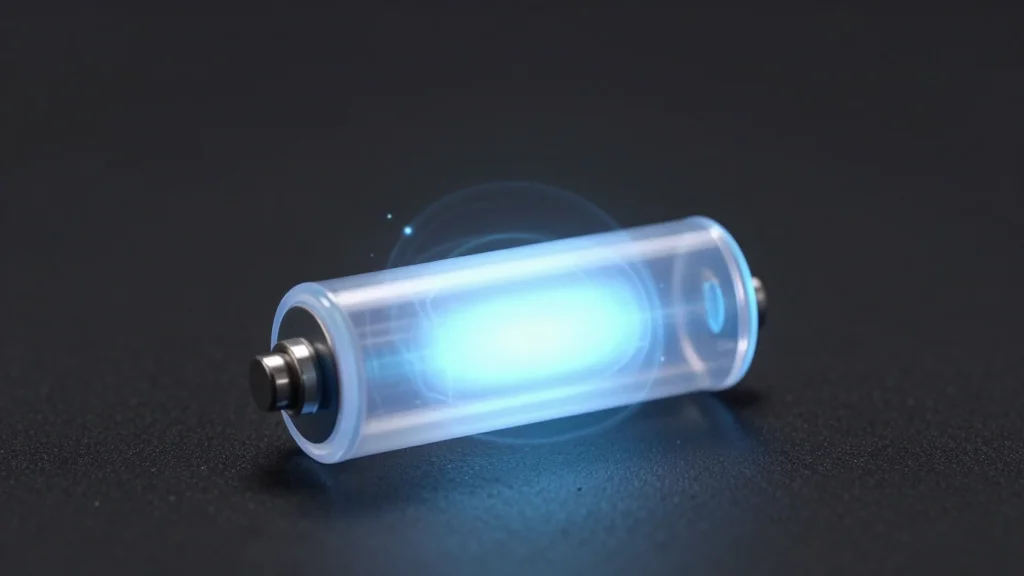
Australian Team Demonstrates Quantum Battery That Charges Instantly and Scales with Size

Companies Mentioned

CSIRO
Why It Matters
Quantum batteries promise a paradigm shift in how energy is stored and delivered to emerging quantum technologies. By delivering charge in femtosecond bursts and scaling faster with size, they could eliminate one of the bottlenecks in quantum computing—slow, inefficient power provisioning. Faster charging also reduces downtime for quantum sensors and communication devices, enabling more responsive and resilient networks. Moreover, the room‑temperature operation reduces the need for complex cooling infrastructure, lowering system costs and expanding deployment scenarios beyond specialized labs. Beyond quantum hardware, the underlying physics could inspire new classes of ultra‑fast conventional batteries, influencing sectors from consumer electronics to electric aviation. If the scalability claim holds, manufacturers could design larger energy packs that charge more quickly, redefining performance benchmarks across the energy storage industry.
Key Takeaways
- •CSIRO, University of Melbourne and RMIT built the first functional quantum battery prototype.
- •Prototype charges in a single femtosecond‑scale burst, effectively instant.
- •Charging speed increases as the battery size grows, a super‑extensive effect.
- •Experiments conducted at the University of Melbourne’s Ultrafast Laser Laboratory confirmed performance.
- •Next research focus: extending energy storage time and scaling to practical devices.
Pulse Analysis
The quantum battery breakthrough arrives at a moment when the quantum computing ecosystem is grappling with power delivery constraints. Current quantum processors are typically powered by conventional batteries or external power supplies that cannot match the rapid energy demands of high‑fidelity qubit operations. By leveraging coherent quantum states for energy storage, the new prototype sidesteps the diffusion limits of chemical batteries, offering a theoretical route to sub‑nanosecond recharge cycles. This could translate into dramatically higher duty cycles for quantum computers, reducing the latency between computational runs.
Historically, energy storage breakthroughs—such as the advent of lithium‑ion—have reshaped entire industries. However, quantum batteries differ fundamentally: they store energy in excitations of quantum systems rather than chemical potentials. This distinction means that traditional metrics like gravimetric energy density may be less relevant than metrics such as charging latency and coherence time. The research team’s focus on room‑temperature operation is especially noteworthy, as it avoids the cryogenic overhead that has limited many quantum technologies.
Commercialization will hinge on solving two key challenges: extending discharge duration and ensuring material stability over many charge‑discharge cycles. Investors and corporate partners will likely monitor progress closely, as a viable quantum battery could become a strategic asset for firms building quantum processors, satellite‑based quantum communication, and ultra‑fast sensors. In the short term, we can expect a wave of follow‑on research exploring alternative quantum materials—such as nitrogen‑vacancy centers in diamond or superconducting circuits—to optimize both storage capacity and longevity. The next 12‑18 months will be critical in determining whether this laboratory marvel can transition into a marketable technology that reshapes the broader energy storage landscape.
Australian Team Demonstrates Quantum Battery That Charges Instantly and Scales with Size
Comments
Want to join the conversation?
Loading comments...