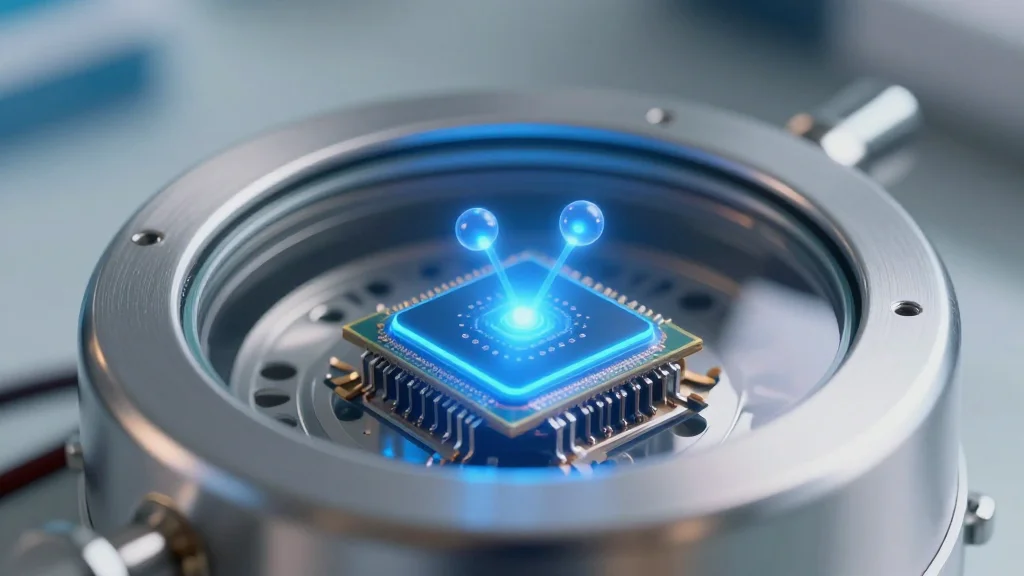
Bennett and Brassard Win $1 Million Turing Award for Quantum Cryptography Breakthrough

Why It Matters
The Turing Award’s focus on quantum cryptography signals a paradigm shift: security will increasingly rely on the immutable laws of physics rather than computational difficulty. As nation‑states and private actors race to build fault‑tolerant quantum computers, the urgency to replace RSA‑based systems with quantum‑key‑distribution or post‑quantum algorithms intensifies. Failure to transition could expose billions of encrypted transactions to retroactive decryption, undermining financial markets, critical infrastructure and personal privacy. Beyond cybersecurity, the recognition validates quantum information science as a foundational discipline, encouraging funding agencies and corporations to double down on research, hardware development, and standards work. The award’s $1 million prize, funded by Google, also illustrates how big‑tech firms view quantum readiness as a strategic asset, likely accelerating commercial QKD deployments and satellite‑based quantum networks in the next decade.
Key Takeaways
- •Charles H. Bennett (IBM Research) and Gilles Brassard (Université de Montréal) received the 2025 ACM A.M. Turing Award.
- •The award includes a US$1 million prize funded by Google.
- •Their 1984 BB84 protocol introduced quantum key distribution, secure against any computational attack.
- •Experts warn of "Q‑day" in the mid‑2030s when quantum computers could break RSA and ECC encryption.
- •Brassard will decline to travel to the San Francisco ceremony, citing political protest.
Pulse Analysis
The Turing Award’s endorsement of quantum cryptography marks the first time a quantum‑focused contribution has been celebrated at the highest level of computer science. Historically, the ACM prize has honored breakthroughs that later became industry standards—think of the Internet’s TCP/IP stack or the MapReduce programming model. By elevating BB84, the ACM is effectively declaring quantum‑secure communication a future‑critical infrastructure, much as the early internet protocols were once deemed academic curiosities.
From a market perspective, the award is likely to catalyze a surge in venture capital for QKD startups and accelerate corporate pilots. Companies such as ID Quantique, Toshiba, and China’s QuantumCTek have already demonstrated commercial QKD links, but adoption remains limited by cost and integration challenges. The public recognition reduces perceived risk for investors and may prompt telecom operators to embed quantum channels alongside fiber‑optic backbones, creating a hybrid security fabric.
Strategically, the award also sharpens the geopolitical competition in quantum technologies. The United States, Europe and China have each pledged billions to quantum research, yet Canada’s quantum ecosystem now boasts two Turing laureates, reinforcing its position as a niche hub for foundational quantum science. As governments draft post‑quantum cryptography standards, the laureates’ advocacy for physics‑based security could influence policy, pushing regulators to adopt QKD as a complement rather than a replacement for algorithmic solutions. In the next five years, the tension will shift from "if" quantum computers will break current encryption to "how quickly" the global digital economy can transition to quantum‑resilient safeguards.
Overall, the award does more than honor past achievements; it sets a benchmark for future research funding, industry roadmaps, and policy frameworks. The quantum community now faces a clear mandate: translate the theoretical elegance of BB84 into scalable, cost‑effective services before the first fault‑tolerant quantum computer arrives.
Bennett and Brassard Win $1 Million Turing Award for Quantum Cryptography Breakthrough
Comments
Want to join the conversation?
Loading comments...