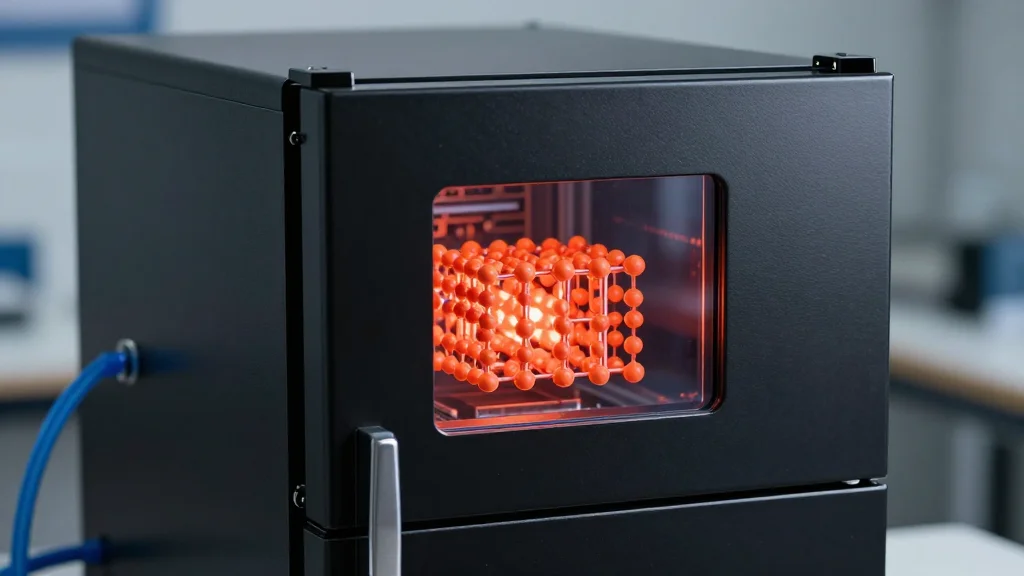
China Launches Hanyuan‑2, First Dual‑Core Neutral‑Atom Quantum Processor

Companies Mentioned
Why It Matters
Hanyuan‑2 demonstrates that neutral‑atom quantum computers can move beyond single‑array prototypes toward system‑level designs that address error correction—a critical hurdle for practical quantum advantage. By delivering a low‑power, cabinet‑sized machine, China lowers the barrier to entry for organizations that lack the massive cryogenic infrastructure of superconducting platforms, potentially expanding the user base and accelerating application development. The dual‑core concept also introduces a new architectural paradigm that could influence future quantum processor designs worldwide. If the parallel error‑correction model proves scalable, it may reduce the overhead required for fault‑tolerant operation, shortening the timeline for commercial quantum services and reshaping competitive dynamics among the United States, Europe, and Asia.
Key Takeaways
- •Hanyuan‑2 integrates two 100‑qubit neutral‑atom arrays (rubidium‑85 and rubidium‑87) into a single cabinet‑sized system.
- •The dual‑core design enables parallel computation and dedicated real‑time error correction.
- •Power consumption stays under 7 kW, eliminating the need for dilution refrigerators.
- •CAS Cold Atom Technology, affiliated with the Chinese Academy of Sciences, leads the development.
- •The system positions China as a contender in scalable, low‑cost quantum hardware.
Pulse Analysis
The launch of Hanyuan‑2 marks a strategic inflection point for neutral‑atom quantum computing. Historically, the field has been dominated by superconducting qubits, whose performance gains have been offset by the logistical burden of millikelvin cooling. By delivering a processor that operates with modest power and a compact laser‑cooling system, China is effectively redefining the cost curve for quantum hardware. This could democratize access, allowing universities and mid‑size enterprises to experiment with quantum algorithms without massive capital outlays.
From a competitive standpoint, the dual‑core architecture introduces a fresh axis of differentiation. While most vendors focus on increasing raw qubit counts, CAS Cold Atom Technology is tackling the software‑hardware interface by embedding error correction directly into the hardware layout. If the approach scales, it may reduce the qubit overhead traditionally required for fault tolerance, giving neutral‑atom platforms a performance edge that could shift investment toward this technology. However, the real test will be in benchmark results and ecosystem support. Without robust compilers, libraries, and cloud integration, the hardware advantage may remain theoretical.
Looking forward, the next six months will be critical. Successful demonstration of quantum volume metrics comparable to leading superconducting systems would validate the dual‑core concept and likely trigger a wave of funding from both state and private investors. Conversely, if scaling challenges emerge—particularly in synchronizing the two cores or extending the architecture to larger arrays—China’s lead could be blunted. Either outcome will shape the global quantum race, influencing where venture capital flows and which hardware platforms become the foundation for future quantum‑enabled industries.
China Launches Hanyuan‑2, First Dual‑Core Neutral‑Atom Quantum Processor
Comments
Want to join the conversation?
Loading comments...