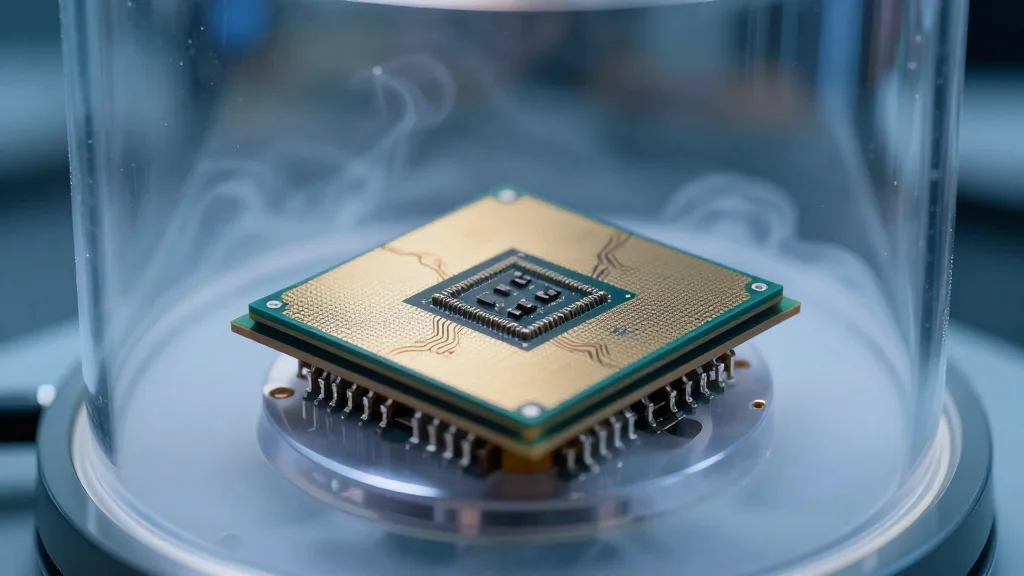
China Open-Sources “Origin Pilot”: The First Domestically Developed Quantum OS
Why It Matters
Open‑sourcing a full quantum OS gives China a sovereign software stack and positions Origin Pilot as a potential global standard, reshaping competition in the emerging quantum computing market.
Key Takeaways
- •First open‑source quantum OS from China
- •Supports superconducting, trapped‑ion, and neutral‑atom hardware
- •Enables local deployment versus cloud‑only Western tools
- •Already runs 339k jobs on 72‑qubit Wukong
- •Aims to set global standard and ensure tech sovereignty
Pulse Analysis
Quantum computing has long been dominated by a handful of Western software stacks that are primarily offered as cloud services. IBM’s Qiskit, Google’s Cirq, and Microsoft’s Q# give developers access to remote processors but require reliance on foreign infrastructure. China’s decision to release Origin Pilot as an open‑source operating system flips this model, allowing users to install the full stack on locally owned hardware. By making the code publicly downloadable, the Hefei‑based Origin Quantum Computing Technology Co. invites researchers worldwide to experiment without the constraints of cross‑border licensing or export controls.
Origin Pilot is marketed as an integrated quantum‑classical‑intelligent platform that bridges the gap between fragile qubits and conventional processors. Its multi‑hardware compatibility spans superconducting circuits, trapped‑ion traps, and neutral‑atom arrays, giving developers a single API regardless of the underlying technology. Automatic qubit calibration and parallel task execution promise higher resource efficiency than manual setups, while the unified driver system simplifies code migration across chips. The OS also embeds the QPanda framework, enabling autonomous job scheduling and hybrid compilation, which lowers the barrier for both academic labs and commercial teams seeking to scale quantum workloads.
The launch aligns with China’s 15th Five‑Year Plan, which earmarks quantum technology as a strategic pillar for economic growth and national security. By offering both a free Community Edition and a feature‑rich Enterprise Edition with post‑quantum cryptography tools, Origin Quantum aims to cultivate a domestic developer ecosystem while courting international talent. The reported 339,000 jobs executed on the 72‑qubit Wukong processor across more than 120 countries demonstrates early market traction and hints at a potential shift toward a de facto global standard. If adoption accelerates, the move could reshape supply chains, influence talent flows, and intensify competition in the emerging quantum software market.
China Open-Sources “Origin Pilot”: The First Domestically Developed Quantum OS
Comments
Want to join the conversation?
Loading comments...