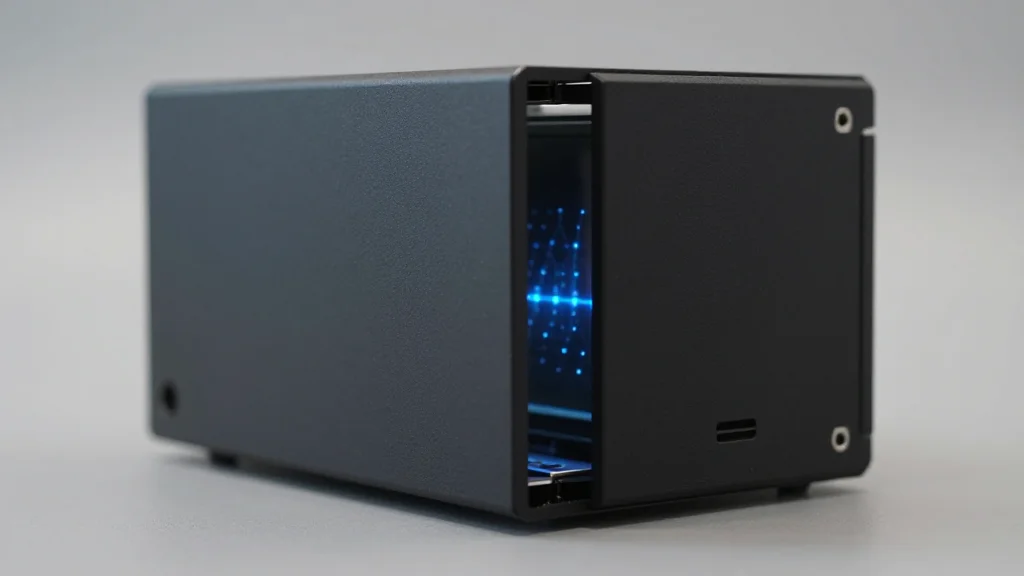
China's CAS Cold Atom Unveils Hanyuan-2, First Dual‑Core Neutral‑Atom Quantum Computer

Companies Mentioned
Why It Matters
Hanyuan-2 challenges the prevailing belief that quantum computers must be housed in massive cryogenic facilities, potentially democratizing access to quantum processing power. By lowering both capital and operational costs, the technology could accelerate research in drug discovery, materials science, and complex optimization problems that are currently out of reach for most organizations. Moreover, the dual‑core error‑correction scheme may address one of the field’s most stubborn technical obstacles, bringing practical, fault‑tolerant quantum computing closer to reality. If the neutral‑atom approach proves scalable, it could reshape the competitive dynamics among quantum‑hardware vendors. Companies that have invested heavily in superconducting chips may need to pivot or diversify, while new entrants could leverage the lower barrier to entry to capture niche markets. The development also raises strategic considerations for governments and defense agencies that view quantum supremacy as a national security priority, prompting a reassessment of funding allocations and technology roadmaps.
Key Takeaways
- •CAS Cold Atom Technology unveiled Hanyuan-2, a 200‑qubit dual‑core neutral‑atom quantum computer.
- •The system operates at room temperature, consumes <7 kW and fits in a standard closet.
- •Traditional superconducting quantum computers require cryogenic cooling costing tens of millions of euros and 10‑25 kW power.
- •Dual‑core architecture enables real‑time error correction, akin to multi‑core CPUs in smartphones.
- •Potential applications span drug discovery, energy‑grid optimization, logistics, and quantum‑secure communications.
Pulse Analysis
The Hanyuan-2 marks a strategic inflection point for the quantum‑computing industry. Historically, the field has been dominated by superconducting and trapped‑ion platforms, both of which demand elaborate cryogenic infrastructure. By demonstrating a functional, room‑temperature processor, CAS Cold Atom forces a re‑evaluation of the cost‑benefit calculus that has kept quantum hardware confined to a few well‑funded labs. The immediate impact may be modest—performance metrics have not yet been disclosed—but the reduction in overhead could catalyze a wave of new entrants, especially in regions where funding for large‑scale cryogenic facilities is scarce.
From a market perspective, the dual‑core error‑correction model could address the fidelity gap that has limited many quantum algorithms to proof‑of‑concept status. If the approach scales beyond 200 qubits without a proportional increase in error rates, it could accelerate the timeline for commercially viable quantum advantage. Established players like IBM, Google, and Rigetti may need to accelerate their own efforts in neutral‑atom or photonic technologies, or risk ceding a segment of the emerging quantum‑hardware market.
Looking ahead, the key questions revolve around scalability, software ecosystem support, and integration with existing quantum‑cloud services. Investors will watch for follow‑on funding rounds and partnerships with cloud providers that could turn Hanyuan‑2 from a laboratory curiosity into a rentable resource. In the broader geopolitical arena, China’s progress underscores the nation’s ambition to lead in quantum technologies, potentially reshaping global standards and export controls. The next 12‑18 months will reveal whether the Hanyuan‑2’s architectural advantages translate into a competitive edge that reshapes the quantum‑computing landscape.
China's CAS Cold Atom Unveils Hanyuan-2, First Dual‑Core Neutral‑Atom Quantum Computer
Comments
Want to join the conversation?
Loading comments...