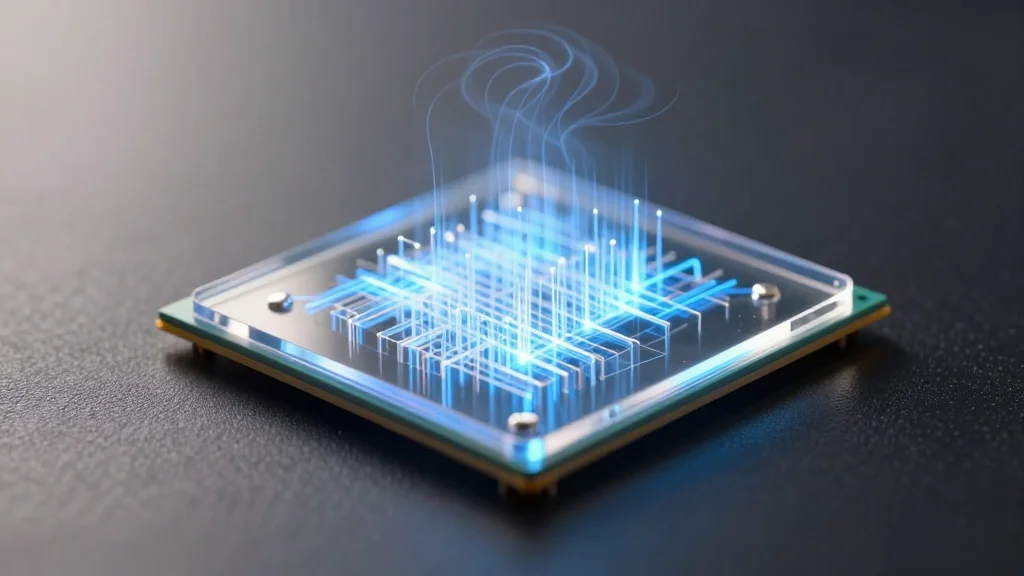
China’s Jiuzhang 4.0 Beats Supercomputers, Solving Task 10⁵⁴× Faster

Companies Mentioned
Why It Matters
Jiuzhang 4.0’s breakthrough demonstrates that photonic quantum processors can overcome the photon‑loss barrier that has limited their scalability for years. By achieving a 92 percent source efficiency and a 51 percent overall system efficiency, the USTC team shows that large‑scale, low‑error photonic circuits are feasible, potentially lowering the cost and complexity of quantum hardware. The record also reshapes the geopolitical competition for quantum supremacy. While the United States has focused on superconducting qubits, China’s success with light‑based qubits offers an alternative path that could diversify the global quantum ecosystem. The ability to solve specialized sampling problems orders of magnitude faster than classical supercomputers may accelerate applications in chemistry, materials science, and cryptography, giving China a strategic advantage in both civilian and defense research.
Key Takeaways
- •Jiuzhang 4.0 solved a Gaussian boson sampling task in 25 µs, 10^54 times faster than the world’s top supercomputer.
- •The processor manipulated and detected 3,050 photons, a ten‑fold increase over Jiuzhang 3.0.
- •Source efficiency reached 92 % and overall system efficiency 51 %, addressing photon‑loss challenges.
- •The architecture integrates 1,024 squeezed‑state inputs across an 8,176‑mode interferometric network.
- •Researchers claim no classical algorithm can match the accuracy of the experiment, reviving the quantum‑supremacy debate.
Pulse Analysis
The Jiuzhang 4.0 announcement marks a watershed for photonic quantum computing, a sub‑field that has long been viewed as a niche alternative to superconducting qubits. By scaling photon count to the thousands and achieving unprecedented efficiencies, USTC has effectively turned a laboratory curiosity into a contender for large‑scale quantum advantage. Historically, photonic systems suffered from exponential loss as circuit depth grew; the hybrid‑coded interferometer and high‑efficiency OPO source directly address that limitation, suggesting a viable engineering roadmap toward fault‑tolerant optical processors.
From a market perspective, the record could shift investment patterns. Venture capital and government funding that have traditionally funneled into cryogenic platforms may now diversify into photonics, especially as the technology promises room‑temperature operation and potentially lower capital expenditures. Companies such as Xanadu and PsiQuantum, already pursuing photonic architectures in the West, will likely accelerate their development cycles to keep pace with China’s rapid progress.
Strategically, the achievement intensifies the quantum technology race between Beijing and Washington. While the U.S. maintains a lead in general‑purpose quantum processors, China’s dominance in a specialized, ultra‑fast sampling task could translate into early advantages in fields that rely on boson sampling, such as molecular simulation and cryptographic analysis. The next few years will test whether Jiuzhang 4.0 can transition from a benchmark device to a platform capable of running practical algorithms, a step that will determine if photonic quantum computing can move from novelty to commercial relevance.
China’s Jiuzhang 4.0 Beats Supercomputers, Solving Task 10⁵⁴× Faster
Comments
Want to join the conversation?
Loading comments...