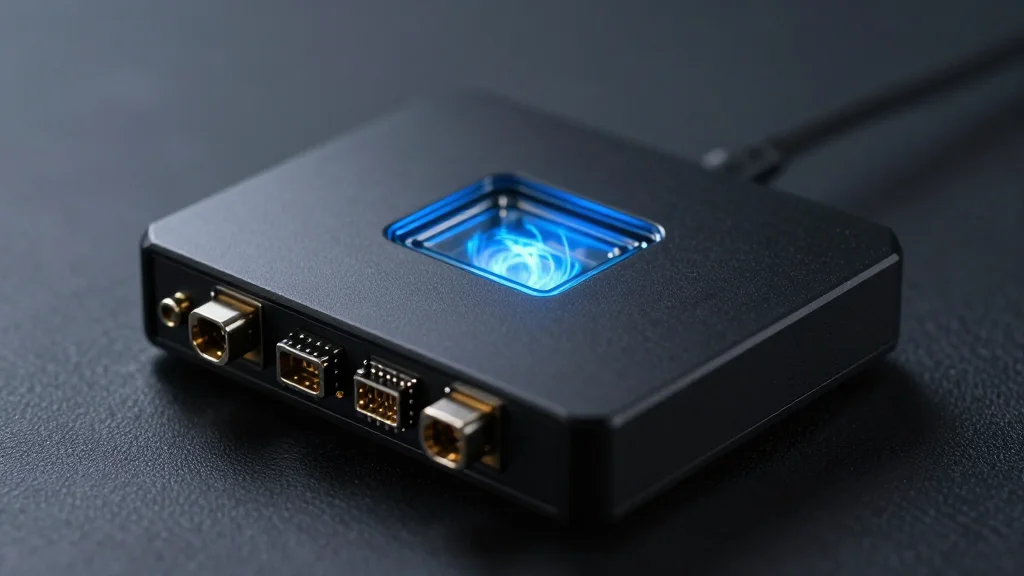
Cisco Debuts Universal Quantum Switch Prototype to Bridge Heterogeneous Qubits

Companies Mentioned
Why It Matters
The ability to route quantum information between disparate processors addresses a critical bottleneck in building scalable quantum computers. By abstracting away the specifics of encoding, Cisco's switch could enable modular quantum architectures where specialised processors—optimised for error correction, simulation or optimization—work together seamlessly. This interoperability could accelerate research collaborations, reduce duplication of effort, and open new business models for quantum service providers. Beyond the lab, a room‑temperature, fibre‑based quantum switch aligns with existing telecom infrastructure, making it easier for telecom operators to experiment with quantum‑enhanced services such as secure key distribution or distributed sensing. If the technology proves reliable at scale, it could become a foundational component of a future quantum internet, reshaping how data security, computation and sensing are delivered worldwide.
Key Takeaways
- •Cisco's universal quantum switch prototype routes quantum signals in as little as 1 ns
- •Power consumption is below 1 mW, enabling low‑energy operation
- •Experimental validation shows <4% fidelity loss for polarization encoding
- •Design works at room temperature using standard telecom fibre
- •Collaborations include IBM, Qunnect and Atom Computing
Pulse Analysis
Cisco's entry into quantum networking marks the first time a major networking vendor has publicly demonstrated a hardware layer capable of translating between multiple quantum encoding schemes. Historically, quantum networking efforts have been fragmented, with academic groups focusing on narrow‑band solutions tied to a single qubit technology. Cisco's approach leverages its expertise in optical switching and telecom standards, suggesting a shift from bespoke, cryogenic‑only solutions toward more pragmatic, industry‑compatible designs.
The prototype's sub‑nanosecond switching speed and sub‑millivatt power draw are noteworthy because they address two perennial challenges: maintaining coherence while achieving practical throughput, and integrating quantum hardware into existing data‑center environments. If Cisco can extend validation beyond polarization to time‑bin and frequency‑bin encodings, the switch could become the "TCP/IP" of quantum communications, providing a common lingua franca for otherwise incompatible devices. This would lower the barrier for startups and research labs to assemble heterogeneous quantum clusters without committing to a single vendor's ecosystem.
However, the path from prototype to production is fraught with technical and market risks. Scaling the conversion engine to handle higher photon rates, ensuring long‑term stability under real‑world traffic, and securing a robust supply chain for quantum‑grade photonic components are all open questions. Moreover, the commercial viability will depend on whether cloud quantum providers and telecom operators see enough demand to justify integrating such switches into their infrastructure. In the short term, Cisco is likely to target university labs and government research facilities, using early deployments to refine the technology and build a standards narrative that could influence future quantum networking protocols.
Cisco Debuts Universal Quantum Switch Prototype to Bridge Heterogeneous Qubits
Comments
Want to join the conversation?
Loading comments...