Cisco Launches Universal Quantum Switch, Paving Way for Scalable Quantum Fabric

Companies Mentioned
Why It Matters
A reliable quantum networking layer is the missing piece that will enable the scaling of quantum computing from isolated labs to enterprise‑grade workloads. By leveraging existing telecom infrastructure, Cisco reduces the capital expense and technical risk associated with building dedicated quantum links, accelerating the timeline for practical quantum advantage. The Universal Quantum Switch also establishes a de‑facto standard for entanglement routing, which could drive interoperability across competing quantum hardware vendors and foster a broader ecosystem of quantum services. Beyond the technical benefits, Cisco’s entry signals that the quantum market is moving from pure research toward commercial infrastructure. Enterprises will soon need to budget for quantum connectivity just as they do for bandwidth and latency, creating new business models for cloud providers, telecom operators, and system integrators. The shift could reshape capital allocation in the tech sector, with networking equipment manufacturers becoming key players in the emerging quantum economy.
Key Takeaways
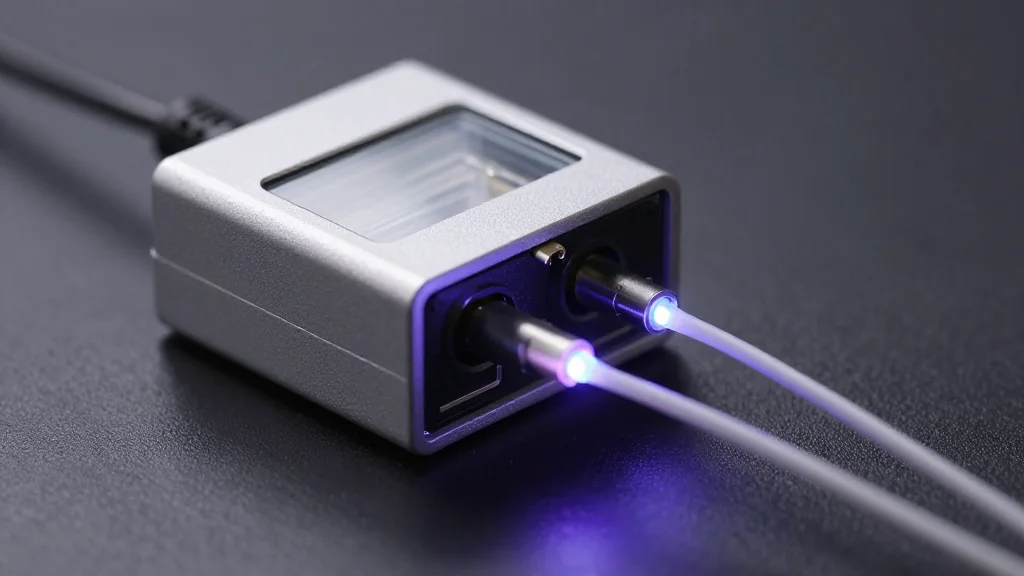
- •Cisco unveiled the Universal Quantum Switch, a room‑temperature entanglement router for standard telecom fiber.
- •The accompanying entanglement source chip generates ~200 million photon pairs per second at telecom wavelengths.
- •Field trials with Qunnect achieved multi‑kilometer entanglement swapping at rates far above prior lab experiments.
- •Scaling quantum applications to 10⁵‑10⁶ logical qubits will require a networked fabric linking many smaller processors.
- •Cisco’s approach could set a de‑facto standard, influencing telecom operators, cloud providers, and quantum hardware vendors.
Pulse Analysis
Cisco’s foray into quantum networking is a strategic extension of its core competency—large‑scale, high‑performance routing. By abstracting the quantum layer from the underlying hardware, Cisco can sell a service rather than a single product, mirroring the shift it made in AI where the company provided the connective fabric for disparate models and workloads. This business model reduces the risk of betting on a single qubit technology, which remains uncertain, and instead positions Cisco as the indispensable infrastructure provider regardless of which quantum processor wins the eventual standards war.
Historically, networking breakthroughs have unlocked new computing paradigms: Ethernet enabled client‑server architectures, and IP made the Internet possible. Quantum networking faces a similar inflection point, where the ability to reliably distribute entanglement at scale will unlock distributed quantum algorithms, secure communications, and hybrid quantum‑classical workloads. Cisco’s use of room‑temperature optics sidesteps the cryogenic constraints that have limited earlier prototypes, making deployment on existing fiber networks economically viable. If the company can deliver a robust control plane that integrates with classical IP signaling, it will lower the barrier for enterprises to adopt quantum services, accelerating the transition from experimental labs to production environments.
The competitive landscape will likely fragment. Start‑ups focusing on cryogenic switches may find a niche in ultra‑low‑latency or high‑fidelity links, but Cisco’s mass‑market approach could dominate the bulk of quantum traffic. Telecom carriers, already invested in fiber, may become the primary distributors of quantum links, creating a new revenue stream that parallels their 5G rollouts. In the next two years, the market will watch whether Cisco can translate its prototype success into commercial contracts, and whether standards bodies adopt its architecture as a baseline for quantum interconnects. The outcome will shape the economics of quantum computing and determine who controls the critical infrastructure of the next computing era.
Cisco Launches Universal Quantum Switch, Paving Way for Scalable Quantum Fabric
Comments
Want to join the conversation?
Loading comments...