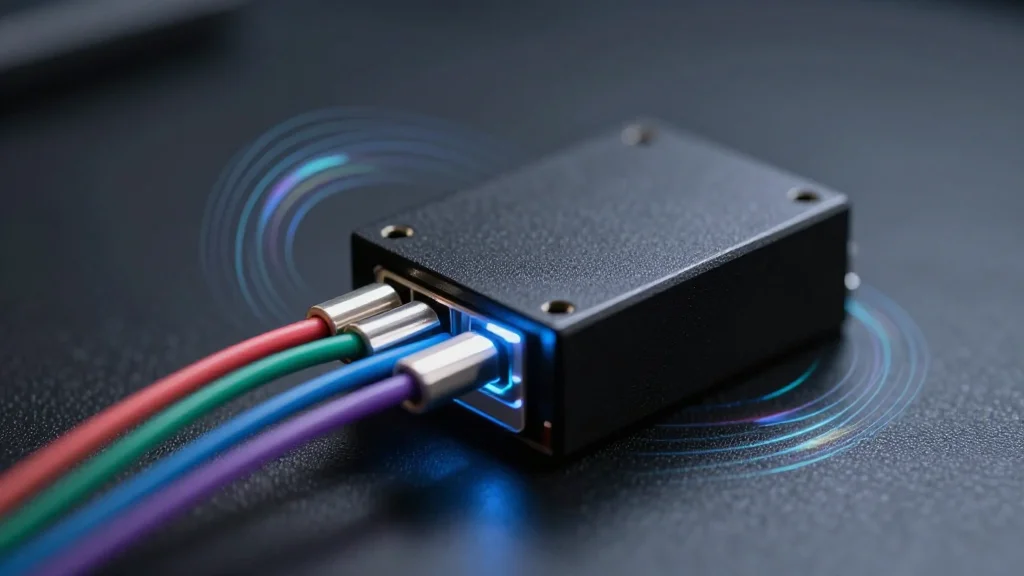
Cisco Unveils Room‑Temperature Quantum Switch That Routes Qubits Across Vendors

Companies Mentioned
Why It Matters
The Universal Quantum Switch addresses the most immediate barrier to building heterogeneous quantum networks—encoding incompatibility—by providing a hardware‑level translation layer that works at room temperature. This could dramatically reduce the cost and complexity of quantum infrastructure, making it accessible to telecom operators and enterprises that already manage massive fiber deployments. By preserving entanglement across conversions, the switch also safeguards the security guarantees of quantum key distribution and the computational advantages of distributed quantum processing. If Cisco’s prototype scales to production, it could trigger a wave of vendor‑agnostic quantum services, similar to how Ethernet standards unified classical networking. The ability to route qubits without cryogenics may also open new markets in edge computing and remote sensing, where deploying bulky cooling systems is impractical. In short, the switch could become the missing piece that turns quantum networking from a niche research pursuit into a mainstream technology.
Key Takeaways
- •Cisco demonstrated a Universal Quantum Switch that routes qubits across four encoding modalities with ≤4% fidelity loss.
- •The device operates at room temperature, consuming less than 1 mW of power.
- •Nanosecond electro‑optic switching and up to 1 GHz reconfiguration speed enable dynamic quantum network routing.
- •Built on thin‑film lithium niobate (TFLN) photonic integrated circuits, the switch leverages existing telecom fiber.
- •Field trials and multi‑vendor interoperability demos are slated for later in 2026.
Pulse Analysis
Cisco’s entry into quantum hardware marks a strategic pivot from its traditional focus on classical networking to the emerging quantum communications market. The company’s strength lies in large‑scale deployment expertise, and the Universal Quantum Switch leverages that by using familiar telecom fiber and low‑power photonic platforms. Historically, quantum networking has been hamstrung by the need for cryogenic environments and vendor‑specific encoding, limiting scalability. By solving the encoding mismatch at the hardware layer, Cisco not only creates a new product line but also positions itself as the de‑facto standards body for quantum interconnects.
The competitive landscape includes startups like PsiQuantum and QuEra, which focus on processor development, and larger players such as IBM and Google, which are building quantum‑ready data centers. Cisco’s advantage is its existing customer base of telecom carriers and data‑center operators, who can adopt the switch without overhauling their physical plant. This could force other networking vendors to accelerate similar roadmaps or risk being left out of the quantum supply chain.
Looking ahead, the key risk is whether the prototype can be mass‑produced with consistent performance across larger port counts. The TFLN platform is promising, but yield and packaging challenges remain. If Cisco can deliver a reliable, cost‑effective product, it may set the stage for a quantum‑Internet backbone that mirrors the evolution of the classical Internet—standardized, interoperable, and widely deployed. Until then, the industry will watch closely as Cisco moves from prototype to pilot deployments, a transition that could define the next decade of quantum networking.
Cisco Unveils Room‑Temperature Quantum Switch That Routes Qubits Across Vendors
Comments
Want to join the conversation?
Loading comments...