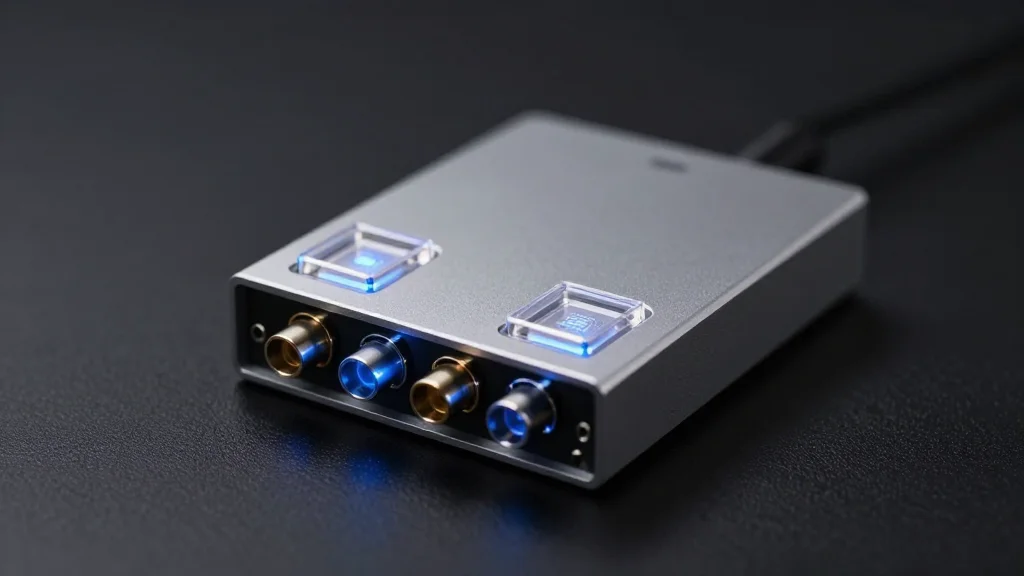
Cisco Unveils Universal Quantum Switch Prototype to Bridge Heterogeneous Quantum Systems

Companies Mentioned
Why It Matters
A universal routing device could dissolve the current siloed nature of quantum hardware, enabling a modular ecosystem where processors from different vendors interoperate seamlessly. This interoperability is essential for reaching the qubit counts required for real‑world applications, as no single technology is likely to dominate the long‑term quantum landscape. Beyond technical benefits, the switch could catalyze new business models. Telecom operators might offer quantum‑network‑as‑a‑service, leveraging existing fiber assets, while cloud providers could sell distributed quantum‑compute credits that span multiple hardware platforms. The resulting market expansion would attract additional investment into quantum research and accelerate the transition from isolated labs to production‑grade quantum services.
Key Takeaways
- •Cisco unveiled the Universal Quantum Switch prototype, a routing layer for heterogeneous quantum systems.
- •The device translates between different quantum encoding methods while preserving entanglement.
- •Developed with partners Rohde & Schwarz, Arrow Electronics, Infineon, and onsemi.
- •Aims to enable distributed quantum computing architectures beyond the limits of single processors.
- •Field trials are planned for later 2026, with potential integration into Cisco's existing optical infrastructure.
Pulse Analysis
Cisco’s entry into quantum networking reflects a strategic pivot from pure IT infrastructure to the emerging quantum layer that will sit atop today’s fiber backbone. Historically, networking breakthroughs—such as the transition from copper to fiber and the rise of packet‑switching—have unlocked new services and revenue streams. The Universal Quantum Switch could play a similar role by providing the connective tissue needed for heterogeneous quantum processors to function as a cohesive system.
The prototype’s emphasis on preserving quantum state fidelity during modality conversion addresses a pain point that has limited cross‑platform experiments. Current quantum‑communication demonstrations often require custom‑built interfaces that are not scalable. By abstracting the encoding layer, Cisco may lower the barrier for research labs and commercial entities to experiment with multi‑vendor quantum networks, fostering a standards‑driven ecosystem. This could, in turn, pressure existing quantum hardware vendors to adopt common interfacing protocols, accelerating industry convergence.
However, the path to commercial viability is fraught with technical and market challenges. Quantum error rates remain high, and any additional routing step introduces potential decoherence. Cisco will need to demonstrate that its switch can operate with error thresholds compatible with fault‑tolerant quantum computing. Moreover, the business case hinges on the emergence of demand for distributed quantum services—a demand that is still speculative. If Cisco can align its switch development with emerging standards bodies such as the Quantum Internet Alliance and secure early adopters among telecom operators, it could secure a first‑mover advantage that translates into long‑term revenue streams. Absent such alignment, the prototype may remain a research showcase without a clear path to market.
Cisco Unveils Universal Quantum Switch Prototype to Bridge Heterogeneous Quantum Systems
Comments
Want to join the conversation?
Loading comments...