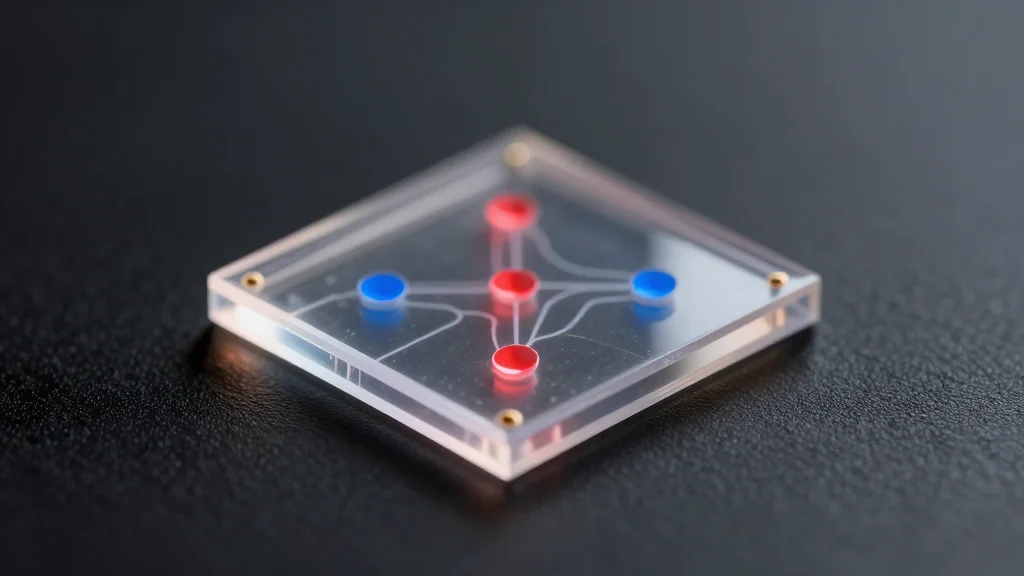
Classical Light Trains Photonic Quantum Machines to 99% Accuracy

Why It Matters
Achieving 99% fidelity in quantum state reconstruction without exhaustive device modelling addresses a critical reliability gap in photonic quantum computing. As photonic platforms move from laboratory prototypes to commercial products, the ability to quickly calibrate and maintain performance will determine their competitiveness against superconducting and trapped‑ion alternatives. The classical‑light training method also illustrates a broader principle: classical resources can be harnessed to mitigate quantum hardware imperfections, potentially reshaping how future quantum systems are engineered and validated. By demonstrating scalability to two‑qubit entanglement witnesses, the research provides a concrete proof‑of‑concept that the technique can support quantum communication protocols that rely on entanglement, such as quantum key distribution. This could accelerate the deployment of secure quantum networks that depend on photonic links, where hardware variability has been a persistent obstacle. The collaborative nature of the work, spanning multiple universities, signals a growing European focus on photonic quantum technologies. The method’s hardware‑agnostic character may foster standardisation across research groups and industry partners, facilitating a more unified development ecosystem. Overall, the study offers a pragmatic solution to a technical bottleneck, turning a theoretical advance into a tool that can be directly applied to improve the reliability and scalability of near‑term quantum devices.
Key Takeaways
- •Classical light used to train photonic QELMs, eliminating need for direct quantum manipulation
- •Single‑qubit Pauli observables reconstructed with >99% accuracy across unseen states
- •Two‑qubit entanglement witnesses estimated for arbitrary bipartite states
- •Collaboration among Sapienza University of Rome, University of Palermo, Queen’s University Belfast, and University of Milan
- •Method reduces calibration time and improves durability of photonic quantum processors
Pulse Analysis
The classical‑light training approach marks a pragmatic shift in how the quantum community addresses hardware imperfections. Historically, photonic quantum processors have relied on exhaustive characterisation campaigns—often involving tomographic reconstructions that demand thousands of measurements and precise knowledge of every noise source. Those campaigns are costly, time‑consuming, and fragile to drift, limiting the practical deployment of photonic devices. By moving the learning phase to a classical domain, the researchers effectively decouple the calibration problem from the quantum hardware, allowing rapid, repeatable optimisation that can be refreshed as devices age.
From a market perspective, the technique could lower the total cost of ownership for photonic quantum hardware. Companies developing integrated photonic chips, such as PsiQuantum and Xanadu, have repeatedly highlighted calibration as a key hurdle for scaling. If classical‑light training can be packaged as a software layer that runs on existing control hardware, it may become a differentiator for vendors that can deliver turnkey, high‑fidelity performance. This could also stimulate investment in photonic foundries, as the barrier to achieving production‑grade yields would be reduced.
Looking ahead, the scalability of the method to larger qubit counts will be the decisive test. While the current results for single‑ and two‑qubit systems are impressive, real‑world quantum processors will need to handle dozens or hundreds of modes. Extending the classical‑training pipeline to such dimensions will require sophisticated simulation tools and possibly hybrid classical‑quantum feedback loops. Nonetheless, the proof‑of‑concept establishes a clear pathway: use classical optics to tame quantum imperfections, then let the quantum system focus on tasks where it truly outperforms classical counterparts. This hybrid philosophy could become a cornerstone of near‑term quantum engineering, blending the reliability of classical control with the computational power of quantum mechanics.
Classical Light Trains Photonic Quantum Machines to 99% Accuracy
Comments
Want to join the conversation?
Loading comments...