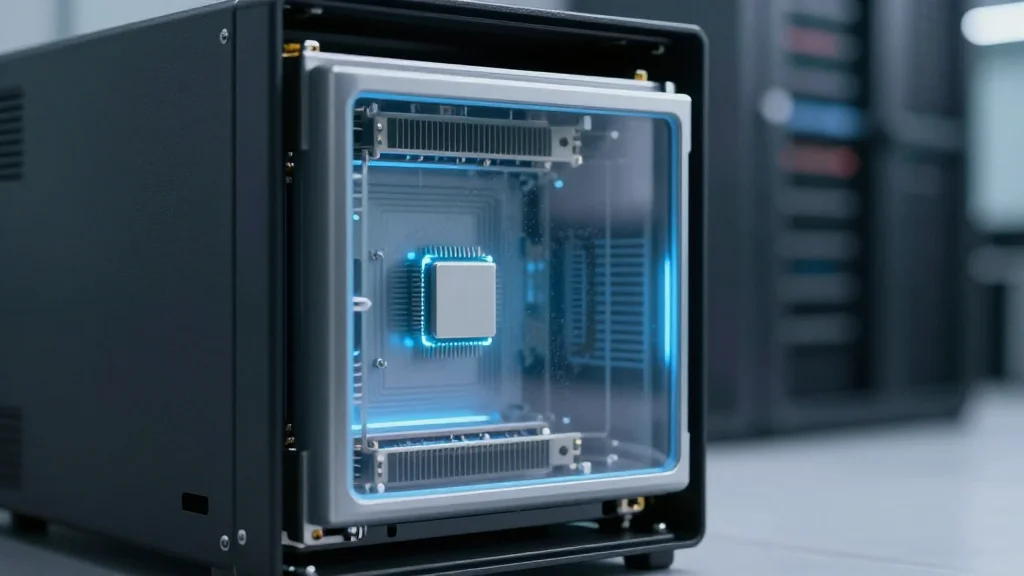
Equal1 and Dell Unveil First Rack‑Mounted Quantum Computer for Data Centers

Companies Mentioned
Why It Matters
The RacQ prototype bridges a critical gap between laboratory‑grade quantum computers and the data‑center environments where most enterprise workloads run. By fitting into a standard rack and using familiar power and networking interfaces, the system reduces the engineering overhead that has so far limited quantum adoption to specialized facilities. This could unlock new use cases in finance, logistics and drug discovery where quantum speed‑ups are theorized but have been impractical to access. Moreover, the reliance on silicon‑spin qubits fabricated with conventional semiconductor processes suggests a scalable supply chain. If manufacturing yields improve, quantum processors could become a commodity component, driving down costs and fostering a broader ecosystem of software developers, system integrators and service providers.
Key Takeaways
- •Equal1 and Dell introduced RacQ, a rack‑mounted quantum computer, at Dell Technologies World 2026.
- •The system fits a 19‑inch, 42U Dell VR3300 rack and plugs into a standard 1.6 kW wall socket.
- •RacQ uses a close‑cycle cryocooler to maintain 0.3 K operating temperature, eliminating external dilution refrigerators.
- •UnityQ chip is built with standard semiconductor processes, hinting at scalable manufacturing.
- •Prototype weighs ~400 kg and integrates with Dell PowerEdge R770, PowerSwitch networking and Quantum Intelligent Orchestrator.
Pulse Analysis
The RacQ announcement signals a strategic shift from quantum as a niche research tool toward a data‑center‑ready accelerator. Historically, quantum hardware has required dedicated cryogenic rooms, specialized power, and custom networking, creating a high barrier to entry for enterprises. By aligning quantum hardware with the existing rack‑and‑power paradigm, Dell and Equal1 are effectively lowering that barrier, much like the transition from mainframe to rack‑mount servers in the 1990s.
From a market perspective, the move could catalyze a new segment of quantum‑as‑a‑service offerings that sit alongside traditional cloud compute. Cloud providers that already host GPU‑accelerated AI workloads may find it easier to add quantum co‑processors to their fleets if the hardware conforms to existing rack standards. This could compress the competitive timeline, forcing incumbents like IBM, Google and Amazon to accelerate their own hardware integration strategies.
However, the prototype’s performance, error rates and software stack remain untested at scale. Early adopters will need clear metrics to justify the capital outlay, especially given the current scarcity of quantum‑ready applications. The next 12‑18 months will be decisive: successful field trials could trigger a wave of enterprise pilots, while underwhelming results may relegate rack‑mounted quantum to a longer‑term vision. Either way, the RacQ sets a benchmark for what enterprise‑friendly quantum hardware could look like, and it will shape vendor roadmaps and investment decisions across the quantum ecosystem.
Equal1 and Dell Unveil First Rack‑Mounted Quantum Computer for Data Centers
Comments
Want to join the conversation?
Loading comments...