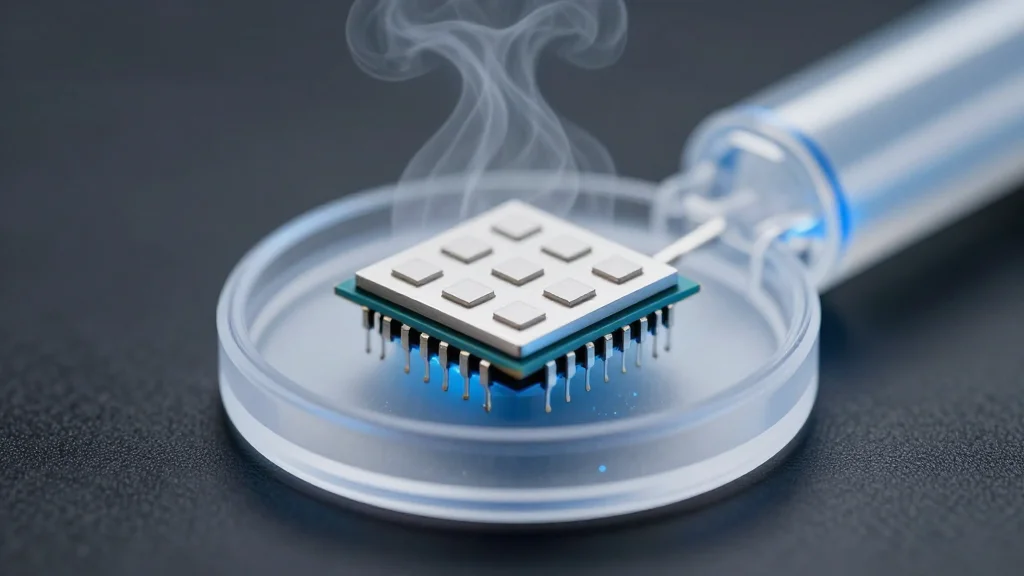
EuroHPC Debuts EuroQCS-Spain, Advancing Hybrid Quantum-HPC Access in Europe
Key Takeaways
- •EuroQCS-Spain adds 10-qubit analogue quantum annealer to MareNostrum 5.
- •Project cost €8.5M (~$9.2M), split equally between EuroHPC JU and Spain.
- •Hybrid quantum‑HPC platform opens optimization tasks for EU researchers and industry.
- •First‑generation system slated for calibration, user onboarding within weeks.
- •Europe now runs eight quantum computers in six nations, expanding sovereign tech.
Pulse Analysis
Europe’s drive toward a sovereign quantum ecosystem has accelerated with the launch of EuroQCS‑Spain, an analogue quantum annealer that dovetails with the continent’s flagship pre‑exascale machine, MareNostrum 5. The EuroHPC Joint Undertaking, a public‑private partnership, is financing a network of diverse quantum platforms—ranging from trapped‑ion to photonic systems—to ensure Europe does not rely on external providers for breakthrough computing capabilities. By co‑funding the €8.5 million (€9.2 million USD) installation with national ministries, the initiative underscores a strategic commitment to shared ownership and cross‑border collaboration.
The Barcelona Supercomputing Center’s new system, built by Qilimanjaro Quantum Tech and Do IT Now, delivers ten superconducting flux qubits capable of quantum annealing, a method well‑suited for solving large‑scale optimization challenges in logistics, finance, and materials science. Its integration into MareNostrum 5 creates a hybrid architecture where classical HPC workloads can off‑load combinatorial sub‑problems to the quantum processor, potentially shortening solution times dramatically. Early access for European researchers and industry partners is expected within weeks, positioning the platform as a testbed for quantum‑enhanced algorithms and quantum‑machine‑learning experiments.
The addition of EuroQCS‑Spain brings the total count of EuroHPC‑deployed quantum computers to eight, reflecting a broader EU agenda to build a resilient, home‑grown quantum supply chain. This growing portfolio not only diversifies the technological approaches—analogue simulators, trapped ions, superconducting circuits, and photonics—but also signals to global competitors that Europe is ready to compete in the emerging quantum‑HPC market. Ongoing procurements in the Netherlands and Luxembourg suggest the network will continue expanding, offering a pan‑European resource that could accelerate innovation, attract private investment, and ultimately translate quantum advantage into commercial value.
EuroHPC Debuts EuroQCS-Spain, Advancing Hybrid Quantum-HPC Access in Europe
Comments
Want to join the conversation?