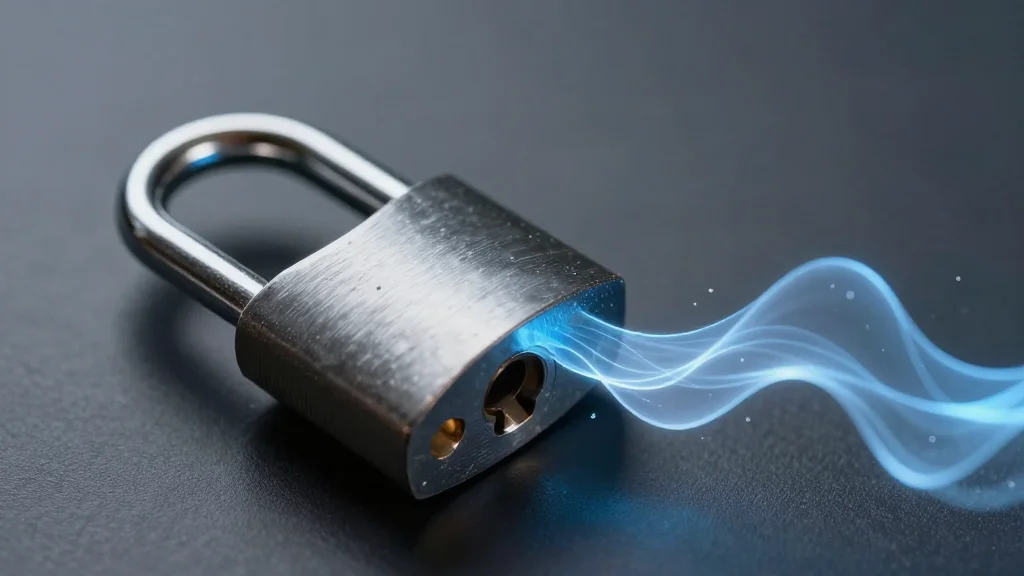
Experts Warn ‘Q‑Day’ Threat Looms as Quantum Computers Near Decryption Capability

Why It Matters
The prospect of Q‑Day transforms a technical challenge into a strategic national‑security issue. If quantum decryption becomes operational before post‑quantum safeguards are in place, adversaries could retroactively unlock decades of encrypted communications, undermining trust in diplomatic channels, financial systems, and critical infrastructure. This would not only erode economic stability but also shift the balance of power, giving early quantum adopters a decisive intelligence advantage. Beyond immediate security concerns, the Q‑Day scenario forces a reevaluation of regulatory frameworks, corporate risk management, and international cooperation. Nations that lead in PQC standardization and deployment will set the rules of the new cryptographic order, influencing trade agreements, export controls, and cyber‑defense alliances. The urgency of the threat makes proactive investment in quantum‑resistant technologies a strategic imperative for both public and private sectors.
Key Takeaways
- •Q‑Day denotes the moment quantum computers can break current encryption, threatening banking, military, and corporate data.
- •Cybercriminals and nation‑states are already harvesting encrypted data for future quantum decryption.
- •Many firms still rely on legacy encryption despite spending millions on other security measures.
- •Recent U.S.–China summit highlighted the need to modernize the 1979 science‑technology agreement for quantum security.
- •Post‑quantum cryptography market is heating up, but adoption remains uneven across industries.
Pulse Analysis
The Q‑Day narrative is reshaping the cybersecurity market in a way reminiscent of the Y2K scramble, but with far higher stakes. Unlike the Y2K bug, which was a software bug fix, Q‑Day threatens the very mathematical foundations of digital trust. Companies that have already integrated post‑quantum algorithms into their product pipelines now enjoy a competitive moat, while laggards risk becoming high‑value targets for state‑backed espionage.
Historically, major security transitions—such as the shift from SHA‑1 to SHA‑256—have been driven by public disclosures of vulnerabilities. In the quantum case, the vulnerability is not yet exploitable, but the certainty of future breakage is enough to trigger pre‑emptive market moves. Venture capital is flowing into PQC startups at a rate comparable to the early AI boom, indicating that investors view quantum readiness as a new frontier of defensible technology.
Looking ahead, the decisive factor will be policy alignment. If the U.S., EU, and China converge on a common set of PQC standards within the next 12‑18 months, the transition could be orderly, preserving global commerce and diplomatic channels. Conversely, a fragmented approach—where each bloc adopts its own standards—could create a patchwork of compatibility issues, slowing adoption and leaving critical gaps. The next summit on quantum security, likely to be convened by the G7 or a dedicated UN forum, will be the litmus test for whether the international community can coordinate a unified response before quantum computers cross the decryption threshold.
Experts Warn ‘Q‑Day’ Threat Looms as Quantum Computers Near Decryption Capability
Comments
Want to join the conversation?
Loading comments...