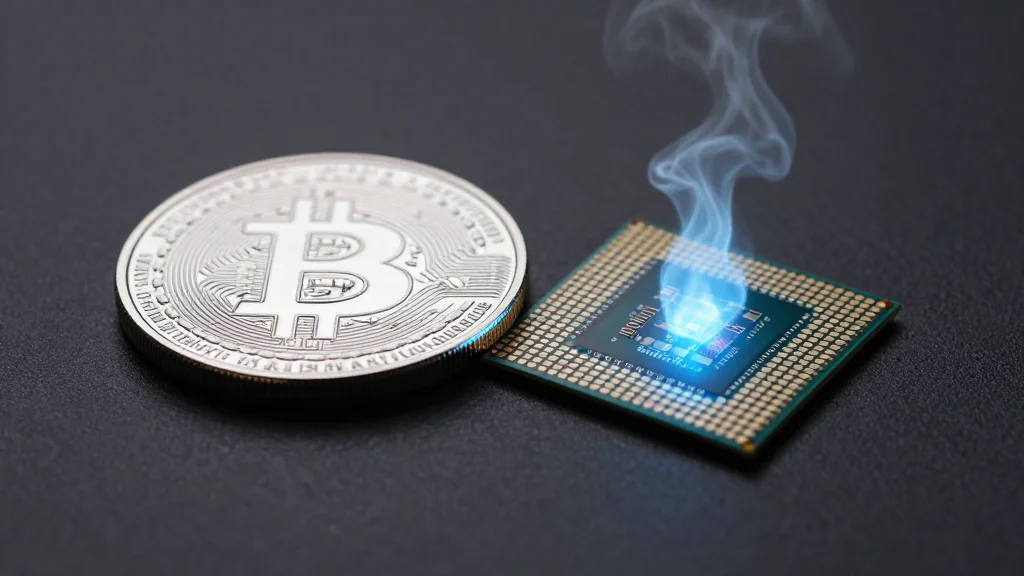
StarkWare Proposes $75‑$150 Quantum‑Safe Bitcoin Spend, While XRP Shows Lower Exposure

Companies Mentioned
Why It Matters
Quantum computing threatens the foundational cryptography of major cryptocurrencies, and the speed at which the required qubit counts are dropping forces the industry to act now. A successful quantum attack on Bitcoin could invalidate billions of dollars in assets, while a less vulnerable ledger like XRP may become a preferred store of value for risk‑averse investors. The emergence of practical, no‑fork quantum‑resistant transaction schemes such as StarkWare’s QSB highlights both the urgency and the market demand for immediate protection, even if it comes at a premium cost. The race to post‑quantum security also has regulatory implications. Governments worldwide are already mandating migration to NIST‑approved post‑quantum algorithms for federal systems, and similar pressure could be applied to crypto exchanges and custodians. How quickly Bitcoin, XRP, and other networks adopt robust quantum‑safe protocols will shape investor confidence, institutional adoption, and the overall stability of the digital asset ecosystem.
Key Takeaways
- •StarkWare’s QSB scheme estimates $75‑$150 GPU cost per quantum‑resistant Bitcoin transaction.
- •Google and academic teams reduced the qubit threshold for breaking Bitcoin from 10 million to as low as 10,000‑26,000.
- •BIP‑360 testnet processed >100,000 blocks with >100 cryptographers and 50 miners as of March 2026.
- •CoinDesk analysis finds XRP’s ledger design leaves a smaller share of its supply exposed to quantum attacks than Bitcoin.
- •Approximately 1.7 million BTC in early P2PK outputs remain vulnerable to future quantum cracking.
Pulse Analysis
The quantum‑risk narrative is evolving from speculative to actionable. Historically, the crypto community treated quantum threats as a distant, theoretical concern, but the convergence of software optimizations and hardware breakthroughs has compressed the timeline. StarkWare’s QSB is a pragmatic response that leverages existing Bitcoin script rules, offering a stopgap for high‑value users who can absorb the GPU cost. However, its non‑standard transaction format and limited applicability to Lightning Network use cases mean it is unlikely to become a universal solution.
Bitcoin’s longer‑term strategy hinges on BIP‑360, which aims to eliminate public‑key exposure entirely. The testnet’s rapid adoption signals strong developer consensus, yet the path to a network‑wide soft fork remains politically fraught. In contrast, XRP’s architecture, which keeps public keys hidden until spend time, provides an inherent quantum‑resilience advantage without protocol changes. This could shift institutional capital toward XRP, especially as custodians prioritize assets with lower quantum exposure.
From a market perspective, the cost differential is stark: $75‑$150 per transaction versus the near‑zero marginal cost of a protocol upgrade. As GPU pricing continues to fall and specialized hardware becomes more accessible, QSB’s economics may improve, but it will still be a niche tool for treasury‑level operations. The broader implication is a bifurcated ecosystem where legacy blockchains either adopt sweeping protocol upgrades or rely on costly, transaction‑level mitigations. The winners will be those that can integrate post‑quantum standards seamlessly while maintaining network performance and user experience.
StarkWare Proposes $75‑$150 Quantum‑Safe Bitcoin Spend, While XRP Shows Lower Exposure
Comments
Want to join the conversation?
Loading comments...