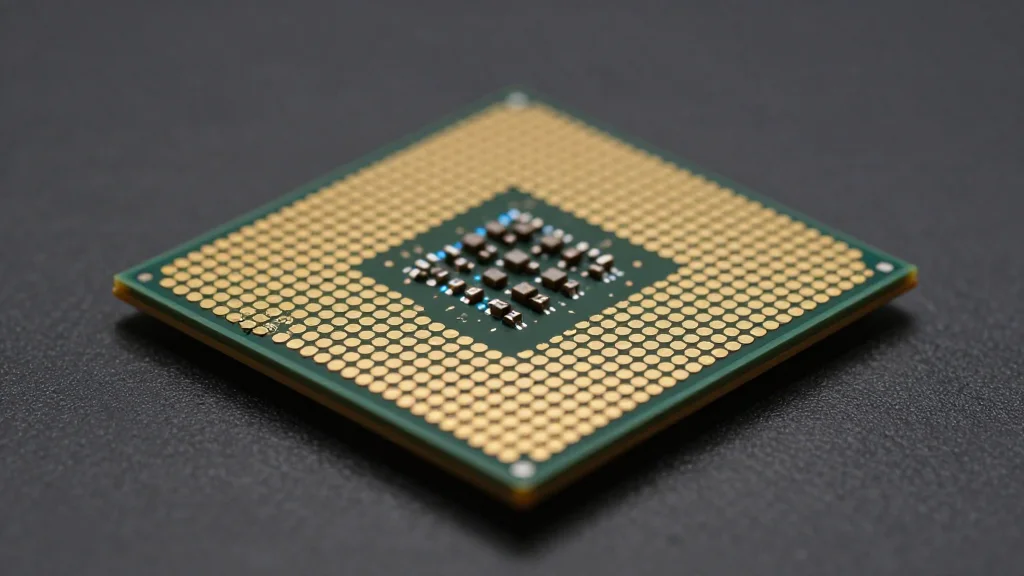
Google's Willow Chip Achieves Scalable Quantum Error Correction, Cutting Errors to 2.1%

Companies Mentioned
Why It Matters
Scalable error correction is the linchpin for moving quantum computers from laboratory curiosities to tools that can address real‑world challenges. By showing that error rates decline with larger qubit arrays, Google provides a template that other hardware platforms can emulate, potentially compressing the timeline for commercial quantum services. The breakthrough also forces a reassessment of security strategies, as the same technology that threatens current encryption can also underpin quantum‑resistant protocols. Beyond security, the ability to run chemically accurate simulations at scale could transform drug discovery, materials science, and energy research. These sectors represent multi‑trillion‑dollar markets, and early adopters of fault‑tolerant quantum hardware could secure a decisive competitive edge. The Willow chip therefore not only advances scientific understanding but also reshapes economic incentives across the technology ecosystem.
Key Takeaways
- •Google's Willow chip contains 105 superconducting qubits cooled to ~15 mK.
- •Error rates fell from 3% (3×3 array) to 2.1% (7×7 array), demonstrating below‑threshold correction.
- •Benchmark task completed in <5 minutes that would take classical supercomputers ~10 septillion years.
- •Surface‑code lattice architecture provides a scalable route to millions of qubits.
- •Potential applications span drug discovery, quantum‑safe cryptography, and advanced AI.
Pulse Analysis
Google’s Willow demonstration redefines the engineering roadmap for quantum computing. Historically, the field has been hamstrung by the error‑correction paradox: adding qubits to increase computational power also multiplied error channels, creating a scaling ceiling. Willow’s empirical evidence that error rates can contract with lattice growth validates the surface‑code approach that many academic groups have championed for years. This validation is likely to shift venture capital toward hardware teams that can integrate similar lattice designs, accelerating the consolidation of the quantum supply chain.
From a competitive standpoint, the achievement narrows the gap between Google and rivals such as IBM, which has pursued its own error‑correction milestones with the Eagle and Condor processors. While IBM’s recent announcements have highlighted incremental improvements, Willow’s leap in error‑rate scaling may force a strategic pivot, prompting rivals to prioritize surface‑code implementations or hybrid error‑mitigation techniques. The race to the first million‑qubit logical device now has a clearer technical benchmark, and we can expect a surge in collaborative research between academia and industry to refine decoding algorithms and cryogenic control electronics.
Looking ahead, the real test will be translating Willow’s synthetic benchmark into domain‑specific workloads. If Google can demonstrate, for example, a quantum chemistry calculation that outperforms classical methods on a commercially relevant molecule, the market impact will be immediate. Such a proof point would likely trigger a wave of corporate pilots, especially in pharma and finance, and could catalyze regulatory frameworks around quantum‑safe encryption. In short, Willow’s breakthrough is not just a technical milestone; it is a catalyst that could reshape investment, competition, and application development across the entire quantum ecosystem.
Google's Willow Chip Achieves Scalable Quantum Error Correction, Cutting Errors to 2.1%
Comments
Want to join the conversation?
Loading comments...