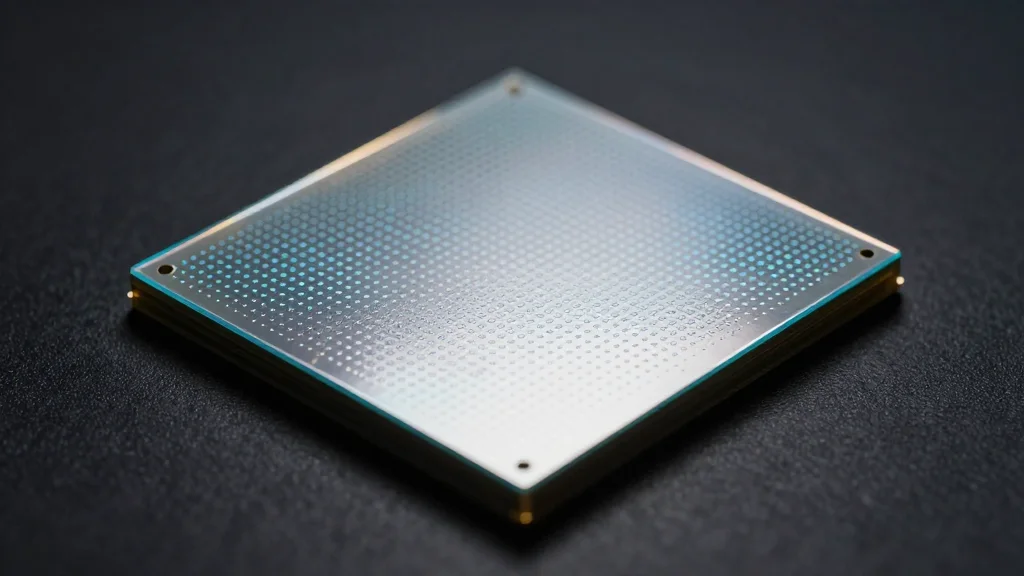
Groove Quantum Secures €16 M and Unveils World’s Largest 18‑Qubit Spin‑Qubit Processor

Companies Mentioned
Why It Matters
Groove Quantum’s funding and hardware breakthrough address the scaling bottleneck that has limited most quantum‑hardware platforms to small, laboratory‑grade prototypes. By leveraging germanium spin qubits that can be fabricated in existing CMOS fabs, the company offers a path to mass‑manufacturable quantum chips, potentially reducing time‑to‑market and capital expenditures for quantum‑computing customers. The European Union’s grant support also underscores a strategic push to keep advanced quantum manufacturing capabilities within Europe, counterbalancing the heavy US and Chinese investments in superconducting and photonic approaches. If Groove’s tiled architecture proves viable, it could accelerate the timeline for quantum advantage in fields such as drug discovery, materials science, and climate modeling. A scalable, cost‑effective quantum processor would broaden access beyond a handful of well‑funded research labs, enabling startups and mid‑size enterprises to explore quantum‑enhanced algorithms, thereby expanding the overall market and driving a new wave of quantum‑software innovation.
Key Takeaways
- •Groove Quantum raised €16 million ($18.7 M) in equity and grants.
- •Unveiled an 18‑qubit germanium spin‑qubit processor, the largest of its kind.
- •Seed round co‑led by Innovation Industries and 55 North; grants from EIC Accelerator and JU Chips Act.
- •Roadmap targets a 100‑qubit “unit cell” that can be tiled for larger processors.
- •Processor uses CMOS‑compatible manufacturing, enabling potential fab‑scale production.
Pulse Analysis
Groove Quantum’s announcement marks a pivotal moment for semiconductor‑based quantum hardware. Historically, spin‑qubit research has been hampered by low yields and complex control electronics, keeping most prototypes under ten qubits. By marrying germanium spin qubits with a CMOS‑friendly process, Groove sidesteps the need for exotic fabrication steps that have slowed superconducting and trapped‑ion scaling. This convergence of quantum physics and mainstream semiconductor engineering could compress the development cycle dramatically, turning quantum chips from bespoke research tools into commodity components.
The funding mix—private equity from deep‑tech investors and public grants—reflects a broader trend where governments are de‑risking quantum hardware while allowing market forces to drive commercialization. Europe’s strategic emphasis on chip‑scale quantum devices positions Groove as a flagship for the region’s ambition to become a quantum manufacturing hub. Competitors will now have to justify the higher cost and larger footprint of superconducting systems against Groove’s promise of fab‑scale density and lower power consumption.
Looking forward, the real test will be whether Groove can maintain qubit coherence and gate fidelity as it tiles the 18‑qubit blocks into larger arrays. If error rates stay competitive, the company could attract large‑scale customers in finance, pharmaceuticals, and energy, sectors that have already earmarked billions for quantum solutions. Success would not only validate germanium spin qubits as a viable commercial technology but also reshape the competitive dynamics of the quantum hardware market, forcing incumbents to accelerate their own integration‑ready roadmaps or risk obsolescence.
Groove Quantum Secures €16 M and Unveils World’s Largest 18‑Qubit Spin‑Qubit Processor
Comments
Want to join the conversation?
Loading comments...