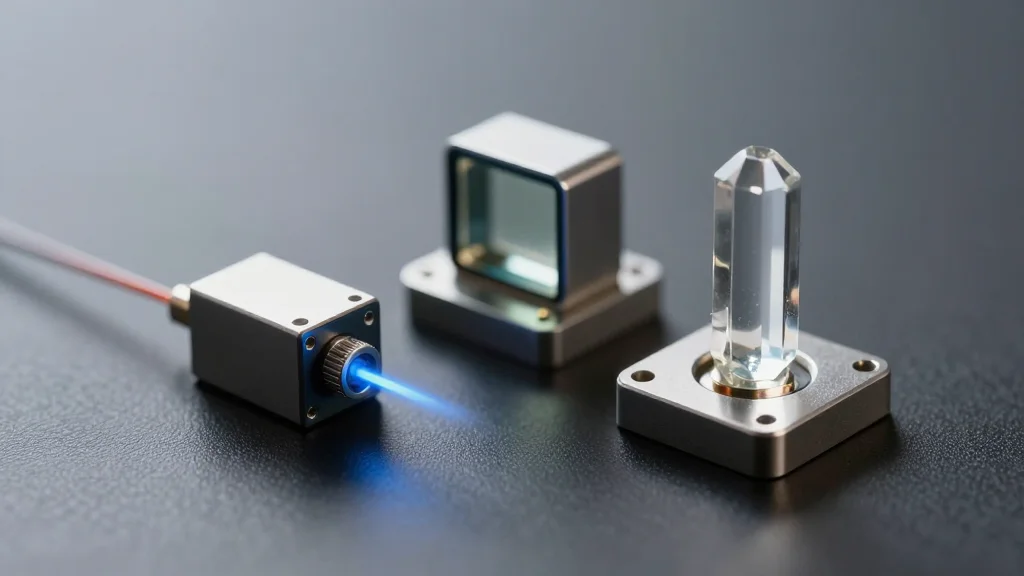
Hamamatsu Photonics, NKT Photonics, and Yaqumo Form Alliance to Industrialize Cold-Atom Quantum Core Components
Companies Mentioned
Why It Matters
Standardizing cold‑atom hardware removes a key bottleneck, accelerating commercial quantum‑computing deployments and strengthening a secure, cross‑border supply chain. The move signals a shift from bespoke research rigs to scalable products, unlocking new revenue streams in a market projected to reach up to $7.9 billion by the early 2030s.
Key Takeaways
- •Hamamatsu, NKT, and Yaqumo sign MoU to industrialize cold‑atom modules
- •NKT supplies low‑noise fiber lasers for coherent multi‑qubit control
- •Hamamatsu provides single‑photon detectors for high‑fidelity readout
- •Yaqumo integrates photonic engines into Ytterbium neutral‑atom computers
Pulse Analysis
The three‑company alliance tackles one of the most stubborn hurdles in quantum computing: turning delicate, lab‑scale optics into rugged, repeatable hardware. Cold‑atom platforms promise long coherence times and high gate fidelity, but they rely on precisely aligned laser tweezers, ultra‑stable cooling beams, and single‑photon detection—components that have traditionally required hand‑tuned assemblies. By committing to a joint development roadmap, Hamamatsu, NKT, and Yaqumo aim to deliver plug‑and‑play optical engines that can be manufactured at volume, dramatically reducing system cost and integration time.
Technical synergy is at the heart of the effort. NKT’s low‑noise fiber‑laser sources and photonic‑crystal fibers will carry phase‑stable light to hundreds of atom traps, ensuring the uniformity needed for parallel qubit operations. Hamamatsu’s high‑sensitivity imaging arrays and single‑photon detectors will capture the faint fluorescence signals that constitute readout, boosting measurement accuracy without sacrificing speed. Meanwhile, Yaqumo’s expertise in Ytterbium neutral‑atom architectures provides the software‑hardware co‑design framework that aligns laser frequencies, pulse sequencing, and error‑correction protocols with the new photonic modules. This integrated stack promises a compact, scalable quantum core that can be deployed outside specialist labs.
Beyond the engineering payoff, the partnership reinforces strategic supply‑chain independence for Japan’s quantum sector and deepens Denmark’s photonics cluster. With the global positioning, navigation, timing and quantum‑sensing market forecast to reach $3.5‑$7.9 billion by the early 2030s, a reliable component pipeline could capture a sizable share of future government and enterprise contracts. The MoU also dovetails with a bilateral Japan‑Denmark quantum cooperation framework, signaling coordinated policy support and potential funding avenues. As cold‑atom systems move toward commercial readiness, this alliance positions its members to profit from the next wave of quantum‑enabled applications, from secure communications to ultra‑precise sensing.
Hamamatsu Photonics, NKT Photonics, and Yaqumo Form Alliance to Industrialize Cold-Atom Quantum Core Components
Comments
Want to join the conversation?
Loading comments...