IEEE Study Unveils Robust Time-Bin Entanglement for Practical Quantum Communication

Key Takeaways
- •93% visibility achieved with off‑the‑shelf components.
- •Time‑bin entanglement outperforms polarization in fiber networks.
- •Demonstration spanned Vienna’s metropolitan fiber infrastructure.
- •Mach‑Zehnder interferometer enabled high‑quality entanglement measurement.
- •Scalable source paves way for practical quantum key distribution.
Pulse Analysis
Quantum communication hinges on the ability to distribute entangled photons over long distances with minimal decoherence. Historically, polarization‑encoded entanglement has dominated laboratory demonstrations, yet it suffers from birefringence and temperature‑induced drift in standard telecom fibers. Time‑bin encoding, which maps quantum information onto discrete arrival windows, offers intrinsic resilience to such disturbances, making it a compelling alternative for real‑world networks. As governments and enterprises invest heavily in quantum‑safe encryption, the industry has been searching for a source that combines performance with manufacturability.
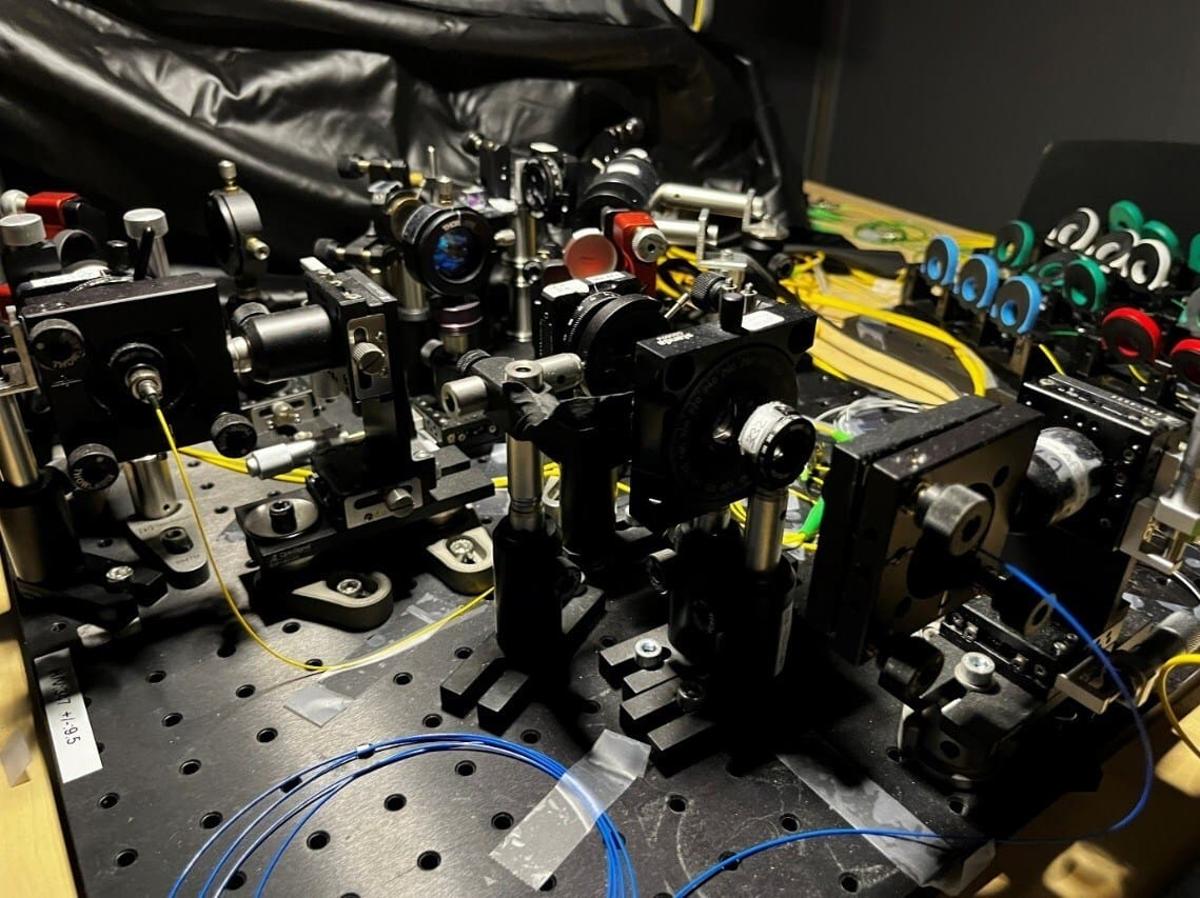
The IEEE team addressed this gap by assembling a time‑bin entanglement source from readily available laser drivers, GHz modulators, and a spontaneous parametric down‑conversion crystal. After converting the modulated pulses into a visible pump beam, the crystal generated photon pairs that were routed through Vienna’s municipal fiber grid. Using a commercial Mach‑Zehnder delay‑line interferometer, the researchers recorded a visibility of roughly 93 %, comfortably above the 80 % benchmark required for error‑corrected quantum‑key‑distribution. This level of fidelity was achieved without custom‑built optics, demonstrating that high‑quality entanglement can be realized with off‑the‑shelf hardware.
The implications extend beyond a single field trial. A scalable, cost‑effective time‑bin source lowers the entry barrier for telecom operators seeking to overlay quantum channels on existing infrastructure, accelerating the rollout of quantum‑ready backbones. Manufacturers can now target volume production, while standards bodies gain a concrete reference for interoperability testing. In the longer term, such deployment‑ready technology could enable multi‑city quantum networks, support satellite‑ground links, and underpin the next generation of secure communications for finance, defense, and cloud services.
IEEE Study Unveils Robust Time-Bin Entanglement for Practical Quantum Communication
Comments
Want to join the conversation?