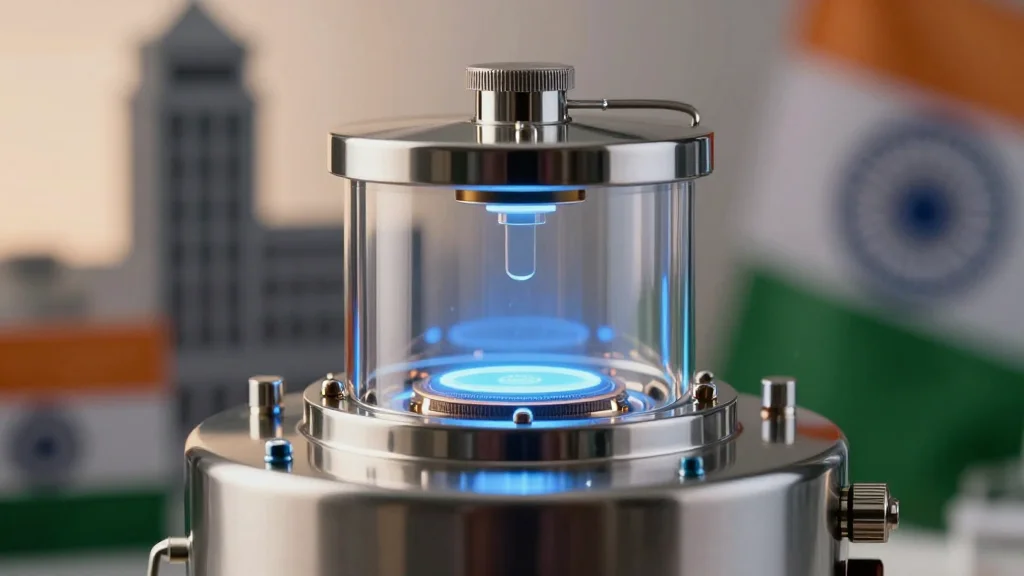
India's Amaravati Quantum Valley Opens Two Open‑Access Quantum Computing Centers

Why It Matters
The Amaravati Quantum Valley centers represent a critical inflection point for South Asia’s quantum ambitions. By providing low‑cost, locally sourced infrastructure, India reduces its dependence on foreign quantum test‑beds, which have traditionally been expensive and geographically distant. This shift could accelerate homegrown talent pipelines, foster a domestic supplier base, and position India as a credible node in the global quantum supply chain. Moreover, the establishment of a national certification regime addresses a long‑standing market gap: the lack of standardized benchmarks for quantum hardware. Consistent testing and validation can lower investment risk, encouraging venture capital and government funding to flow into Indian quantum startups, potentially spurring the next wave of quantum‑enabled applications in cryptography, materials science, and optimization.
Key Takeaways
- •Two quantum computing centers opened on April 14, 2026 in Amaravati’s Quantum Valley.
- •Total construction cost kept to ₹15 crore (≈ $1.8 million) by sourcing parts from TIFR and DRDO.
- •Facilities include the QU‑414 (superconducting) and Bharat Quantum Reference Facility (indigenous platform).
- •Open‑access model aims to democratize quantum research for students, startups and academia.
- •Government plans to roll out certification standards and expand test‑beds to other Indian universities by end‑2026.
Pulse Analysis
India’s decision to fund and operate open‑access quantum test‑beds marks a departure from the traditional model where quantum hardware is locked behind corporate or foreign research labs. By lowering the financial barrier—$1.8 million for two centers—the government signals that quantum readiness is a public good, not a niche commercial venture. This could catalyze a virtuous cycle: more hands‑on experience leads to a larger talent pool, which in turn attracts private investment and accelerates productization.
Historically, quantum ecosystems have coalesced around a few global hubs—U.S., Europe, China—where dense networks of academia, industry and venture capital intersect. Amaravati’s approach tries to replicate that density through a centralized, government‑backed hub that also integrates regional universities. If the certification framework gains credibility, India could become a regional testing hub for neighboring countries lacking such infrastructure, extending its influence beyond domestic borders.
However, the initiative faces challenges. Delivering repeatable, high‑fidelity experiments requires not just hardware but also sophisticated cryogenic infrastructure, software stacks, and skilled personnel. The dual‑platform strategy mitigates technical risk but doubles the operational complexity. Success will hinge on sustained funding, clear governance of the open‑access model, and the ability to publish benchmark results that the global community trusts. In the short term, the centers will likely serve as training grounds, but their long‑term impact will be measured by the emergence of Indian quantum startups that can commercialize applications built on these test‑beds.
If the Amaravati Quantum Valley can demonstrate reliable certification and foster a thriving community, it may well rewrite the narrative that quantum leadership is confined to a handful of nations, positioning India as a pivotal player in the next decade of quantum innovation.
India's Amaravati Quantum Valley Opens Two Open‑Access Quantum Computing Centers
Comments
Want to join the conversation?
Loading comments...