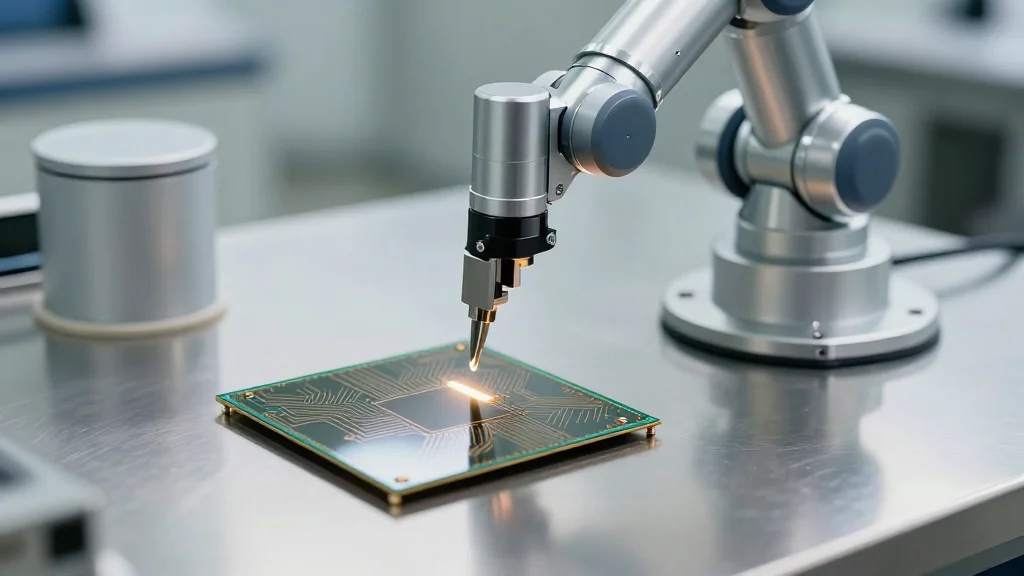
Infineon Joins Three EU Quantum Pilot Lines to Accelerate Chip Industrialization

Companies Mentioned
Why It Matters
The Infineon partnership addresses a critical bottleneck in the quantum supply chain: the transition from bespoke, low‑volume prototypes to repeatable, high‑volume manufacturing. By leveraging established semiconductor processes, Europe can reduce dependence on external foundries, protect intellectual property, and accelerate time‑to‑market for quantum applications that promise economic and societal benefits. Moreover, the pilot lines serve as a testbed for standards and quality‑control frameworks that will be essential as quantum devices become commercial products. If successful, the initiative could reshape the competitive landscape, positioning Europe as a credible alternative to the United States and China in quantum hardware. It also signals to investors that the EU is committing tangible resources—not just research grants—to turn quantum breakthroughs into market‑ready products, potentially unlocking new financing streams for quantum startups.
Key Takeaways
- •Infineon joins three EU quantum pilot lines covering ion‑trap, superconducting and CMOS qubits.
- •Pilot programmes involve 21 partners (ion‑trap) and 23 partners (superconducting) across six‑eight countries.
- •Superconducting line targets a 200‑qubit, 3D‑integrated module as a key milestone.
- •EU projects span seven years and aim to bridge lab research to industrial-scale production.
- •Quantum market projected to reach $97 billion by 2035, driving urgency for domestic manufacturing.
Pulse Analysis
Europe’s quantum ambition has long been hampered by a fragmented ecosystem that excels in research but lags in manufacturing. Infineon’s entry into the pilot lines injects a rare combination of process engineering depth and supply‑chain clout, effectively turning the EU’s quantum roadmap from a theoretical plan into an operational one. The company’s existing fab footprint means that lessons learned on the pilot lines can be transferred directly to high‑volume production lines, shortening the typical 5‑10 year lag between prototype and commercial chip.
Historically, the United States has relied on private giants like IBM and Google to drive quantum hardware, while China has marshaled state‑backed fabs to accelerate its own roadmap. Europe’s approach—public‑private consortia anchored by a semiconductor veteran—offers a hybrid model that could mitigate the risk of over‑reliance on any single entity. However, the success of the pilot lines will depend on meeting aggressive yield targets; quantum devices are notoriously sensitive to defects, and scaling CMOS‑based qubits without compromising coherence times remains a technical hurdle.
Looking ahead, the next 12‑18 months will be decisive. If the 200‑qubit superconducting module demonstrates reproducible performance, it could attract early commercial contracts from sectors like pharmaceuticals and aerospace, creating a virtuous cycle of demand and investment. Conversely, failure to achieve industrial yields could reinforce the perception that quantum manufacturing is still a niche activity best left to a few well‑funded labs. Either outcome will shape policy decisions around the European Chips Act and future funding allocations for quantum infrastructure.
Infineon Joins Three EU Quantum Pilot Lines to Accelerate Chip Industrialization
Comments
Want to join the conversation?
Loading comments...