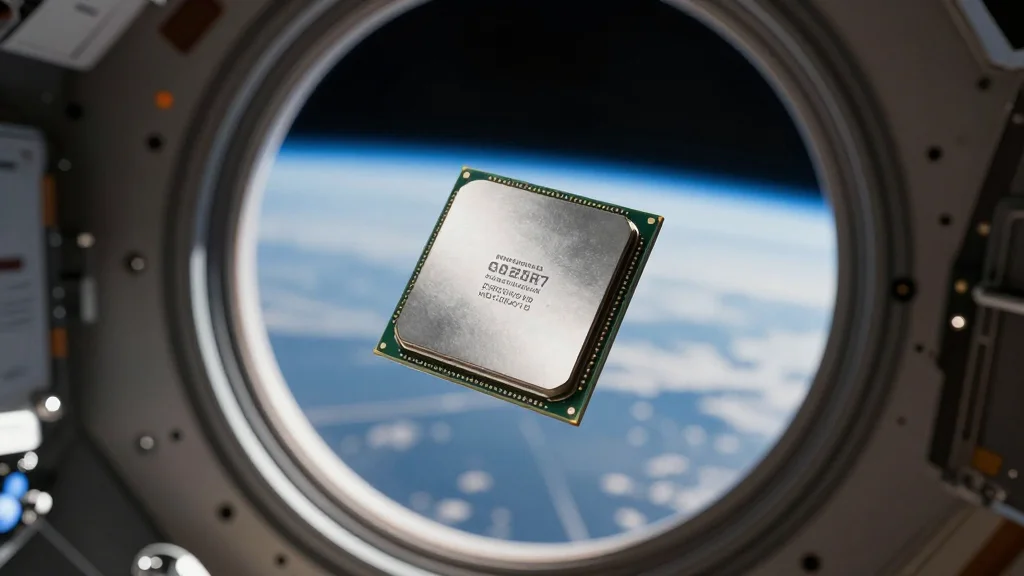
Infleqtion Partners with NASA to Deploy Quantum Hardware on ISS, Stock Rises 3%

Companies Mentioned
Why It Matters
Embedding quantum processors on the ISS provides a unique testbed for evaluating hardware performance under conditions unattainable on Earth. Success could accelerate the rollout of quantum‑enhanced navigation, secure communications, and sensing for both government and commercial satellite operators. Moreover, the partnership signals that federal agencies are willing to back private quantum firms, potentially unlocking additional funding streams and fostering a broader ecosystem of space‑based quantum research. The move also underscores a strategic shift: quantum technology is no longer confined to laboratory benches but is becoming a critical component of national security and aerospace infrastructure. If Infleqtion's hardware demonstrates superior resilience to radiation and microgravity, it could set a new benchmark for quantum hardware design, influencing standards across the industry and prompting rivals to pursue similar orbital experiments.
Key Takeaways
- •Infleqtion's shares rose 3.36% to $11.70 after announcing the NASA partnership
- •Quantum hardware will be delivered to the ISS via the Northrop Grumman‑24 cargo mission
- •The experiment targets longer‑duration testing of quantum coherence in microgravity
- •Market cap reached approximately $1.2 billion, with analysts raising price targets
- •Successful results could lead to follow‑on missions for the Lunar Gateway and deep‑space probes
Pulse Analysis
Infleqtion's decision to place quantum hardware on the ISS reflects a broader trend of leveraging space as a proving ground for emerging technologies. Historically, quantum research has been hampered by environmental noise and limited coherence times; the microgravity environment offers a low‑vibration platform that could extend qubit lifetimes, a critical metric for scaling quantum processors. By securing a NASA payload slot, Infleqtion not only gains access to this unique environment but also earns a badge of credibility that can be leveraged in future defense and commercial bids.
From a market perspective, the stock's modest but noticeable uptick suggests that investors view the partnership as a risk mitigator rather than a speculative gamble. The quantum hardware market is still nascent, with total addressable revenue projected at $15 billion by 2030. Infleqtion's move could help it capture a larger slice of the aerospace and defense sub‑segment, which is expected to grow faster than the broader quantum computing market due to heightened geopolitical competition.
Looking forward, the key question is whether the ISS experiment can translate into quantifiable performance gains that justify the added cost of space deployment. If the data shows a meaningful improvement in error rates or coherence, Infleqtion could position itself as the go‑to supplier for quantum‑ready satellites, potentially reshaping the supply chain for secure communications and navigation. Conversely, technical setbacks could reinforce the perception that terrestrial quantum platforms remain the more pragmatic path. The outcome will likely influence not only Infleqtion's valuation but also the strategic calculus of other quantum firms considering space‑based experiments.
Infleqtion Partners with NASA to Deploy Quantum Hardware on ISS, Stock Rises 3%
Comments
Want to join the conversation?
Loading comments...