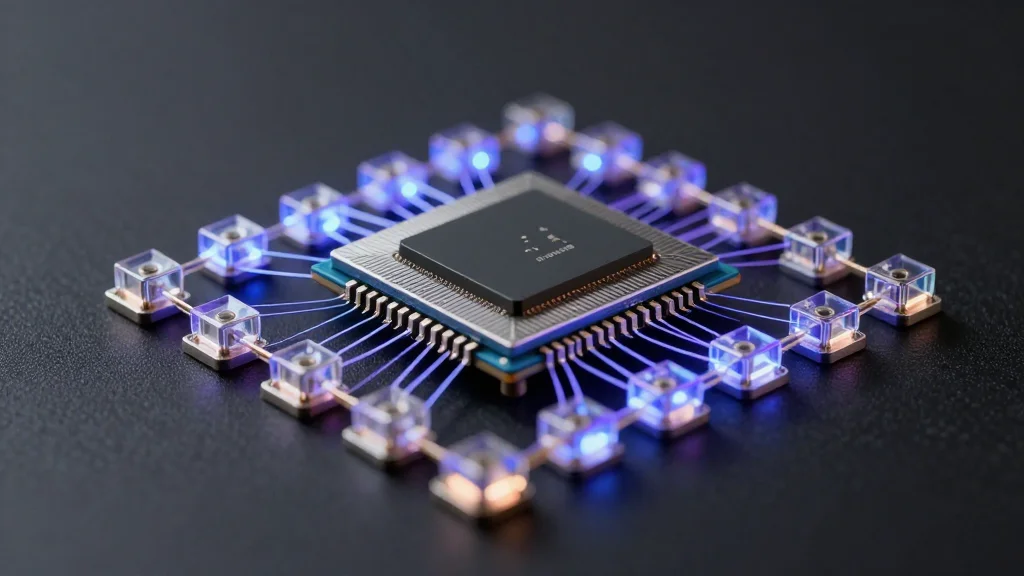
Infleqtion Wins $2 Million DARPA Contract to Advance Heterogeneous Quantum Computing

Companies Mentioned
Why It Matters
The DARPA contract elevates Infleqtion from a niche neutral‑atom player to a central software partner in the U.S. quantum ecosystem. By tackling the compiler challenge, the project addresses a critical layer that has slowed the transition from isolated quantum prototypes to interoperable, mission‑critical systems. Success could accelerate the timeline for heterogeneous quantum computers, which promise higher performance and resilience than any single‑technology approach. Beyond the technical realm, the award underscores the U.S. government’s strategy of leveraging commercial innovators to maintain a strategic edge. As rival nations pour resources into quantum hardware, the ability to rapidly integrate diverse qubit technologies could become a decisive factor in national‑security applications, from secure communications to advanced simulation.
Key Takeaways
- •Infleqtion receives a $2 million, 24‑month DARPA contract for the HARQ program.
- •The award funds development of Multistaq, a compiler that unifies multiple qubit modalities.
- •Project focuses on Technical Area 1: quantum circuit compilation across heterogeneous platforms.
- •Collaboration includes researchers from the University of Chicago and leverages Infleqtion’s Superstaq™ technology.
- •Mid‑term review scheduled for early 2027 to demonstrate cross‑platform compilation of benchmark algorithms.
Pulse Analysis
Infleqtion’s DARPA win arrives at a moment when the quantum hardware market is fragmenting into specialized niches—superconducting chips dominate cloud services, trapped ions excel in fidelity, and neutral atoms promise scalability. The industry has long lacked a unifying software layer, forcing developers to rewrite code for each platform. Multistaq’s ambition to provide a single compilation pipeline could become the de‑facto standard, much like CUDA did for GPU computing. If Infleqtion can deliver on its promise, it will not only lock in a pipeline of federal contracts but also attract a wave of commercial customers seeking hardware‑agnostic quantum solutions.
From a competitive standpoint, the contract differentiates Infleqtion from peers such as IonQ and Rigetti, which have focused primarily on hardware sales and proprietary software stacks. By positioning itself as the software glue for heterogeneous systems, Infleqtion may capture a larger share of the emerging quantum‑as‑a‑service market, especially as defense agencies look to hedge against technology risk by diversifying qubit sources. The modest size of the DARPA award suggests a proof‑of‑concept phase, but the strategic importance of the work could translate into multi‑year, multi‑million follow‑on funding if milestones are met.
Looking ahead, the success of Multistaq could catalyze a broader ecosystem of cross‑compatible quantum tools, encouraging hardware vendors to adopt open interfaces and standards. This shift would lower barriers to entry for startups and academic groups, accelerating innovation across the quantum stack. Conversely, failure to demonstrate tangible performance gains could reinforce the status quo of siloed development, slowing the pace at which quantum advantage is realized for national‑security missions.
Infleqtion Wins $2 Million DARPA Contract to Advance Heterogeneous Quantum Computing
Comments
Want to join the conversation?
Loading comments...