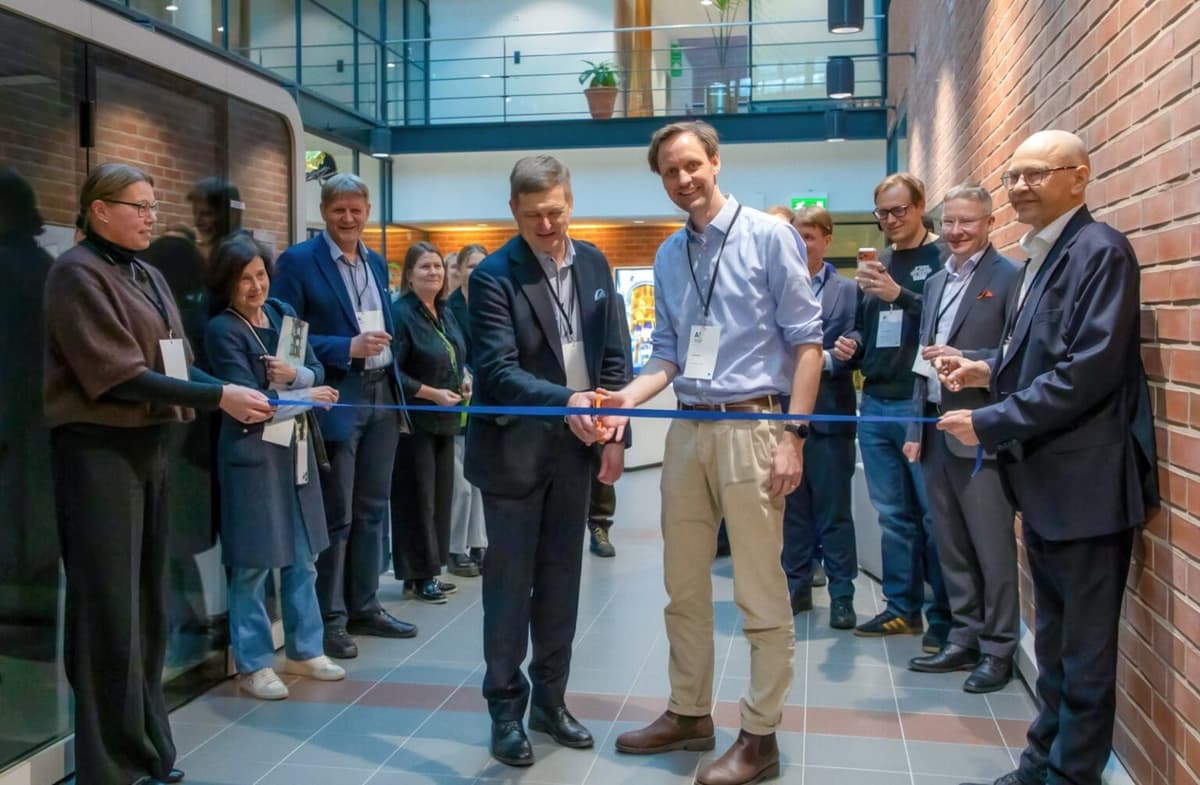
IQM Deploys 20-Qubit Quantum Computer at Aalto University
•March 11, 2026
0
Why It Matters
The integration of a quantum processor with a leading European supercomputer accelerates hybrid computing research and showcases a viable commercial pathway for quantum hardware, reinforcing Europe’s strategic position in the emerging quantum market.
Key Takeaways
- •IQM delivered fourth 20‑qubit system in Finland.
- •Aalto Q20 integrates with LUMI pre‑exascale supercomputer.
- •Hybrid quantum‑HPC aims to serve EU research community.
- •Deployment supports Finland’s goal of 3,000 quantum workforce.
- •IQM’s SPAC merger prepares company for public listing.
Pulse Analysis
Quantum computing is moving from laboratory prototypes to operational platforms, and Europe is positioning itself as a key hub. IQM Quantum Computers, a Finnish‑origin startup, has now installed its fourth 20‑qubit superconducting processor, the Aalto Q20, directly on the campus of Aalto University. The on‑premises deployment follows IQM’s full‑stack model, giving researchers direct control over hardware, data, and intellectual property. By situating the machine within a leading academic environment, IQM accelerates experimental cycles and provides a tangible testbed for quantum algorithms that were previously confined to cloud access.
The strategic partnership with CSC – IT Center for Science links the Aalto Q20 to LUMI, Europe’s most powerful pre‑exascale supercomputer. This hybrid architecture enables quantum‑accelerated high‑performance computing, where classical workloads can offload specific sub‑problems to the quantum processor, potentially reducing time‑to‑solution for chemistry, materials science, and optimization tasks. For the broader EU research community, the integration offers a shared gateway to quantum resources without the need for individual institutions to maintain costly cryogenic infrastructure. Early benchmarks suggest that even a 20‑qubit device can deliver measurable speed‑ups when paired with massive classical cores.
Beyond the hardware, the deployment underpins Finland’s national quantum technology strategy, which forecasts a demand for 3,000 skilled professionals in the sector. IQM complements its machines with the IQM Academy, delivering curricula that turn students into quantum engineers capable of maintaining and programming superconducting qubits. The timing coincides with IQM’s preparation for a public listing via a SPAC merger, signaling confidence in commercializing quantum hardware at scale. Investors and policymakers alike view this move as validation that Europe’s quantum ecosystem is maturing from research grants to market‑ready solutions.
IQM Deploys 20-Qubit Quantum Computer at Aalto University
0
Comments
Want to join the conversation?
Loading comments...