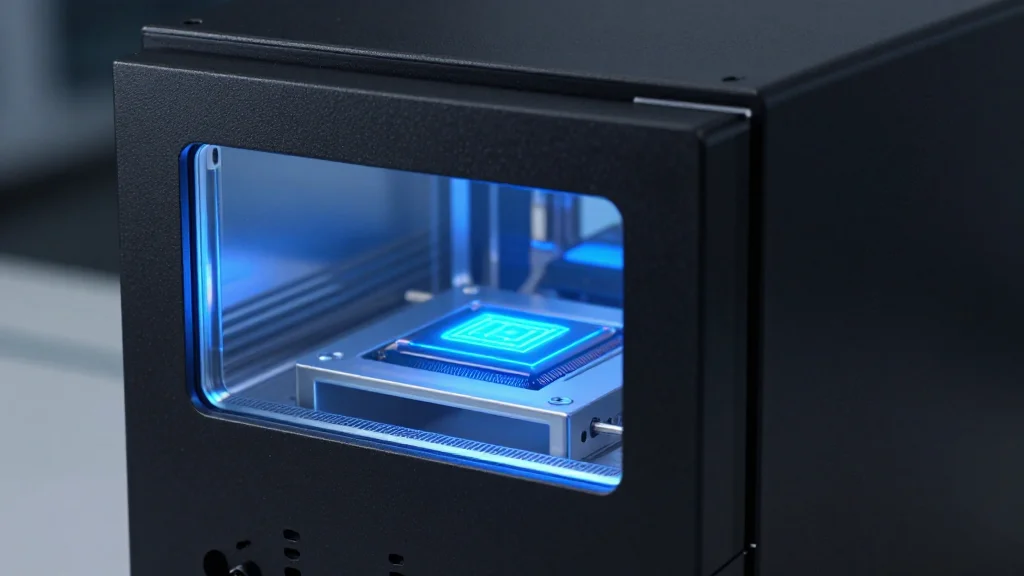
Italy Deploys Lagrange, Europe’s First Public‑Access Quantum Computer

Companies Mentioned
Why It Matters
Lagrange demonstrates that open‑access quantum computing can be delivered at scale without sacrificing reliability or security. By embedding billing and project‑management tools directly into the quantum stack, Italy creates a sustainable model that could be adopted across Europe, reducing dependence on proprietary cloud services and fostering a more collaborative research environment. The platform also provides a real‑world laboratory for students, accelerating the development of a skilled quantum workforce essential for future industry growth. Moreover, the success of Lagrange may shift the competitive dynamics of the global quantum market. As European researchers gain direct, affordable access to quantum hardware, the region could see a surge in home‑grown algorithms, patents and startups, challenging the dominance of U.S. and Asian quantum cloud providers. The initiative therefore has implications not only for scientific progress but also for economic and strategic positioning in the emerging quantum economy.
Key Takeaways
- •Lagrange processed >240,000 quantum jobs in its first nine months
- •System uptime exceeded 98% since September 2025
- •Five‑qubit IQM Spark superconducting processor now open to public users
- •Managed by LINKS Foundation, Politecnico di Torino and INRiM
- •New middleware adds billing, project management and fair‑usage enforcement
Pulse Analysis
Lagrange’s launch marks a pivotal moment in Europe’s quantum strategy, moving the continent from a fragmented, research‑only landscape to a service‑oriented ecosystem. The key differentiator is the middleware layer, which translates raw quantum hardware into a cloud‑like offering while preserving the unique constraints of superconducting qubits. This approach mirrors the evolution of classical high‑performance computing, where resource managers and schedulers turned isolated clusters into shared services. By solving the “access‑vs‑control” dilemma, Italy has set a template that other EU members can replicate, potentially leading to a federated network of open quantum resources.
From a market perspective, the platform’s billing capability introduces a modest but meaningful revenue stream that can fund hardware upgrades and software development. It also creates a data‑rich environment for studying usage patterns, informing future procurement decisions and policy. Companies looking to prototype quantum‑enhanced applications now have a low‑friction entry point, which could accelerate the commercialization pipeline for quantum software startups in Europe.
The broader strategic implication is the reduction of technology dependence on non‑European providers. As more research groups adopt Lagrange for algorithm development and error‑correction experiments, Europe builds a domestic knowledge base that can feed into next‑generation fault‑tolerant machines. If the platform scales as planned, it could become a cornerstone of the EU’s Quantum Flagship, delivering both scientific breakthroughs and economic returns.
In the short term, the biggest challenge will be maintaining the high uptime and fair‑usage guarantees as demand grows. The consortium’s service‑level agreements will be tested as industry pilots and academic courses converge on the same limited qubit pool. Success will hinge on continuous software refinement and possibly expanding the hardware footprint beyond the current five‑qubit Spark. If those hurdles are cleared, Lagrange could evolve from a pioneering pilot into a cornerstone of Europe’s quantum infrastructure.
Italy Deploys Lagrange, Europe’s First Public‑Access Quantum Computer
Comments
Want to join the conversation?
Loading comments...