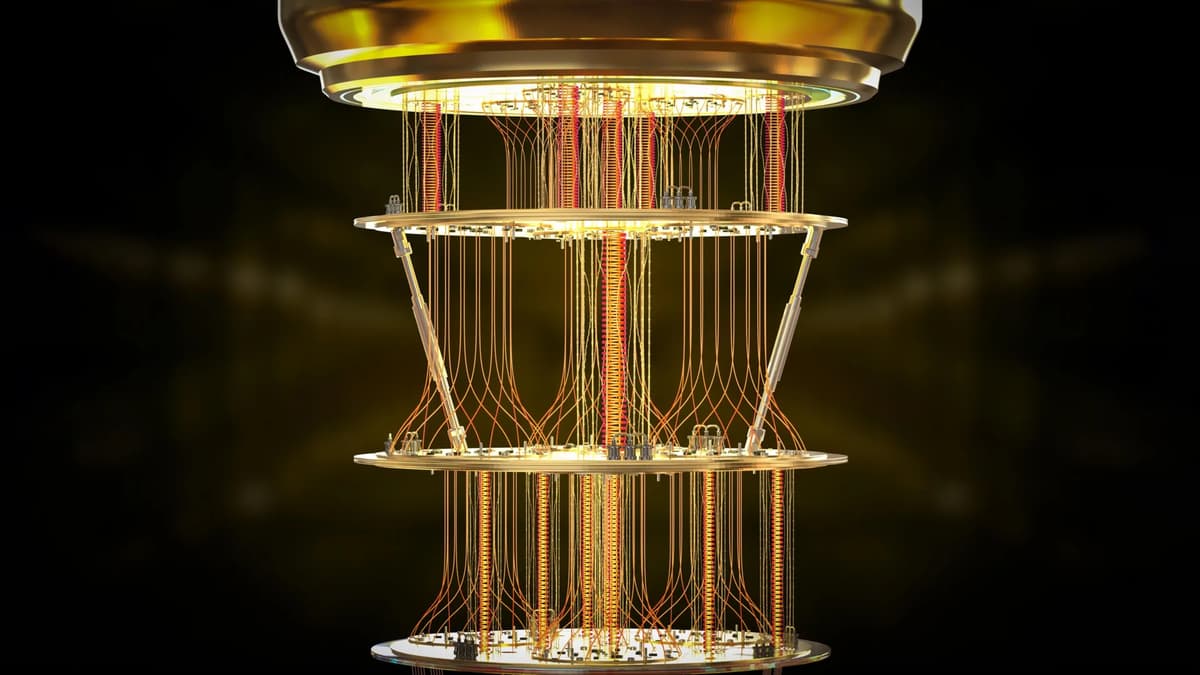
JUPITER Supercomputer Breaks World Record with 50-Qubit Quantum Simulation
Why It Matters
The breakthrough demonstrates that exascale HPC can model quantum systems beyond current hardware limits, accelerating algorithm development and informing future quantum processor designs. It also showcases Europe’s growing leadership in high‑performance and quantum computing convergence.
Key Takeaways
- •JUPITER simulates 50 qubits, surpassing previous 48‑qubit record
- •Simulation consumes ~2 petabytes memory, equivalent to two million gigabytes
- •NVIDIA GH200 Superchips enable CPU‑GPU memory sharing for quantum workloads
- •JUQCS‑50 software will be offered via JUNIQ to external researchers
- •Exascale performance links HPC advances directly to quantum algorithm development
Pulse Analysis
The JUPITER exascale system’s 50‑qubit simulation marks a watershed moment for both high‑performance computing (HPC) and quantum research. By pushing the envelope of classical simulation, the project illustrates how Europe’s HPC infrastructure can rival and even exceed the capabilities of legacy supercomputers like Japan’s K computer. This achievement not only sets a new benchmark for quantum emulation but also validates the strategic investments made by EuroHPC, the German Federal Ministry of Research, and regional partners.
Technically, the record hinges on NVIDIA’s GH200 Superchips, which fuse CPU and GPU memory hierarchies to handle the massive data flow required for quantum state vectors. The updated JUQCS‑50 simulator employs an eight‑fold byte‑encoding compression and a dynamic optimization layer that coordinates more than 16,000 GH200 units, slashing memory demands while preserving fidelity. The result is a simulation that processes over 2 quadrillion complex numbers in real time, a scale previously unattainable on conventional clusters.
Looking ahead, the availability of JUQCS‑50 through the JUNIQ platform opens doors for academia and industry to test algorithms such as VQE and QAOA without waiting for fault‑tolerant quantum hardware. This accelerates research in drug discovery, materials science, logistics, and finance, where quantum advantage promises substantial gains. Moreover, the collaboration between Jülich and NVIDIA exemplifies a co‑design model that could become standard as HPC and quantum technologies converge, positioning Europe as a hub for next‑generation computational innovation.
JUPITER supercomputer breaks world record with 50-qubit quantum simulation
Comments
Want to join the conversation?
Loading comments...