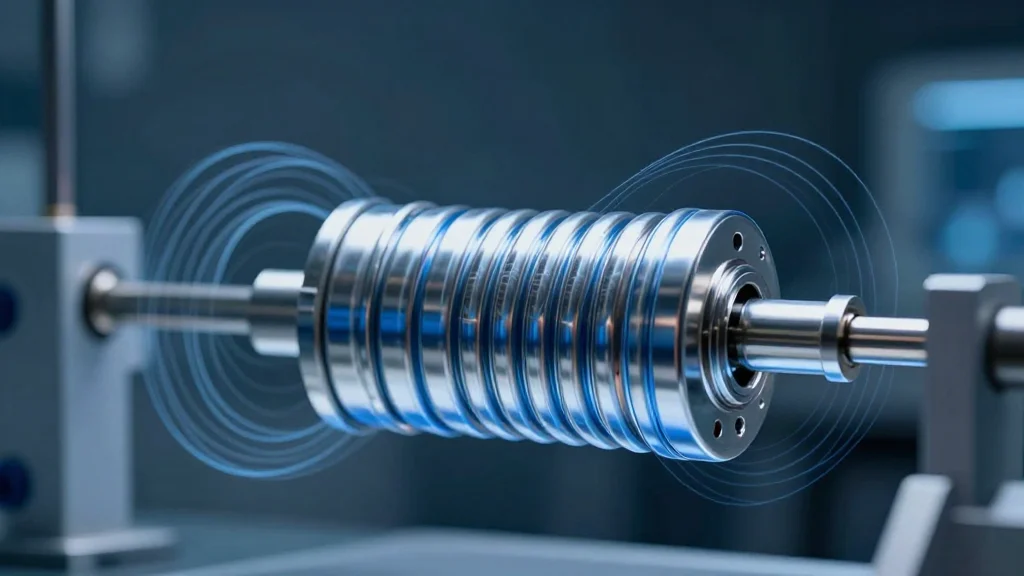
Lawrence Livermore National Laboratory Receives $4.1M ARPA-E Award to Develop Quantum Algorithms for Magnetic Materials
Why It Matters
Accelerating magnetic‑material discovery could cut energy use in AI‑driven data centers and reduce U.S. reliance on foreign rare‑earth supplies, strengthening both economic competitiveness and national security.
Key Takeaways
- •LLNL awarded $4.1M by ARPA‑E for quantum magnet research
- •Hybrid algorithms will combine supercomputer El Capitan with quantum processors
- •Project targets rare‑earth‑free magnets for EVs, wind turbines, MRAM
- •10,000 physical qubits aim to produce 100 logical qubits
- •Prototype testing starts early 2027, with two‑year refinement phase
Pulse Analysis
Quantum computing is moving from theoretical promise to practical toolkits for materials science, and the Department of Energy’s ARPA‑E QC3 program is a key catalyst. By funding projects that blend classical high‑performance computing with emerging quantum processors, the agency hopes to overcome the exponential scaling barriers that have long limited magnetic‑material simulations. LLNL’s selection reflects its deep expertise in electronic‑structure codes and access to El Capitan, the nation’s most powerful supercomputer, positioning it to lead a new generation of algorithmic breakthroughs.
The technical core of the LLNL effort is a hybrid workflow that offloads the many‑body spin calculations to neutral‑atom quantum hardware while retaining the bulk of the simulation on classical nodes. This division of labor promises a scalable quantum advantage, especially as the team pursues aggressive error‑correction schemes—grouping roughly 10,000 physical qubits to forge 100 logical qubits. By integrating machine‑learning models to screen candidate compounds, the project aims to accelerate the identification of magnets that combine high coercivity with low weight, a combination critical for next‑generation electric drives and memory technologies.
Strategically, the outcomes could reshape several high‑growth sectors. A 20% reduction in the energy required to flip magnetic states in MRAM would lower data‑center power draw, directly benefiting AI workloads. Rare‑earth‑free magnets would diversify supply chains currently dominated by China, enhancing U.S. manufacturing resilience. In automotive and aerospace, lighter, corrosion‑resistant magnets translate to longer electric‑vehicle range and more efficient wind turbines. Collectively, these advances position the United States to capture emerging market share in clean‑energy hardware and secure a technological edge in national‑security‑critical applications.
Lawrence Livermore National Laboratory Receives $4.1M ARPA-E Award to Develop Quantum Algorithms for Magnetic Materials
Comments
Want to join the conversation?
Loading comments...