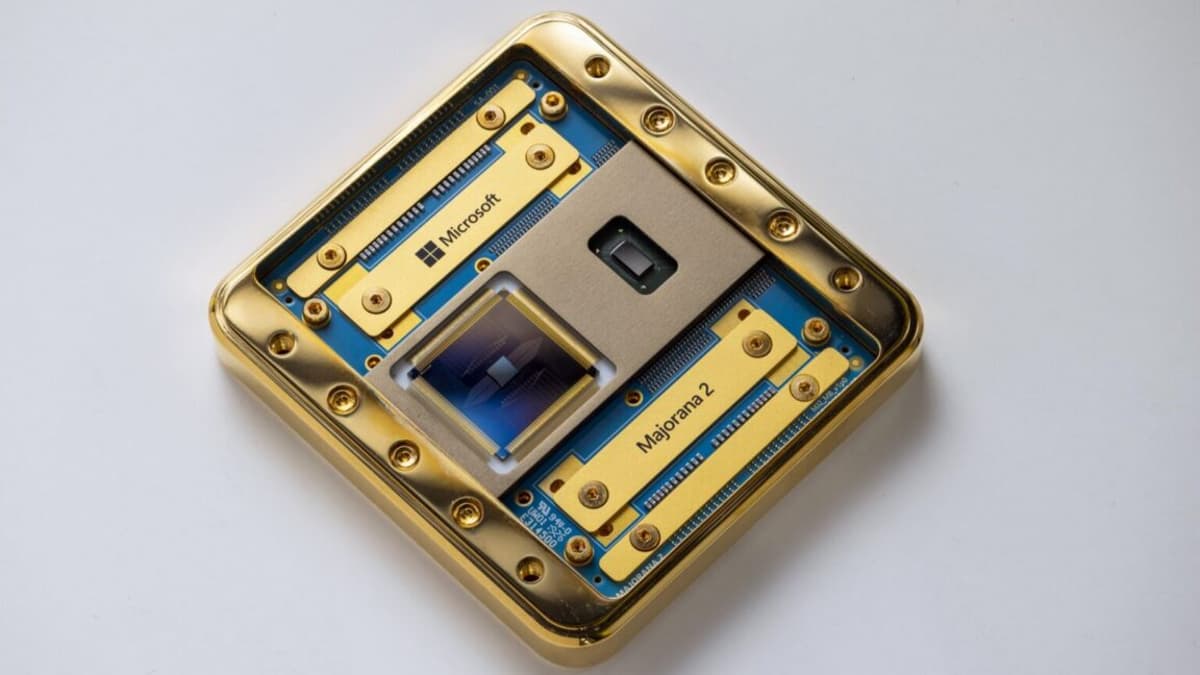
Microsoft, Atom Computing, EeroQ Update Their Quantum Computing Progress
Companies Mentioned
Why It Matters
These incremental gains tighten the gap between laboratory prototypes and fault‑tolerant quantum processors, accelerating the timeline for commercial quantum advantage across industries.
Key Takeaways
- •Microsoft swapped aluminum for lead, extending parity stability to 20 seconds.
- •Atom Computing’s spare-atom swap kept logical qubit error rate constant.
- •EeroQ added resonator to helium pool, enabling electron‑motion coupling.
- •Topological qubit progress still lacks controllable parity manipulation for computation.
- •Error‑corrected logical qubits now survive up to 90 measurement rounds.
Pulse Analysis
The quantum‑computing sector is moving from headline‑grabbing milestones to the gritty, material‑science work that underpins real‑world performance. Companies such as Microsoft, Atom Computing and EeroQ illustrate how incremental engineering—whether swapping superconductors, refining optical‑tweezer protocols, or adding resonant structures—creates measurable stability gains. These advances matter because quantum error correction, the cornerstone of scalable quantum processors, hinges on qubits that can retain coherence long enough for logical operations.
Microsoft’s latest topological‑qubit prototype replaces aluminum with lead and adds tin‑doped semiconductor layers, boosting parity‑state lifetimes from sub‑10‑millisecond bursts to more than 20 seconds. This material overhaul improves spin‑orbit coupling, a critical factor for protecting qubits against decoherence. Although the platform still lacks reliable parity manipulation for gate operations, the extended coherence window narrows a key hurdle for implementing topological error‑correction codes.
Atom Computing’s optical‑tweezer architecture tackles a different bottleneck: thermal drift of trapped atoms during error‑correction cycles. By swapping in pre‑cooled spare atoms, the firm keeps logical‑qubit error probabilities steady across repeated measurements, achieving up to 90 stable rounds. Meanwhile, EeroQ’s resonator‑enhanced helium‑pool design demonstrates controllable coupling of an electron’s motional states, a novel route to electron‑spin qubits. Together, these incremental breakthroughs illustrate a broader industry trend: practical quantum hardware will emerge from a mosaic of material, control‑system, and architectural refinements rather than a single breakthrough.
Microsoft, Atom Computing, EeroQ update their quantum computing progress
Comments
Want to join the conversation?
Loading comments...