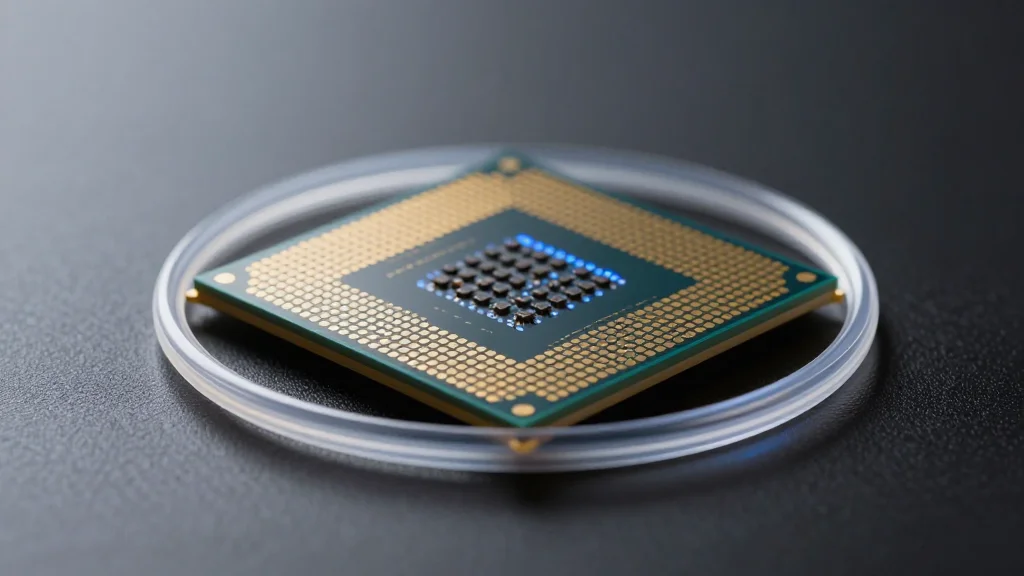
Microsoft Unveils Majorana 2 Chip, Claims 1,000‑Fold Qubit Reliability Amid Skepticism

Companies Mentioned
Why It Matters
If Microsoft’s reliability improvements prove real, the Majorana 2 chip could shift the balance of power in the quantum computing race, giving a cloud giant a proprietary hardware stack that integrates tightly with its AI services. A functional topological qubit platform would also validate a decades‑old theoretical approach, potentially opening new pathways for error‑corrected quantum architectures. Conversely, persistent skepticism underscores the broader issue of transparency in quantum research. Without peer‑reviewed data, investors, governments, and developers may hesitate to commit resources, slowing the commercialization of quantum‑enhanced applications such as cryptography, materials discovery, and complex optimization.
Key Takeaways
- •Microsoft announced Majorana 2, claiming a 1,000‑fold increase in qubit reliability
- •Average qubit lifetime reported at ~20 seconds, up from milliseconds on Majorana 1
- •The chip contains 12 topological qubits and uses a lead‑based superconductor
- •Microsoft targets a scalable quantum computer by 2029, cutting its original timeline in half
- •Physicists and former skeptics question the claims, noting the need for millions of qubits and lack of peer‑reviewed data
Pulse Analysis
Microsoft’s Majorana 2 announcement is a classic example of a tech giant leveraging brand momentum to set an ambitious roadmap in a field where progress is notoriously incremental. The 1,000‑fold reliability claim, if substantiated, would be a watershed for topological qubits, which have long suffered from low coherence times. By coupling the chip’s design with its internal AI platform, Microsoft signals a strategy to accelerate hardware‑software co‑development, a tactic that could shorten the typical multi‑year iteration cycles seen at academic labs.
However, the quantum ecosystem remains highly fragmented. IBM’s roadmap focuses on scaling superconducting qubits, while Google’s Sycamore line pursues error‑corrected gates via surface‑code techniques. Microsoft’s topological approach offers theoretical error‑resilience, but the field has yet to produce a clear, reproducible demonstration at scale. The skepticism from academics like Paul Stevenson and the lingering memory of the 2018 retracted Nature paper suggest that the company still needs to win over the broader scientific community. DARPA’s involvement adds credibility but also raises expectations for rigorous validation.
From a market perspective, a successful Majorana 2 could bolster Azure Quantum’s value proposition, attracting enterprise customers seeking integrated quantum‑AI solutions. It would also differentiate Microsoft from rivals that rely on third‑party hardware providers. Yet, investors will likely temper enthusiasm until the promised 2028 prototype and a peer‑reviewed technical paper materialize. In the short term, the announcement fuels hype and positions Microsoft as a front‑runner, but the real test will be whether the chip’s performance can be independently verified and scaled to the millions of qubits required for fault‑tolerant computation.
Microsoft Unveils Majorana 2 Chip, Claims 1,000‑Fold Qubit Reliability Amid Skepticism
Comments
Want to join the conversation?
Loading comments...