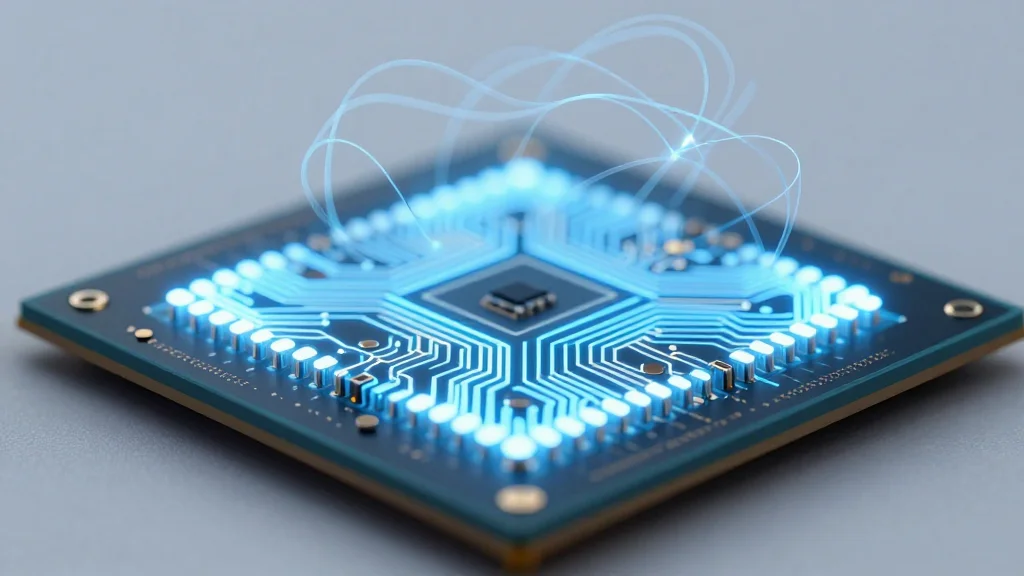
Microsoft’s Majorana 2 Quantum Chip Is Also a Case Study for Agentic AI in R&D

Companies Mentioned
Why It Matters
The chip’s reliability leap pushes Microsoft’s quantum roadmap to a commercially viable system by 2029, reshaping competitive timelines. More broadly, the success proves that agentic AI can accelerate complex scientific R&D, opening new revenue streams for AI‑driven research platforms.
Key Takeaways
- •Majorana 2 qubits 1,000× more reliable than first generation
- •Mean qubit lifetime reaches 20 seconds, vs microseconds industry norm
- •Microsoft Discovery AI automated measurements, cutting weeks-long tasks to minutes
- •AI agents mapped 3D qubit conditions, handling hundreds of parameters simultaneously
- •Discovery platform now generally available to enterprises with free Copilot‑linked app
Pulse Analysis
Quantum computing has long been hampered by fragile qubits that lose coherence in microseconds, limiting practical applications. Microsoft’s Majorana 2 chip breaks that barrier with a 20‑second average qubit lifetime, a scale that rivals a smartphone battery lasting years. By extending coherence, the chip narrows the gap between experimental labs and commercial quantum services, potentially accelerating breakthroughs in cryptography, materials science, and complex optimization.
The engine behind this leap is Microsoft Discovery, an agentic AI system designed for scientific R&D. Rather than inventing new materials, the AI orchestrated the entire research pipeline: it digested twenty years of siloed data, identified the pivotal switch from aluminium to lead, and automated the painstaking measurement of qubit states. The platform built three‑dimensional condition maps and adjusted hundreds of voltage parameters in parallel, compressing weeks‑long experiments into minutes. This level of autonomous data synthesis showcases how AI can augment human insight, enabling researchers to test a hypothesis once instead of iterating endlessly.
With Discovery now offered as a general‑availability service, Microsoft is positioning itself at the intersection of quantum hardware and enterprise AI tools. Companies can leverage the same agents to accelerate their own R&D, from drug discovery to advanced materials, while benefiting from Microsoft’s security and governance framework. The revised quantum timeline—targeting scalable hardware by 2029—signals intensified competition with IBM and Google, but also creates a new market for AI‑driven research platforms that promise faster, cheaper innovation cycles.
Microsoft’s Majorana 2 quantum chip is also a case study for agentic AI in R&D
Comments
Want to join the conversation?
Loading comments...