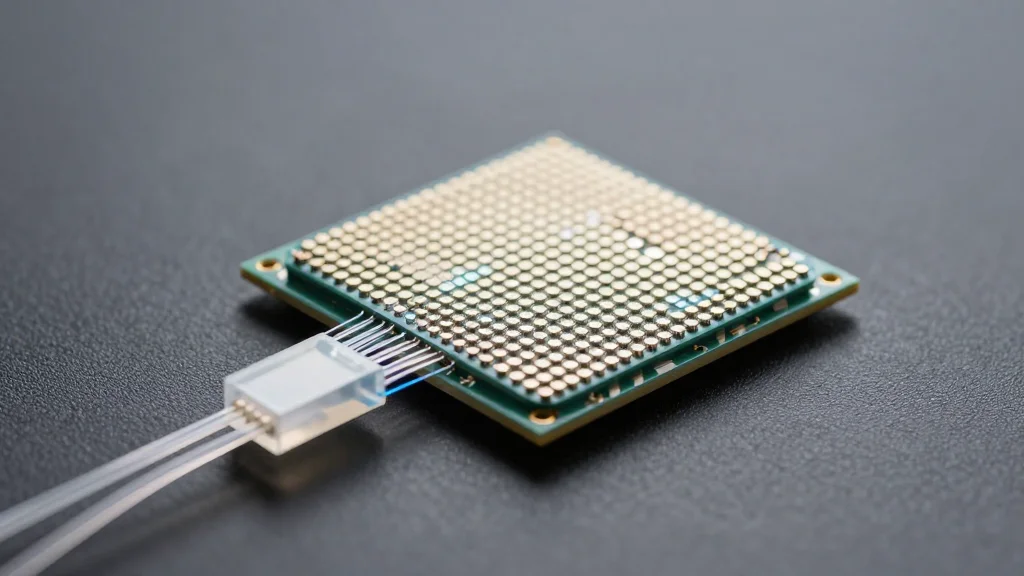
Nu Quantum Demonstrates Subsystem Erasure Tolerance in Networked QPU Architectures
Companies Mentioned
Why It Matters
The method keeps quantum computations running despite hardware failures, cutting the cost and complexity of building massive monolithic chips. It marks a strategic move toward networked quantum processors, accelerating industry timelines for usable quantum advantage.
Key Takeaways
- •Distributed QEC tolerates complete QPU failure as correctable erasures
- •16‑48 qubits per node, linked via photonic entanglement fabric
- •Six‑fold qubit efficiency gain versus traditional concatenated codes
- •Toric code outperforms monolithic chips below 0.05% physical error rate
Pulse Analysis
Quantum error correction has long been the bottleneck for scaling quantum computers. Traditional approaches rely on concatenating codes within a single, ever‑larger chip, which inflates hardware demands and magnifies fabrication risk. Distributed quantum architectures promise a different path: spreading logical information across many smaller modules, each easier to produce and maintain, while preserving the global code’s integrity through entanglement links.
Nu Quantum’s recent work puts this concept into practice. The company’s Entanglement Fabric uses dedicated qubit‑photon interfaces to generate Bell‑state and GHZ resources across a fully connected photonic network. When a node must be taken offline—whether for scheduled calibration or an unexpected failure—the system teleports its quantum data to a standby module and re‑routes the optical switches in real time. Simulations indicate that this strategy reduces the qubit overhead by a factor of six compared with classic concatenated codes, and that a distributed toric code outperforms a monolithic processor once physical error rates fall below 0.05 %.
The broader impact is significant for investors and developers alike. A fault‑tolerant, modular quantum computer can be assembled from existing 16‑48‑qubit devices, lowering entry barriers and accelerating deployment schedules. Moreover, the ability to handle catastrophic node loss without halting computation improves reliability, a key requirement for commercial quantum services. As industry consortia and national programs prioritize networked quantum infrastructure, Nu Quantum’s architecture could become a reference model for the next generation of scalable quantum processors.
Nu Quantum Demonstrates Subsystem Erasure Tolerance in Networked QPU Architectures
Comments
Want to join the conversation?
Loading comments...