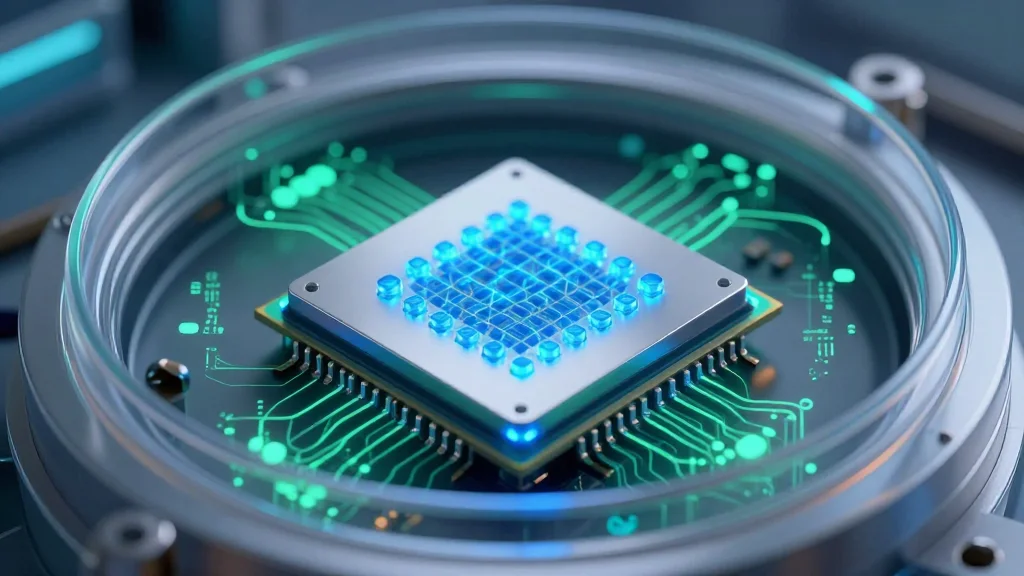
Nvidia Unveils Open‑Source Ising Model, Sending Quantum Start‑Ups’ Shares Soaring

Companies Mentioned
Why It Matters
Nvidia’s Ising model could dramatically lower the expertise barrier that has kept quantum computing confined to academic labs. By providing an AI‑driven control plane, the framework promises faster error correction, more reliable qubit operation, and a unified software stack that could accelerate the transition from noisy intermediate‑scale quantum (NISQ) devices to fault‑tolerant machines. For investors, the stock rally of IonQ, Rigetti and D‑Wave signals a market belief that hardware vendors will benefit from a shared, open‑source ecosystem rather than competing proprietary silos. Beyond immediate financial impacts, the move reshapes the competitive landscape. Nvidia’s dominance in AI hardware gives it leverage to set de‑facto standards for quantum‑classical integration, potentially marginalizing rivals like IBM and Google unless they respond with comparable open‑source offerings. The partnership model also hints at a new revenue stream for Nvidia: licensing premium AI‑optimised toolchains while keeping the core code free, a strategy that has powered its CUDA ecosystem for over a decade.
Key Takeaways
- •Nvidia launched the open‑source Ising AI model for quantum processors, branding AI as the quantum control plane.
- •IonQ shares rose 21%, Rigetti jumped 13.3%, and D‑Wave surged 22.6% after the announcement.
- •Ising builds on Nvidia’s CUDA‑Q platform and aims to standardize quantum‑classical integration, similar to TCP/IP’s role for the internet.
- •CEO Jensen Huang reversed his earlier 15‑30‑year timeline, calling quantum computing an "inflection point" and signaling a commercial bet.
- •Analysts expect a joint benchmark demo with IonQ and Rigetti later this quarter to test Ising’s real‑world performance.
Pulse Analysis
Nvidia’s entry into the quantum software stack is less a technical surprise than a strategic one. The company has spent the past decade turning open‑source CUDA into a revenue engine, and Ising appears to be the quantum analogue. By open‑sourcing the core, Nvidia lowers adoption friction while preserving the ability to monetize premium extensions, a play that could lock in a large share of future quantum‑classical workloads.
Historically, quantum hardware vendors have struggled to attract a broad developer base; IBM’s Qiskit and Google’s Cirq have made strides but remain niche. Nvidia’s brand equity in AI, combined with its massive developer community, could shift the balance, making quantum programming as commonplace as GPU‑accelerated deep learning. If the Ising model delivers on its promise of AI‑driven error mitigation, it could compress the timeline for achieving quantum advantage, prompting a wave of new applications in materials science, cryptography and logistics.
However, the upside is not guaranteed. Quantum error correction remains a formidable scientific hurdle, and AI‑based mitigation may only buy incremental improvements. Moreover, Nvidia’s dominance could provoke regulatory scrutiny over market concentration in a nascent industry. The coming months—particularly the joint benchmark with IonQ and Rigetti—will reveal whether Ising is a genuine catalyst for quantum adoption or a branding exercise that leverages Nvidia’s AI clout without delivering substantive hardware gains.
Nvidia Unveils Open‑Source Ising Model, Sending Quantum Start‑Ups’ Shares Soaring
Comments
Want to join the conversation?
Loading comments...