Oak Ridge Starts Weaving Together A Quantum, Classical HPC, And AI System Stack
Companies Mentioned

Why It Matters
Integrating quantum, HPC and AI could unlock problems beyond the reach of today’s fastest supercomputers, reshaping national security, scientific discovery and the future of high‑performance computing.
Key Takeaways
- •Oak Ridge pairs Frontier exascale system with quantum test‑beds
- •DOE Genesis Mission provides $293 M for AI‑driven compute platform
- •AI is used for quantum error correction and circuit optimization
- •Hybrid stack aims to treat quantum processors as accelerators
- •Collaboration spans 17 labs and industry leaders like Nvidia, Microsoft
Pulse Analysis
The push toward quantum‑centric supercomputing reflects a broader industry consensus that quantum hardware will complement, not replace, classical HPC. IBM’s recent reference architecture and Nvidia’s interconnect research signal that major vendors are laying the groundwork for seamless hardware coupling. By treating quantum processors as specialized accelerators—much like GPUs did in the early 2000s—organizations can begin to partition workloads, sending only the most quantum‑suitable sub‑tasks to qubit arrays while the bulk of computation stays on traditional cores.
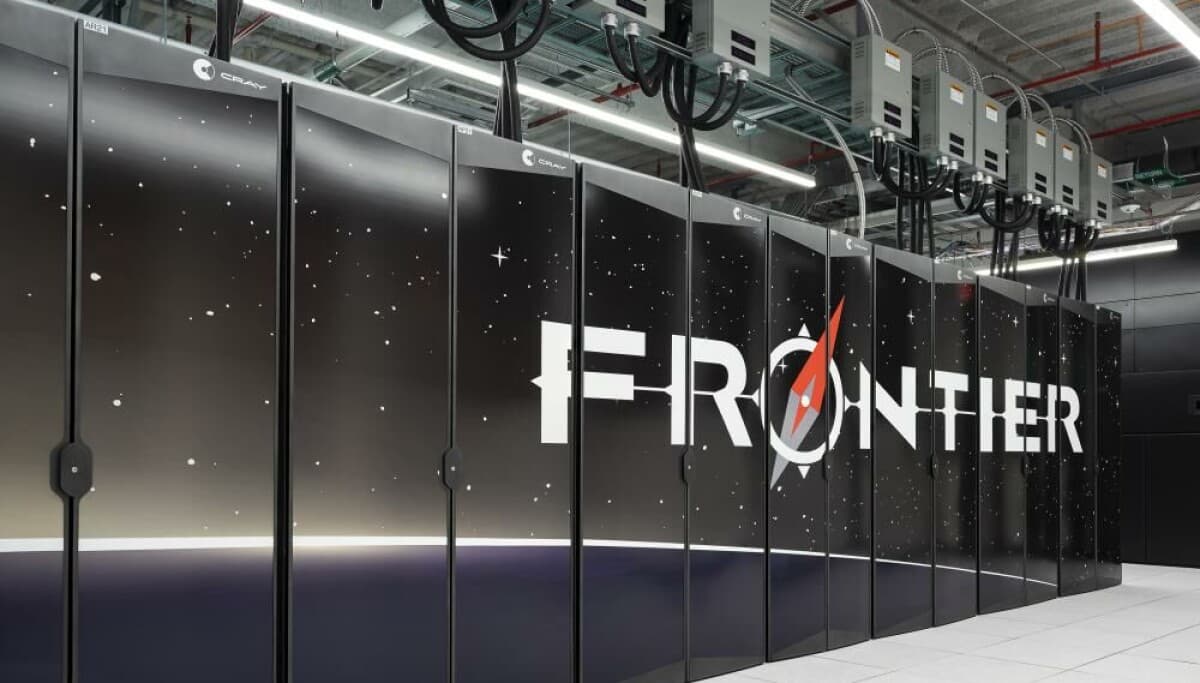
At Oak Ridge, the strategy centers on the Frontier exascale system, a Cray EX235A powered by AMD EPYC CPUs and Instinct MI250X GPUs. Coupled with the DOE’s Genesis Mission—an initiative that poured $293 million into AI‑enabled compute platforms—ORNL is creating a high‑speed network that links classical nodes to quantum processors from the Quantum Computing User Program. The lab’s 2024 study proposes dedicated quantum test beds and a unified software stack that can dynamically route jobs between quantum samplers and classical eigenvalue solvers, effectively turning the hybrid environment into a single, programmable resource.
Artificial intelligence is the glue that makes this hybrid feasible. AI models ingest error telemetry from quantum runs, predict fault patterns, and apply real‑time correction, dramatically reducing the overhead of logical qubit construction. Simultaneously, machine‑learning‑driven circuit optimization trims gate depth, helping quantum devices stay within coherence limits. These AI‑enhanced capabilities not only accelerate material‑science simulations and cryptographic research but also lay a scalable foundation for future commercial quantum services, positioning the United States at the forefront of next‑generation computing ecosystems.
Oak Ridge Starts Weaving Together A Quantum, Classical HPC, And AI System Stack
Comments
Want to join the conversation?
Loading comments...