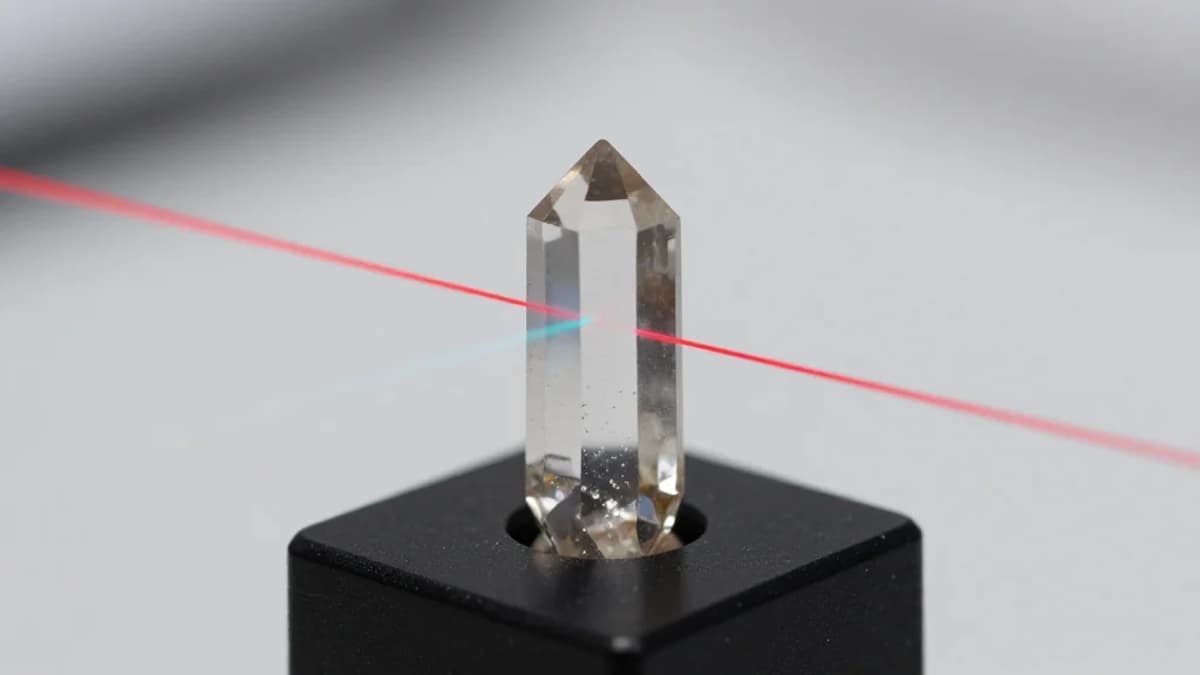
Optical Switch Protocol Verifies Entangled Quantum States in Real Time without Destroying Them
•February 16, 2026
0
Why It Matters
Non‑destructive, real‑time certification accelerates hardware development and error‑correction in quantum computing, reducing costs and time‑to‑market for quantum technologies.
Key Takeaways
- •Real-time verification of entanglement without state destruction
- •Optical switch protocol reduces measurement overhead dramatically
- •Enables scalable quantum computing and network error correction
- •Compatible with existing photonic qubit platforms
- •Potential to accelerate quantum hardware validation pipelines
Pulse Analysis
The verification of quantum states has long been a bottleneck for both research labs and commercial quantum‑technology firms. Conventional tomography requires repeated measurements that collapse the fragile superposition, forcing scientists to discard the very qubits they wish to study. As a result, scaling quantum processors or establishing reliable quantum communication links demands extensive time and costly resources. The recent breakthrough from the University of Vienna introduces an optical‑switch‑based protocol that sidesteps this limitation, allowing entangled states to be certified in real time while leaving the underlying photons intact.
The core of the method relies on a fast optical switch that dynamically routes entangled photons between a weak‑measurement channel and the computational pathway. By probing only a small fraction of the photon stream, the protocol extracts sufficient statistical information to confirm entanglement without collapsing the full quantum state. Real‑time feedback loops adjust the measurement parameters, ensuring that certification keeps pace with the processor’s clock speed. This non‑destructive approach not only preserves coherence for subsequent operations but also reduces the number of required copies, accelerating error‑correction cycles in quantum processors and quantum‑key‑distribution networks.
Industry analysts see this capability as a catalyst for rapid commercialization of photonic quantum hardware. By cutting verification time and resource consumption, manufacturers can iterate designs faster, bringing larger‑scale entangled‑photon chips closer to market. Moreover, the protocol’s compatibility with existing fiber‑optic infrastructure simplifies integration into quantum‑network prototypes, potentially shortening the timeline for secure quantum communication services. As quantum computers move from laboratory curiosities to enterprise‑grade machines, reliable, non‑destructive state certification will become a standard quality‑control metric, driving investment in both hardware and software ecosystems.
Optical switch protocol verifies entangled quantum states in real time without destroying them
0
Comments
Want to join the conversation?
Loading comments...