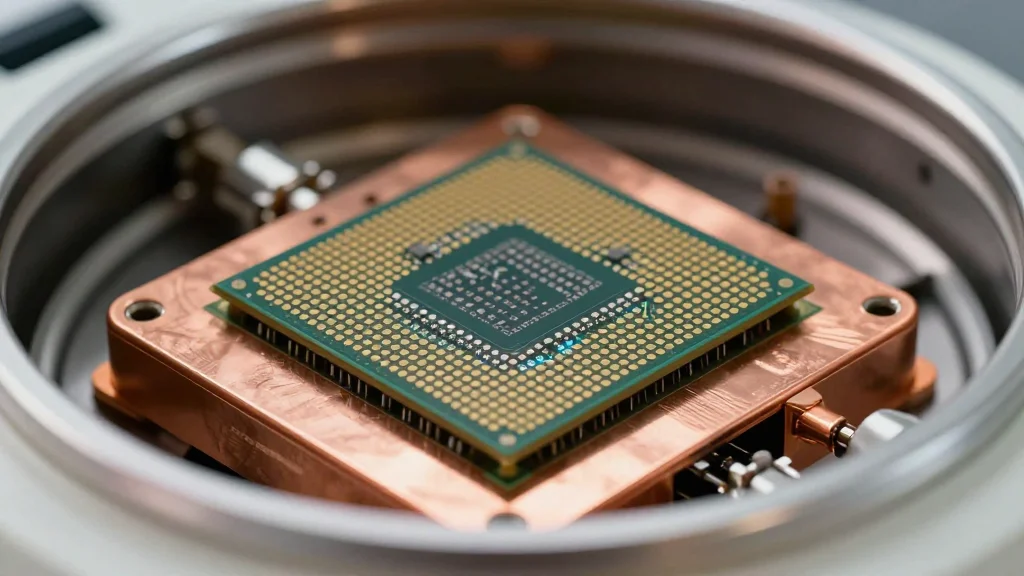
Parity Quantum and Innsbruck Hit 10⁻² Fidelity on 50‑Qubit Processor

Companies Mentioned
Why It Matters
The 10⁻² fidelity milestone signals that quantum hardware is moving from proof‑of‑concept toward usable computational depth. By demonstrating that a 50‑qubit QFT can be run with manageable error rates, the work narrows the gap to quantum advantage for algorithms that underpin cryptography, optimization, and scientific discovery. It also validates parity‑based compilation as a viable route to reduce gate overhead, a critical factor as the community races to meet the error‑correction thresholds required for scalable quantum computers. Beyond the immediate technical gains, the result pressures competing hardware platforms—trapped‑ion, photonic, and other superconducting designs—to match or exceed the combined hardware‑software efficiency demonstrated here. The competitive pressure could accelerate investments in longer‑coherence qubits, more precise microwave control, and advanced compiler stacks, all of which are essential for the next generation of quantum processors.
Key Takeaways
- •Parity Quantum Computing and University of Innsbruck achieved ~10⁻² process fidelity for a 50‑qubit QFT.
- •The result surpasses the previous 36‑qubit benchmark while using one‑third the gate count.
- •iSWAP‑based Parity Twine Networks and XX dynamical decoupling were key to the performance gain.
- •High‑fidelity QFTs enable more reliable Shor’s algorithm and quantum phase estimation, impacting cryptography.
- •Future work aims to push fidelity below 10⁻³ and scale beyond 60 qubits on upcoming hardware.
Pulse Analysis
The record set by Parity Quantum and Innsbruck is less about a single hardware breakthrough and more about the convergence of three trends: hardware maturation, compiler innovation, and error‑mitigation techniques. Historically, superconducting platforms have excelled in raw qubit count but lagged in gate efficiency, forcing algorithm designers to accept deep circuits riddled with errors. The parity‑based approach flips that narrative by front‑loading algorithmic compression, effectively buying fidelity with fewer operations. This mirrors the early days of classical computing, where instruction‑set extensions (e.g., SIMD) unlocked performance without waiting for transistor scaling.
From a market perspective, the achievement could reshape vendor roadmaps. IBM, Google, and emerging European players have all pledged to deliver error‑corrected qubits within the next decade. Demonstrating that a 50‑qubit QFT can be run at 10⁻² fidelity suggests that the error‑correction threshold—often quoted around 10⁻³ for surface codes—may be reachable sooner if software can keep gate counts low. Investors may therefore shift capital toward firms that integrate compiler‑hardware co‑design, a niche where Parity Quantum already has a foothold.
Looking ahead, the real test will be whether the parity methodology scales to the 100‑plus qubit regime without a proportional rise in decoherence. If the team can maintain or improve fidelity while adding qubits, the quantum community could see a cascade of algorithmic demonstrations that were previously deemed out of reach. Such progress would not only accelerate the timeline for quantum‑secure cryptography but also open new avenues in drug discovery and climate modeling, where quantum phase estimation is a critical tool.
Parity Quantum and Innsbruck Hit 10⁻² Fidelity on 50‑Qubit Processor
Comments
Want to join the conversation?
Loading comments...