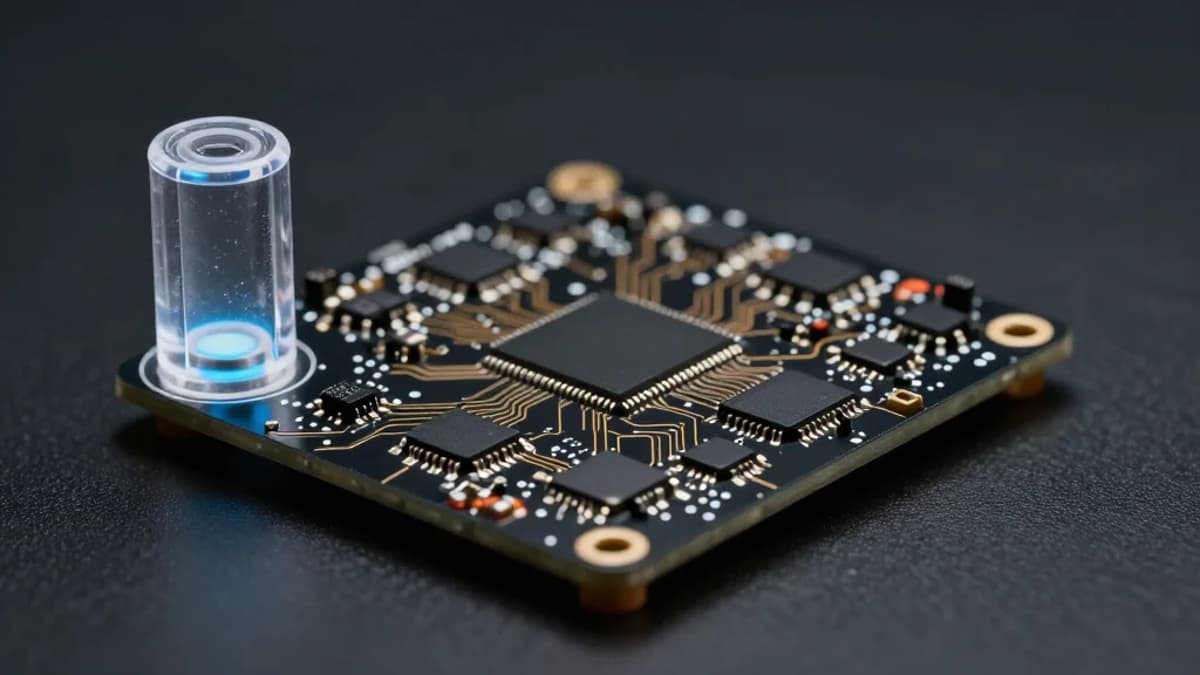
QED-C and NIST Finalize Research to Compact and Optimize Quantum Control Electronics
•February 26, 2026
0
Why It Matters
By cutting size and heat generation, the advances lower the cost and complexity of scaling quantum computers, strengthening domestic quantum technology leadership.
Key Takeaways
- •$1.4 M government matching funds drove the project.
- •Amphenol RF cut weight and signal loss in readout.
- •Maybell and XMA increased channel density via high‑density cabling.
- •Rigetti created on‑chip superconducting temperature sensors.
- •Results shrink footprint, lower thermal load for scalable quantum systems.
Pulse Analysis
Quantum control electronics have long been a scaling bottleneck, as bulky, power‑hungry hardware forces quantum chips to sit far from their classical drivers, inflating system cost and latency. The QED‑C/NIST collaboration tackles this by aligning industry expertise with a focused research agenda, echoing broader trends where consortia accelerate standards and supply‑chain readiness for emerging technologies. By concentrating on both room‑temperature and cryogenic domains, the program addresses the full signal chain, ensuring that improvements at the periphery translate into measurable gains for qubit performance.
The technical outcomes illustrate a multi‑pronged approach. Amphenol RF’s redesign of readout modules trims weight and minimizes signal attenuation, directly improving measurement fidelity. Maybell Quantum Industries and XMA’s high‑density cabling solutions expand channel count while occupying less space, a critical factor as quantum processors move toward thousands of qubits. Rigetti’s nanoscale superconducting temperature sensors embed thermal monitoring on the chip, enabling instantaneous feedback loops that prevent qubit decoherence without adding manufacturing complexity. Together, these innovations compress the control stack, reduce thermal budgets, and simplify integration pathways for commercial quantum systems.
From a business perspective, the compact, low‑heat control electronics lower total ownership costs and shorten time‑to‑market for quantum hardware vendors. Strengthening the domestic supply chain reduces reliance on foreign components, aligning with national security priorities. Moreover, the collaborative model demonstrated by QED‑C—leveraging government funding, academic insight, and industry execution—sets a template for future quantum infrastructure projects. As quantum computers transition from laboratory prototypes to production‑grade machines, such ecosystem‑wide engineering breakthroughs will be decisive in determining which firms capture the emerging market share.
QED-C and NIST Finalize Research to Compact and Optimize Quantum Control Electronics
0
Comments
Want to join the conversation?
Loading comments...