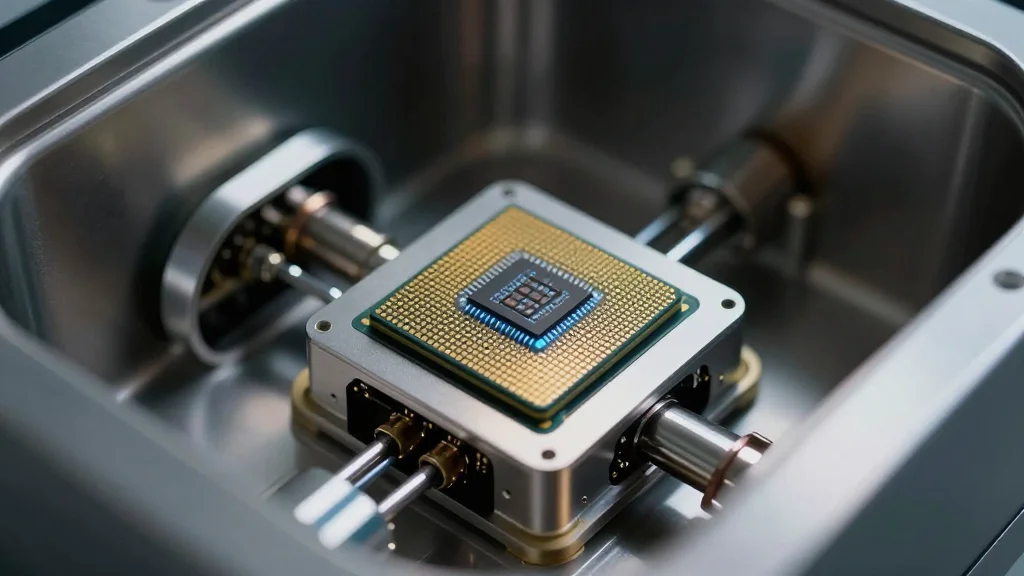
Qilimanjaro Deploys an Analog Quantum Computer at the Barcelona Supercomputing Center
Companies Mentioned
Why It Matters
The hybrid quantum‑HPC environment gives Europe a unique research tool that accelerates breakthroughs in optimization, materials science, and AI, strengthening the region’s competitive edge in the emerging quantum industry.
Key Takeaways
- •10‑qubit analog quantum computer deployed at Barcelona Supercomputing Center
- •Part of €8.5 M (~$9.3 M) EuroQCS‑Spain project funded by EuroHPC
- •Integrated with MareNostrum 5 creates Europe’s leading hybrid quantum‑HPC platform
- •Enables optimization, molecular simulation, and quantum‑enhanced AI workloads
- •Open access via EuroHPC and Spanish Supercomputing Network for researchers
Pulse Analysis
The launch of Qilimanjaro’s analog quantum processor marks a pivotal shift from purely digital quantum experiments toward a more versatile hybrid architecture. Analog quantum processing units (AQPUs) exploit adiabatic evolution to solve specific problem classes without the heavy overhead of fault‑tolerant error correction, making them immediately useful for industry‑relevant tasks. By embedding this technology within the Barcelona Supercomputing Center’s MareNostrum‑Ona ecosystem, researchers can seamlessly offload suitable workloads to the analog engine while retaining the flexibility of digital qubits for broader algorithmic exploration.
From a technical standpoint, the 10‑qubit ACPU is optimized for high‑density optimization, molecular modeling, and quantum‑enhanced artificial‑intelligence pipelines. Its error‑resilient design reduces calibration cycles, allowing scientists to run longer simulations of complex chemical reactions or large‑scale logistics networks with fewer interruptions. Coupled with MareNostrum 5’s petascale classical processing power, the platform delivers a unique quantum‑classical synergy that can accelerate discovery cycles in pharmaceuticals, energy grid management, and financial risk analysis, sectors where marginal performance gains translate into substantial economic impact.
Strategically, the €8.5 million EuroQCS‑Spain investment—approximately $9.3 million—signals strong governmental commitment to positioning Europe at the forefront of quantum innovation. Open access through EuroHPC and the Spanish Supercomputing Network ensures that academic institutions and industry partners across the continent can tap into this capability, fostering a collaborative ecosystem. The roadmap includes two further ACPU generations by 2027, promising higher qubit counts and deeper integration, which will likely catalyze a new wave of quantum‑driven solutions and solidify Europe’s role in the global quantum race.
Qilimanjaro Deploys an Analog Quantum Computer at the Barcelona Supercomputing Center
Comments
Want to join the conversation?
Loading comments...