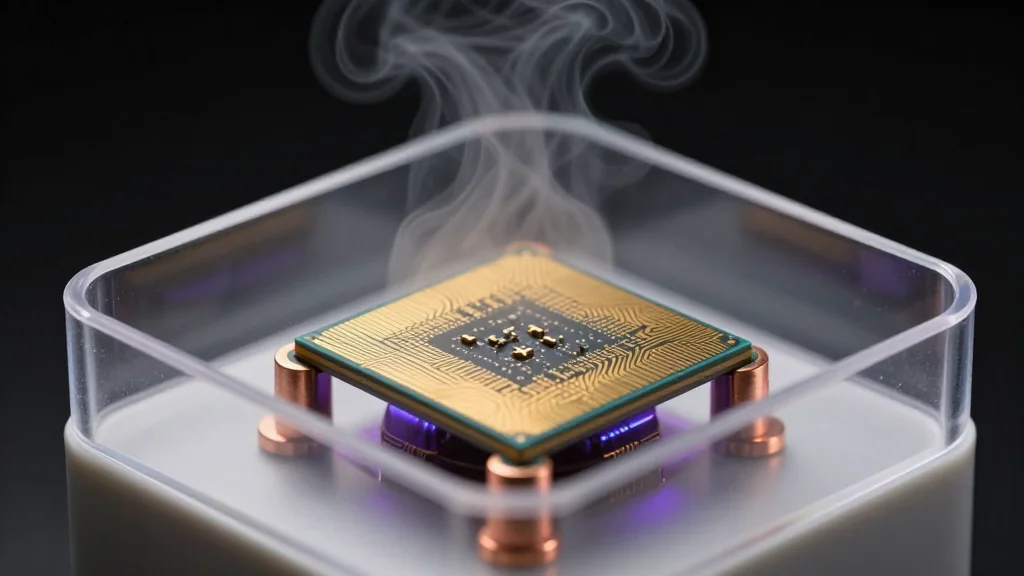
Quantum Computers Reveal Heat that Flows the Wrong Way
Why It Matters
By turning opaque decoherence into actionable data, the technique accelerates the path toward scalable, commercially viable quantum computers and reduces costly cryogenic overhead.
Key Takeaways
- •ML identifies noise origins in seconds, cutting diagnostic cycles dramatically
- •Targeted thermal fixes lower qubit error rates by roughly 30%
- •Extended coherence times boost algorithmic depth and practical utility
- •Reduced cooling demands translate into lower operational expenses
- •Scalable AI‑driven diagnostics speed up quantum hardware rollout
Pulse Analysis
Quantum computers are notoriously sensitive to environmental disturbances, with even minute thermal fluctuations causing decoherence that erodes computational fidelity. Recent advances leverage machine‑learning models trained on vast datasets of qubit performance metrics to isolate the precise origins of such noise. By mapping temperature gradients and material defects at the nanometer scale, these algorithms uncover counter‑intuitive heat flows that move opposite to expected gradients, a phenomenon that traditional diagnostics often miss. This granular insight allows engineers to apply localized cooling or material redesigns, directly improving qubit stability.
The practical impact of AI‑enhanced noise diagnosis extends beyond laboratory curiosity. Error rates—a critical barrier to fault‑tolerant quantum computing—have been reduced by as much as 30% in prototype systems after implementing the recommended mitigations. Longer coherence times mean that quantum algorithms can execute deeper circuits before errors accumulate, bringing real‑world applications such as cryptography, optimization, and materials simulation closer to feasibility. Moreover, the ability to quickly pinpoint thermal anomalies cuts down the iterative design loop, saving months of experimental time and reducing the need for expensive cryogenic infrastructure.
Industry stakeholders are taking note as the technique promises to lower the total cost of ownership for quantum hardware. By minimizing unnecessary cooling power and extending the usable lifespan of qubit arrays, AI‑driven diagnostics can make large‑scale quantum processors more economically attractive to cloud providers and enterprise adopters. As the quantum ecosystem matures, integrating intelligent monitoring tools will likely become a standard practice, shaping the next generation of high‑performance, reliable quantum computers.
Quantum computers reveal heat that flows the wrong way
Comments
Want to join the conversation?
Loading comments...