Quantum Computing Inc. Unveils NeuraWave Photonic Platform for Edge AI Inference

Companies Mentioned
Why It Matters
NeuraWave represents one of the first commercially available photonic AI accelerators aimed at edge deployments, a segment traditionally dominated by silicon‑based GPUs and ASICs. By delivering inference with light, the platform promises to reduce energy consumption and heat generation, two critical constraints for remote or mobile AI workloads. The move also signals a broader trend of quantum‑inspired technologies transitioning from academic prototypes to market‑ready products, potentially reshaping the hardware stack for next‑generation AI. If photonic processors can achieve the performance and cost targets outlined by QCi, they could enable new classes of edge devices that were previously limited by power budgets, opening opportunities in autonomous transportation, real‑time health monitoring, and secure communications. The launch may also spur increased investment in thin‑film lithium niobate foundry services, as more manufacturers seek to integrate photonic components into their supply chains.
Key Takeaways
- •Quantum Computing Inc. (NASDAQ: QUBT) declares NeuraWave deployment‑ready and open for orders.
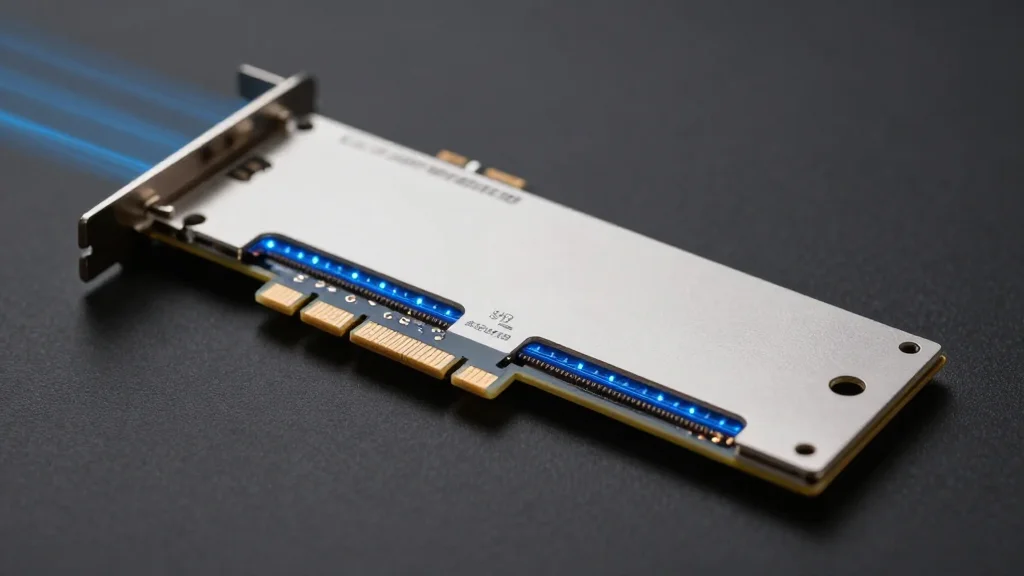
- •NeuraWave is a hybrid photonic‑digital reservoir computing platform delivered as a standard PCIe server card.
- •The system targets ultra‑low‑latency AI inference for edge applications such as telecom, autonomous vehicles, robotics, and healthcare.
- •Quotes from Dr. Yong Meng Sua (CTO) and Prajnesh Kumar (Quantum Technology Lead) emphasize the shift from lab prototypes to practical AI hardware.
- •QCi’s roadmap positions NeuraWave as a stepping stone toward broader commercial photonic computing solutions.
Pulse Analysis
The introduction of NeuraWave marks a tangible shift in the competitive dynamics of edge AI hardware. Historically, the edge market has been constrained by the power‑intensive nature of GPUs and the inflexibility of ASICs, leading many OEMs to accept sub‑optimal performance in exchange for thermal compliance. Photonic computing, long touted for its theoretical speed and energy advantages, has struggled to overcome packaging, integration, and cost barriers. QCi’s decision to package its photonic reservoir in a familiar PCIe form factor directly addresses the integration hurdle, allowing data‑center and edge system designers to adopt the technology without redesigning chassis or power supplies.
From a market perspective, the timing aligns with a surge in demand for on‑device AI that can operate offline or with limited connectivity. Autonomous‑vehicle manufacturers, for instance, are under pressure to meet safety‑critical latency requirements while keeping vehicle power budgets in check. If NeuraWave can deliver the promised sub‑millisecond inference at a fraction of the wattage of a comparable GPU, it could become a preferred accelerator for such workloads, forcing traditional silicon vendors to accelerate their own low‑power roadmaps.
Looking ahead, the success of NeuraWave will hinge on three factors: demonstrable performance gains in real‑world benchmarks, a clear cost advantage over competing solutions, and the ability to scale manufacturing through QCi’s thin‑film lithium niobate foundry partnerships. Should the platform meet these criteria, it could catalyze a wave of photonic‑based edge devices, prompting a re‑evaluation of software stacks to fully exploit light‑based computation. Conversely, any shortfall in performance or price could relegate photonic accelerators to niche research tools for the foreseeable future. The next six months—when QCi releases benchmark data and secures early adopters—will be critical in determining whether NeuraWave becomes a cornerstone of edge AI or a promising but limited experiment.
Quantum Computing Inc. Unveils NeuraWave Photonic Platform for Edge AI Inference
Comments
Want to join the conversation?
Loading comments...